Basic Information
Scientific classification
- Chinese name: Sea dog
- Scientific name: Arctocephalinae (subfamily)
- Classification: Large fish
- Family: Sealidae, Subfamily: Fur Seals
Vital signs data
- Body length: female 1.2–1.8 meters; male 1.6–2.5 meters (great species variation)
- Weight: Females 25–80 kg; Males 100–300+ kg
- Lifespan: Approximately 20–30 years
Significant features
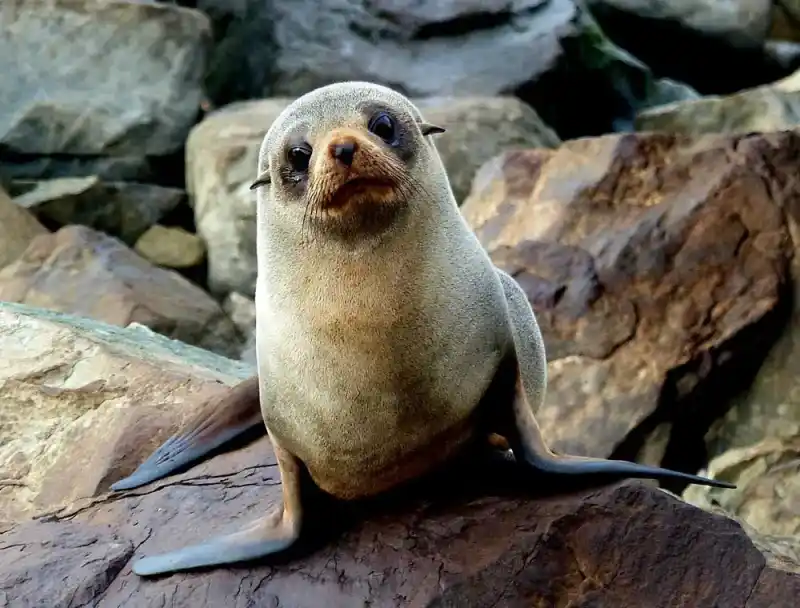
External ear; propulsion with forelimbs; walking on all fours; significant differences in body size between males and females; well-developed underfur.
Distribution and Habitat
Southern Hemisphere islands and continental shelf edges, upwelling currents and seamounts; Northern fur seals are distributed in the island arc and continental slope of the North Pacific.
Appearance
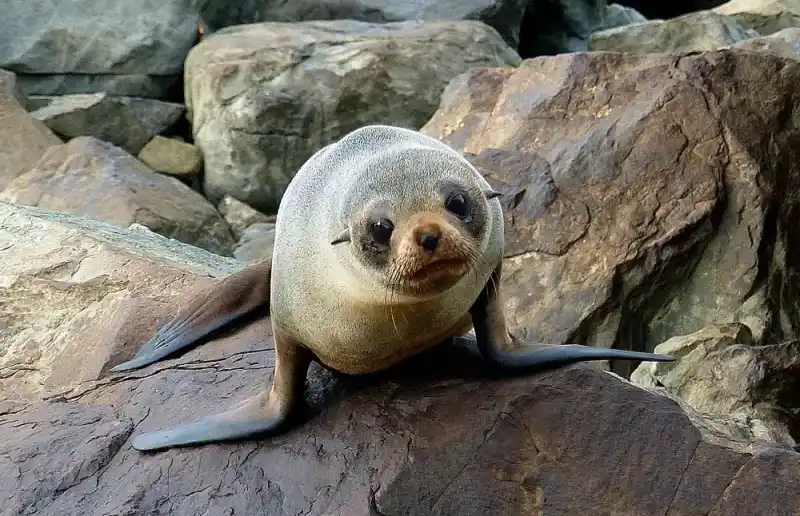
Guard hairs + underfur; broad forepipex; thick neck and shoulders in males; juveniles often have dark downy hairs.
Detailed introduction
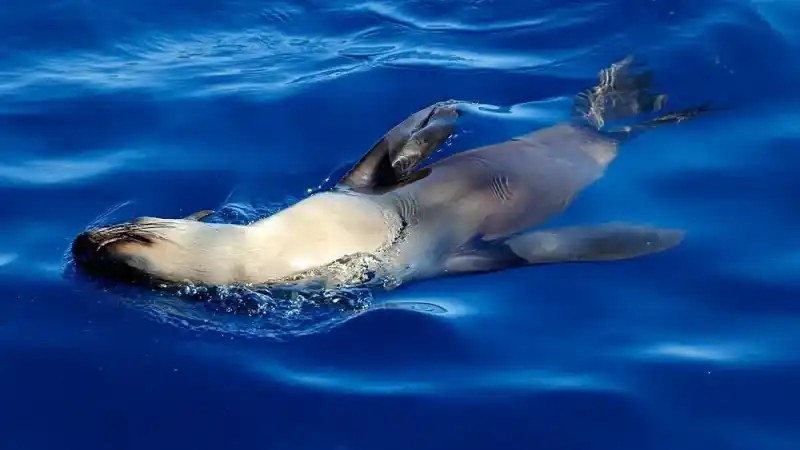
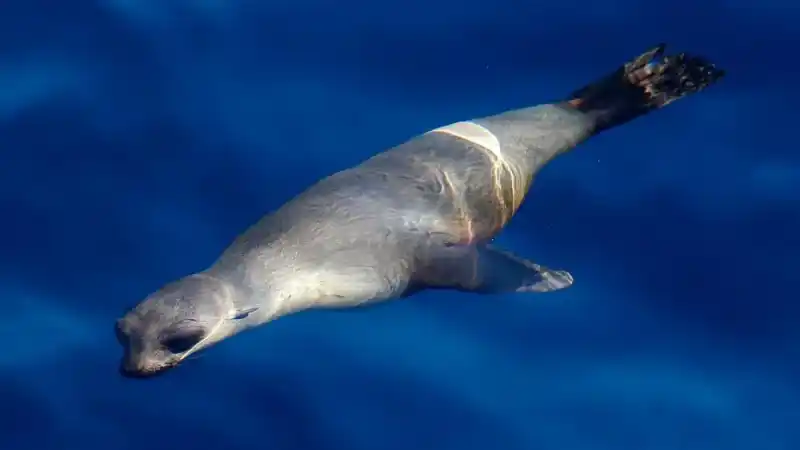
The subfamily Arctocephalinae (also known as the fur seal subfamily) belongs to the family Otariidae and mainly includes the genus Arctocephalus (multiple species in the Southern Hemisphere) and the northern fur seal ( Callocorhinus ursinus ). Unlike true seals, fur seals/sea lions have external ears , propel themselves by using their forepiplets , and can walk on all fours when on land. Fur seals have dense fur on their undersides and have historically been overhunted for the fur trade.
Ecology and Behavior
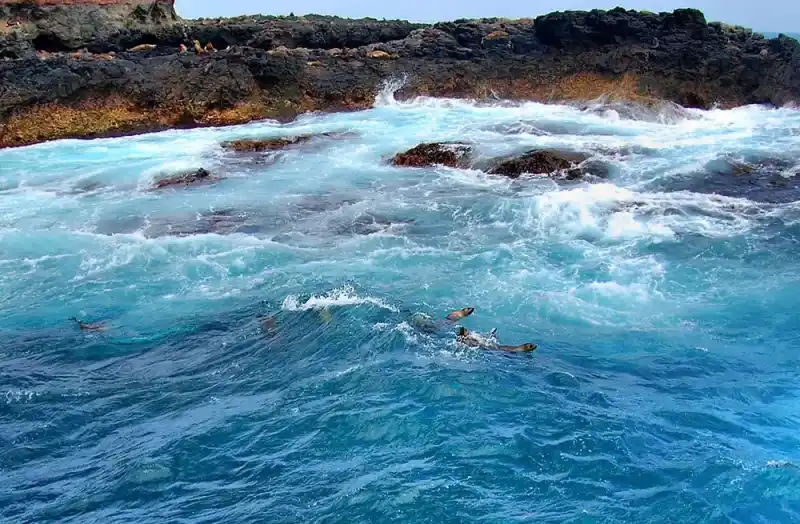
They feed on mid-to-upper-level fish and cephalopods , often foraging near the edge of the continental shelf, upwelling, and seamounts. During the breeding season, they form breeding grounds on islands/reefs. They exhibit significant sexual dimorphism and can have one male with multiple females . Females shuttle between foraging at sea and nursing on land.
Morphology and Recognition
Males are much larger than females; their forepipex is large, and at sea, it provides the main propulsion; their bodies are covered with guard hairs and dense underfur (a more pronounced characteristic of fur seals). On land, they can lift their bodies and use all four limbs for support to move forward.
Distribution and Classification
Arctocephalus : Widely distributed in the South America-Sub-Antarctica-Australia-New Zealand-South Africa region (South American fur seal, South African fur seal, sub-Antarctic fur seal, etc.).
Callorhinus ursinus : Northern sea dog, distributed in the North Pacific (Bering Sea-Aleutian Islands-Northern Japan).
Threats and Protection
The consequences of historical fur hunting are still lingering; a few populations remain unstable.
By-catch and entanglement (longline fishing, drift gillnets, discarded fishing gear).
Food web changes (fisheries stress, El Niño/ocean heatwave).
Pollution and disease (POPs, algal toxins, pathogens).
Human disturbance (breeding ground tourism, ship noise and collisions).
Recommendations: Spatial and temporal protection of key breeding grounds and upwelling hotspots ; improvement of fishing gear and anti-tangling measures; marine debris management and health monitoring; and flexible management based on climate and year conditions.
Frequently Asked Questions
Q1: What are the differences between seals and sea lions/sea lions? Seals/sea lions have external ears, use their forelimbs to paddle, and can walk on all fours; seals do not have external ears, swim by swinging their hind limbs, and crawl on land.
Q2: Why is it called a "sea dog"? The traditional name is related to its thick underfur and call, as it was historically hunted for its fur.
Q3: Conservation status? This page provides an overview of the subfamily and is not assessed as a whole; the conservation status varies for each species (LC to VU/EN), please refer to the species page for the most accurate information.
Q4: Relationship with humans? Breeding grounds are sensitive to disturbance, so distance and speed limits should be maintained; precautions should be taken against entanglement and accidental ingestion near harbors and fishing facilities.