Basic Information
Scientific classification
- Chinese name: whale shark
- Scientific name: Rhincodon typus
- Classification: Giant fish
- Family and genus: Cetaceae (whale shark family), Cetacea (whale shark genus)
Vital signs data
- Body length: Commonly 6–12 meters (extreme values are even greater)
- Weight: Approximately 15–30 tons (estimated)
- Lifespan: Estimated 70–100 years (slow growth, late maturity)
Significant features
The largest fish in the world; filter feeds on plankton and fish eggs; individual spot patterns can be used for photo identification; long-distance migration.
Distribution and Habitat
Coastal-offshore convergence zones, upwelling currents, and seasonal feeding grounds in tropical to subtropical seas worldwide.
Appearance
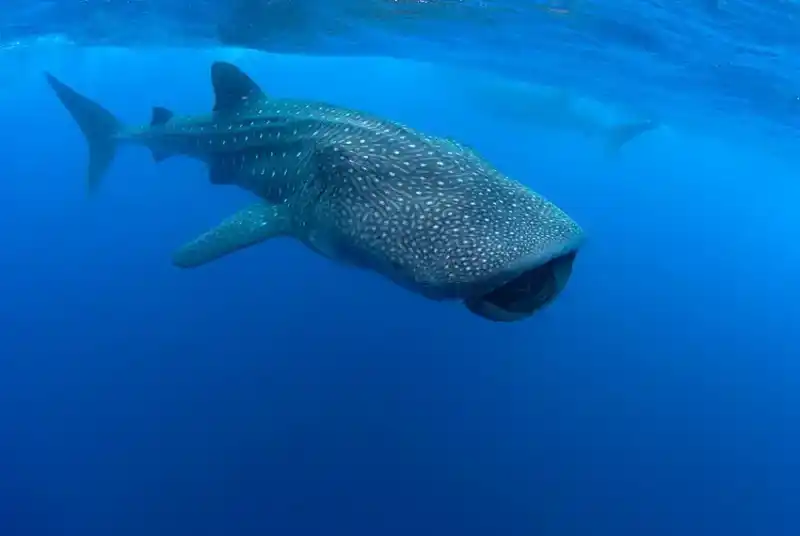
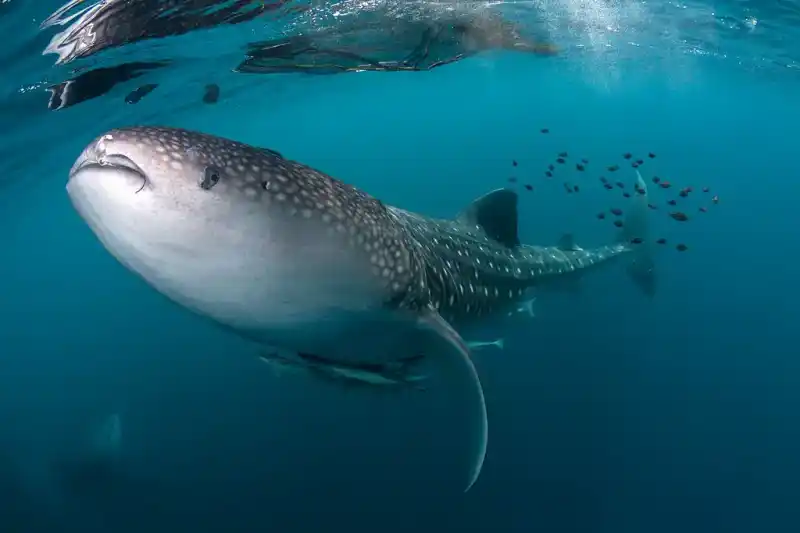
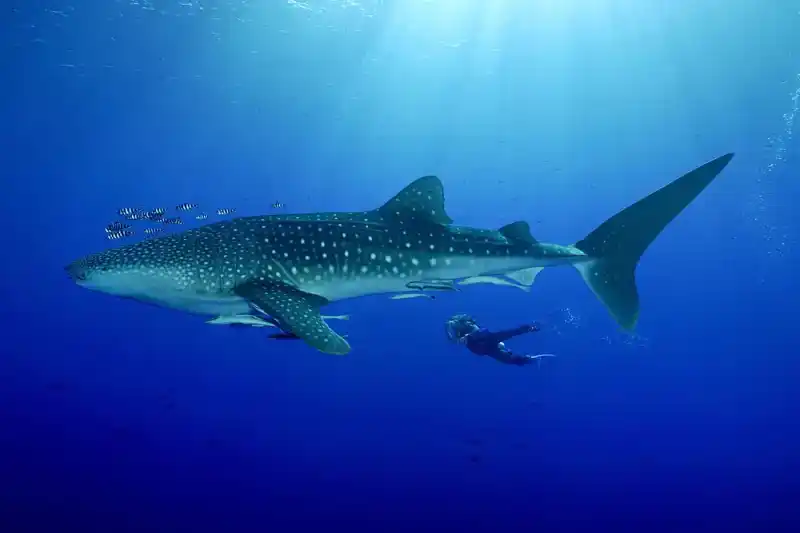
Blue-grey back with white spots and horizontal checkerboard pattern; wide mouth at the front; triangular dorsal fin and large caudal fin; hard skin teeth.
Detailed introduction
The whale shark ( Rhincodon typus ) is the largest fish in the world, belonging to the family Rhincodontidae and the genus Rhincodon . Despite its enormous size, the whale shark is primarily a filter feeder , consuming plankton, fish eggs, and small schools of fish. It feeds using both ram-suction and open-mouth filter swimming. The IUCN classifies it as Endangered (EN) .
Basic Information
Scientific name: Rhincodon typus
Other names: Megalodon, Tofu Shark (common name)
Size: Body length commonly ranges from 6 to 12 meters (extreme values may be even greater); weight can reach 15 to 30 tons (estimated, individual variation is significant).
Ecology and Behavior
They are commonly found in the coastal and offshore areas of tropical and subtropical regions, often congregating during seasonal plankton blooms or fish spawning seasons (such as coral spawning). They forage by slow cruising, typically diving to depths of less than 100 meters per day, but can descend to hundreds of meters. Individuals possess the ability to migrate long distances .
Morphology and Recognition
The back is dark gray to bluish-gray, covered with a checkerboard pattern of white spots and horizontal lines . Each individual pattern is unique and can be used for photo identification. The mouth is anterior and wide. The eyes are small. It has a triangular dorsal fin and a large caudal fin. The body surface has hard barbs.
Reproduction
They are ovoviviparous, with the female incubating the eggs inside her body before giving birth to the pups; the number of pups is large, but the early biology is still not fully understood.
Threats and Protection
Side catches and accidental catches from fixed nets , ship collisions and propeller damage.
Targeted fishing and illegal trade (most countries have banned/restricted fishing).
Habitat degradation and marine pollution ; undue tourism disturbance (chasing, touching, feeding).
Conservation measures include: dynamic protection of habitats and migration routes; management of fishing gear and speed; use of photo recognition databases and satellite tagging for monitoring; and the development of guidelines for shark watching (distance, number of people, number of boats, duration, and prohibition of hand feeding). Internationally, shark watching should be included in CITES Appendix II, CMS appendices, and other relevant conventions.
Frequently Asked Questions
Q1: Will whale sharks hurt people? They are gentle in nature, mainly filter feed, and do not attack people unless provoked; you can live safely with them by keeping your distance and avoiding contact.
Q2: Where are whale sharks more likely to be seen? They often congregate at seasonal feeding hotspots (such as large-scale coral spawning and fish egg zones), but this varies from place to place and season to season.
Q3: How to identify an individual? The spots and horizontal lines on the side of the shoulder area are unique and can be matched with a citizen science project through photo identification.
Q4: Why was it rated as endangered? The answer is a combination of historical and ongoing fisheries pressures, ship attacks and tourism disruptions, and inadequate management due to insufficient data.