Basic Information
Scientific classification
- Chinese name: Tasmanian cave spider
- Scientific name: Hickmania troglodytes
- Classification: Arthropoda
- Family: Hickmaniidae Hickmania troglodytes
Vital signs data
- Body length: Adult spiders are about 13–18 mm in length, while females are slightly larger, with a leg span that can reach more than ten centimeters.
- Weight: Medium-sized cave spiders, with an average body weight in the hundreds of milligrams, varying depending on individual size.
- Lifespan: It is estimated that they can survive for several years; the stable environment of the cave is conducive to their long lifespan.
Significant features
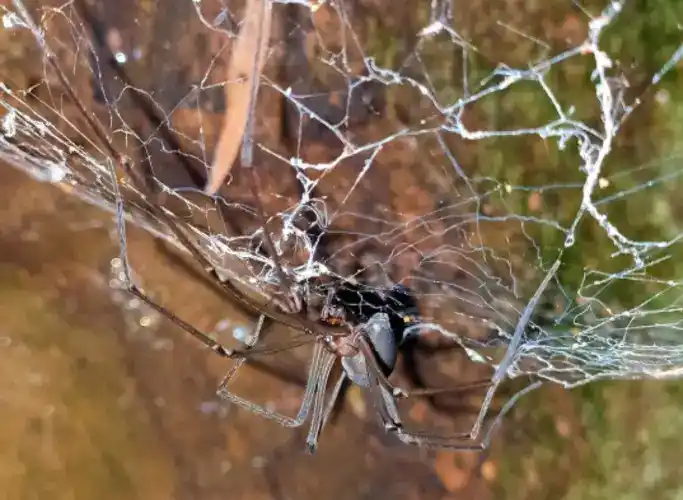
The large cave spider, endemic to Tasmania, has long, slender legs and prominent spinnerets, enabling it to weave large, three-dimensional webs on cave ceilings and rock walls to prey on arthropods.
Distribution and Habitat
They are found only in limestone caves and damp, cold forest valleys on Tasmania, Australia, where they build webs to live in the dark, damp environment around the cave ceilings, walls, and entrances.
Appearance
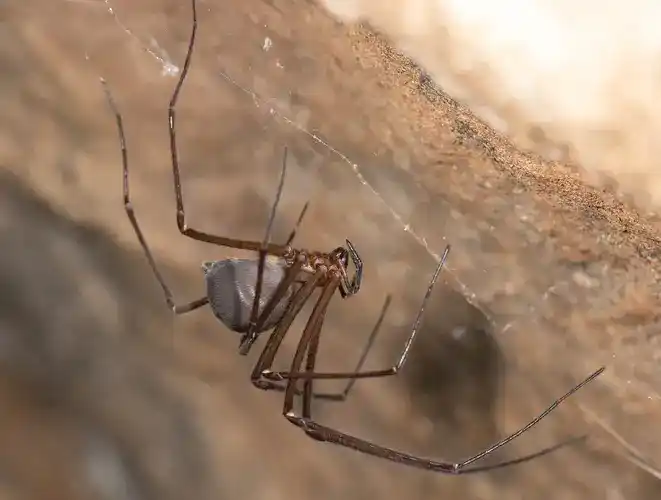
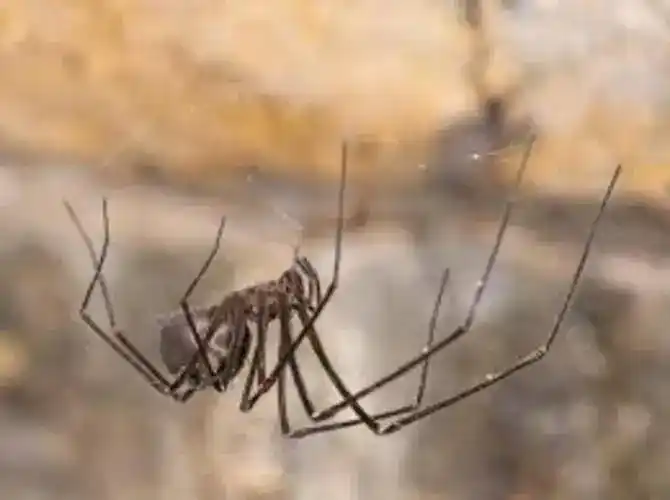
Its body color is mostly dark brown to reddish brown, with a narrow and long body, extremely slender legs, and elongated spindles at the end of the abdomen, giving it an overall slender and slightly strange appearance.
Detailed introduction
The Tasmanian Cave Spider ( Hickmania troglodytes ) is a large, distinctive cave and forest spider. It is endemic to Tasmania and the only extant species in the monotypic family Hickmaniidae, considered an ancient remnant group.
Classification Status and Naming
Common Chinese name: Tasmanian cave spider
English name: Tasmanian Cave Spider
Scientific name: Hickmania troglodytes
Genus: Arthropoda (phylum Arthropoda), Arachnida (class Arachnida), Araneae (order Araneae), Hickmaniidae (family Hickmania)
Appearance and distinguishing features
The Tasmanian cave spider has a relatively long body and slender legs, giving it a slightly eerie appearance.
Size: Adult spiders are about 13 to 18 mm long, with females usually slightly larger than males, and their leg span can reach more than ten centimeters;
Body color: mostly dark brown to reddish brown, sometimes with an olive hue, with the abdomen being darker;
Body shape: The body is relatively long and narrow, and the legs are extremely slender, making it suitable for hanging from the ceiling and walls of caves;
Spinnerets: The significantly elongated spinnerets at the end of the abdomen are one of the distinctive features of this species;
Other features: robust mouthparts and tentacles, small eyes, adapted to dim lighting environments.
Distribution range and habitat
The Tasmanian cave spider is found only on the island of Tasmania, Australia , and has been recorded in several limestone cave systems and surrounding wet and cold forests.
Typical habitats include:
The ceilings, walls, and entrance areas of limestone caves, karst caves, and underground water caves;
The cave entrance is surrounded by damp, dark canyons, streams, and rock walls;
Beneath rock crevices and fallen trees within cool, humid temperate rainforests and broadleaf forests.
This spider is well adapted to cold, humid, and long-term dark environments , and its distribution is closely related to stable cave and valley microclimates.
Spider Web Types and Predation Methods
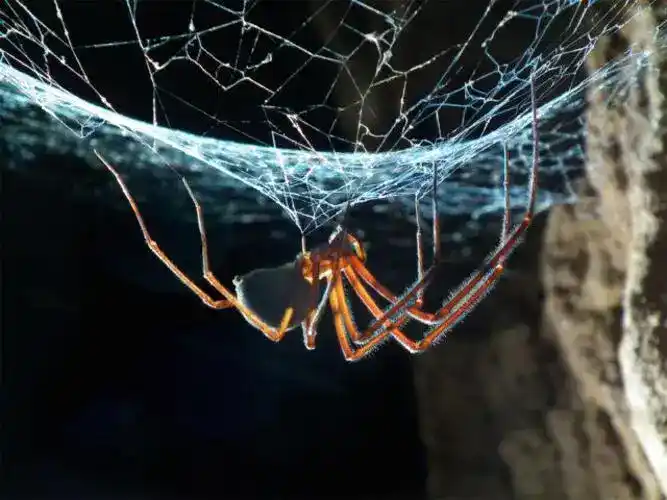
Tasmanian cave spiders weave large, three-dimensional webs , combining features of both shed webs and wire webs.
Spider webs are often hung from cave ceilings or in front of steep rock walls, and are made up of multiple layers of fine threads forming an irregular web.
Multiple vertical trap wires hang below the net, resembling strings of trap lines;
Small insects or other arthropods that come into contact with the hanging threads will get stuck or entangled, and will become even more entangled in the web as they struggle.
Spiders wait in a corner of their web or near a rock face, and once they sense the vibration of the silk, they quickly move in and bite their prey.
The prey mainly includes moths, dipteran insects, small beetles, and other small arthropods that live in caves or forests.
Lifestyle Habits and Behaviors
Tasmanian cave spiders are mostly active at night or in low light .
During the day, they usually sit quietly on the edge of the net or in the crevices of the rock wall, and are not very active;
Deep inside the cave, in a dimly lit or dark environment almost all day, vision is limited, and people rely more on touch and the vibration of the net.
Its movement speed is not extremely fast, but it can easily crawl and hang on vertical surfaces thanks to its long legs;
Adult spiders have a longer lifespan and can use the same web area continuously with regular maintenance and reinforcement.
Reproduction and life history
There is relatively little research on the reproductive biology of Tasmanian cave spiders, but the general characteristics are as follows:
Adults may have a longer adult lifespan on high-latitude islands with colder climates;
The female spider lays her egg sacs in rock crevices or near her web, wraps them in silk, and secures them in a hidden place.
After hatching, the spiderlings first move around the mother web, and then gradually spread to nearby rock walls to build their own webs.
Because cave environments are relatively stable, population changes are generally slower.
Protecting the status quo and threats
The Tasmanian cave spider possesses a high degree of pedigree uniqueness, representing an ancient and isolated group of spiders. It is not currently assessed separately in the global IUCN Register, but is considered a species of scientific and conservation value locally.
Potential threats include:
Human interference and changes in lighting resulting from cave tourism development;
Deforestation and land use changes have led to a deterioration of the microclimate around the cave entrance;
Introduced species may alter the structure of arthropod communities in caves and valleys.
By protecting native forests, restricting tourist activities in sensitive caves, and strengthening species monitoring, long-term habitat protection can be provided.
Impact on humanity
There is currently no evidence that Tasmanian cave spiders pose a significant medical hazard to humans. They spend most of their time on webs in caves or on high rock walls, and have little opportunity for direct contact with humans.
Frequently Asked Questions
Q1: Are Tasmanian cave spiders poisonous?
Like most spiders, it has venom glands used to subdue prey, but there is currently no evidence that it poses a serious medical hazard to humans.
Occasionally being bitten will mostly only cause localized pain and mild redness and swelling.
Q2: Why is it said to be an ancient relic species?
Because it is the only extant species in the Hickmaniidae family, it diverged from other spider families relatively early on the evolutionary tree.
It is considered a lineage that retains some ancient features and is of great significance for studying the evolution of arthropods in the Southern Hemisphere.
Q3: How to protect this spider when visiting caves in Tasmania?
It is recommended to comply with local conservation regulations, refrain from touching or damaging spider webs, and avoid prolonged exposure to strong light.
And stay on the designated trails and avoid stepping on the netting areas at the cave entrances and below the rock walls.
Q4: What role do Tasmanian cave spiders play in the ecosystem?
It is an important predator in caves and damp, cold forests, capable of controlling multiple arthropod populations.
It also serves as a higher nutrient level component in the cave ecosystem, maintaining the balance of the food web.