Basic Information
Scientific classification
- Chinese name: Burrowing Spider
- Scientific name: Idiopidae and other burrowing spiders (a broad general term)
- Classification: Arthropoda
- Family: Idiopidae Trapdoor spiders
Vital signs data
- Body length: Most adult spider species are about 1–4 cm in length, while a few large species can exceed 4 cm.
- Weight: From small to medium-sized Protospora spiders, the body weight varies from several hundred milligrams to several grams.
- Lifespan: Female spiders live in the same burrow year-round and can live for several years or even longer; male spiders have a shorter lifespan after reaching maturity.
Significant features
A general term for a large group of spiders that dig deep burrows in the soil and create trapdoors. They ambush prey at the entrance of their burrows at night and are important surface predators.
Distribution and Habitat
Widely distributed in many temperate and tropical regions around the world, they burrow and nest in loose soil in forest edges, bushes, slopes, pastures, and yards.
Appearance
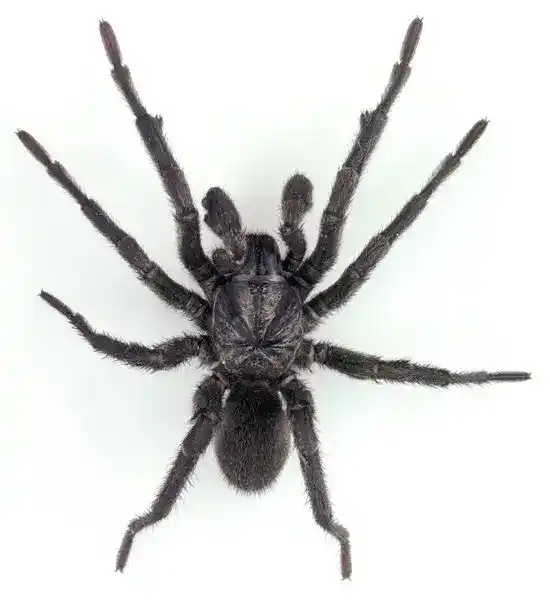
Its body color is mostly brown or dark brown, with a broad and thick head and chest, strong fangs, short and powerful legs, and a rounded abdomen. It has a sturdy and robust appearance and rarely has bright spots.
Detailed introduction
Trapdoor spiders are a large group of small to medium-sized spiders that are adept at digging burrows and creating "trapdoors" in the soil. It is not a single species, but rather a group of proto-arachid spiders encompassing multiple families and genera, such as Idiopidae and Ctenizidae . They are widely distributed in temperate and tropical regions worldwide and are characterized by their robust bodies and burrowing habits.
Classification Status and Naming
Common Chinese names: Burrowing spider, Trapdoor spider (broad terminology)
English name: Trapdoor spiders
Representative groups: Idiopidae, Ctenizidae, and several other closely related families of burrowing spiders.
Classification: Arthropoda → Arachnida → Araneae → Several families of protoarachnoids (such as Idiopidae, etc.)
Appearance and distinguishing features
Burrowing spiders are robust in appearance, with short but powerful legs adapted for digging and moving soil. They share the following characteristics:
Size: Mostly small to medium-sized spiders, with adults measuring about 1 to 4 cm in length, and some larger species slightly exceeding 4 cm;
Body color: mostly brown, dark brown or blackish brown, rarely bright colors, in order to disguise itself with soil and fallen leaves;
Physical characteristics: The head and chest are broad and thick, the fangs are thick and strong, the abdomen is round, and the legs are short, thick and powerful, giving an overall impression of being solid and sturdy;
Surface texture: The cephalothorax is mostly slightly glossy, and the feet and abdomen are often covered with short hairs, which help to sense vibrations;
Sexual differences: Female spiders are more robust and live in the burrow for a long time, while male spiders often leave the burrow to find mates after they mature.
Distribution range and habitat
Burrowing spiders, in a broad sense , are widely distributed in many parts of the world , including Australia, South Africa, parts of Europe, North and South America, East Asia and Southeast Asia.
Typical habitats include:
Woodland edges, shrub belts, and grassland slopes;
Rocky slopes, earthen embankments, and loose soil areas at the foot of mountains;
The edges of farmland, pastures, roadside slopes, and the area around garden flower beds;
Slopes and soil layers that are well-drained and less prone to water accumulation.
They prefer digable, relatively stable soil , which facilitates the construction of deep burrows and the long-term use of the same nest.
underground tunnels and "trapdoor" structures
The most distinctive feature of burrowing spiders is their intricate burrows and trapdoors:
Vertical or slanted holes are dug in the soil, with depths ranging from a few centimeters to tens of centimeters.
The cave walls were reinforced with silk to form a stable silk-lined earth cave, which helps prevent collapse and retain moisture;
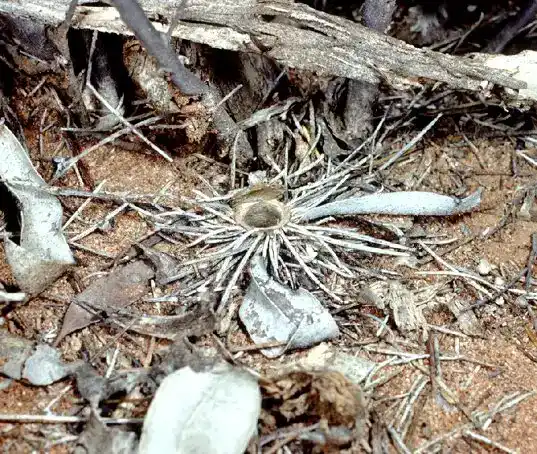
The entrance to the cave is covered by a thick sheet made of soil, plant debris, and spider silk, resembling a small door.
One side of the trapdoor is hinged with silk, which can be tightly closed to blend into the ground, or quickly pushed open to ambush prey.
Some burrowing spiders also lay out radiating silk threads around the entrance of their burrows to help them sense the vibrations of their prey's footsteps.
Lifestyle and Diet
Burrowing spiders are typical nocturnal ambush predators , spending most of their time in or near their burrows.
During the day, they usually hide inside caves, keeping the trapdoors tightly closed to prevent dryness and predators from disturbing them;
They wait behind the cave entrance at dusk and night, placing their forelegs on the trapdoor or surrounding threads to sense vibrations;
Their main prey consists of beetles, cockroaches, ants, centipedes, other spiders, and occasionally small lizards and mollusks;
When prey approaches the burrow entrance, the burrow spider will suddenly push open the trapdoor and rush out, biting the prey and then quickly dragging it back into the burrow to eat.
Female spiders use the same burrow year after year, which can last for many years; male spiders leave the burrow after they mature and are more easily seen by people because they walk on the surface.
Reproduction and life history
The life history of different groups of burrowing spiders varies slightly, but they generally share the following commonalities:
During the maturing season, male spiders leave their burrows to find female spiders and will knock or pull silk near the entrance to send courtship signals.
Mating usually takes place inside the burrow, after which the male spider typically leaves and dies shortly afterward.
The female spider prepares an egg sac inside the burrow and guards it until the spiderlings hatch;
Young spiders initially live together in the mother's nest, but gradually leave the nest and dig their own small burrows in the nearby soil.
Because the burrows are stable and safe, many female burrow spiders can live for many years, and some larger species can live for several years or even longer.
Toxicity and its impact on humans
Burrowing spiders generally possess well-developed fangs and venom glands, but most species are not highly dangerous to humans .
When bitten, the following may occur:
Pain and local redness and swelling at the bite site;
A small number of people may experience more noticeable swelling or allergic reactions;
A small number of individual genera and species are highly toxic, and the risks need to be assessed in conjunction with local experts and medical advice.
Overall, burrowing spiders tend to bite defensively, and they only attack when forced, gripped, or when their burrows are being dug.
Relationship with humans and ecological role
Burrowing spiders are important terrestrial predators in the ecosystem, helping to regulate pest populations by preying on various terrestrial insects and other arthropods.
If burrows and trapdoors are found near residential areas, they generally do not pose a significant threat to people, as long as they are not located in areas frequently trampled. Many nature conservation organizations recommend preserving these spiders as much as possible, allowing them to continue to perform their ecological functions in their original locations.
References
York Main, B. 1976. Spiders. The Australian Naturalist Library, Collins, Sydney.
Brunet, B. 1996. Spiderwatch: a guide to Australian spiders. Reed/New Holland.
Simon-Brunet, B. 1994. The Silken Web: a natural history of Australian spiders. Reed Books.
Frequently Asked Questions
Q1: What are the differences between burrowing spiders and regular house spiders?
Burrowing spiders are mostly of the original spider type, with a relatively thick body, and are good at digging deep burrows and making trapdoors.
The common small spiders in the home are mostly web-weaving or small hunting spiders and usually do not dig holes.
Q2: Do burrowing spiders attack people on their own?
They generally do not attack proactively. They spend most of their time hiding inside their burrows, and when they encounter tremors, they mostly choose to retreat or close the trapdoors tightly.
It may only bite defensively when it is dug into, stepped on, or directly grabbed.
Q3: What should I do if I find a hidden door in the yard?
If the location does not affect daily traffic, you can choose to keep it as an opportunity to observe nature.
If the hole happens to be located on a necessary path, the clod of earth with the hole can be moved to a corner of the garden under professional guidance.
Q4: Are burrowing spiders helpful in controlling pests?
Yes. Burrowing spiders prey on a large number of insects and other arthropods that live on the ground, making them natural pest controllers.
It is very important for maintaining the balance between soil and surface animal populations.