Basic Information
Scientific classification
- Chinese name: Sydney funnel-web spider
- Scientific name: Atrax robustus OP Cambridge, 1877
- Classification: Arthropoda
- Family: Atrax robustus (Family)
Vital signs data
- Body length: Female spiders are about 3–3.5 cm long, while male spiders are about 1.5–2.5 cm long. Male spiders have longer limbs.
- Weight: Medium to large-sized protospora terrestrial spiders, with an average body weight of only a few grams, depending on the size of the individual.
- Lifespan: Female spiders can live for more than ten years in the same burrow, while male spiders have a shorter lifespan after reaching maturity and usually die after the breeding season.
Significant features
One of the world's most famous highly venomous spiders, it has a shiny black body, digs burrows lined with silk, and lays funnel-shaped webs and radial strands at the entrance. The venom of the male spider is of particular interest.
Distribution and Habitat
Endemic to New South Wales, Australia, it is mainly found in shady and humid environments such as damp forests, valleys, suburban gardens, lawns, and under piles of rocks in and around Sydney.
Appearance
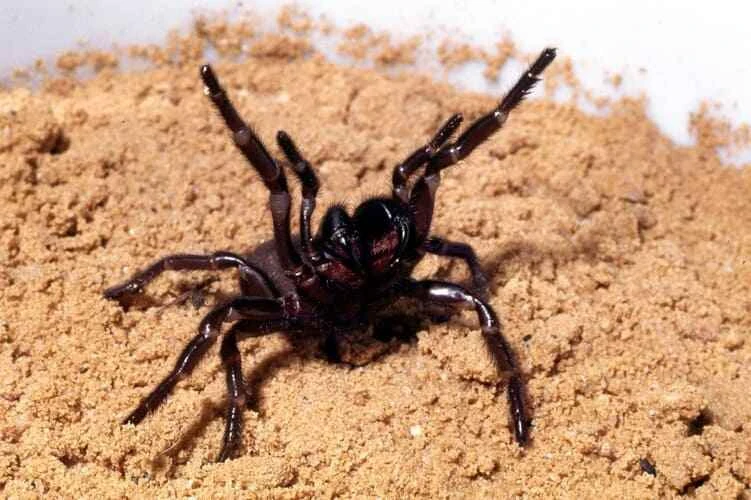
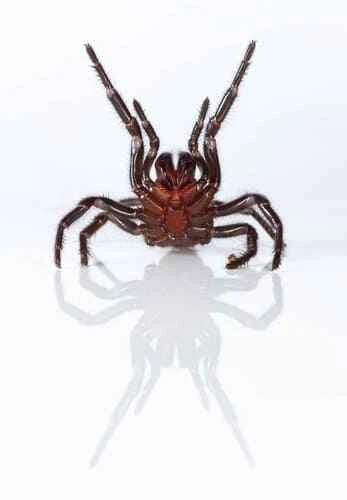
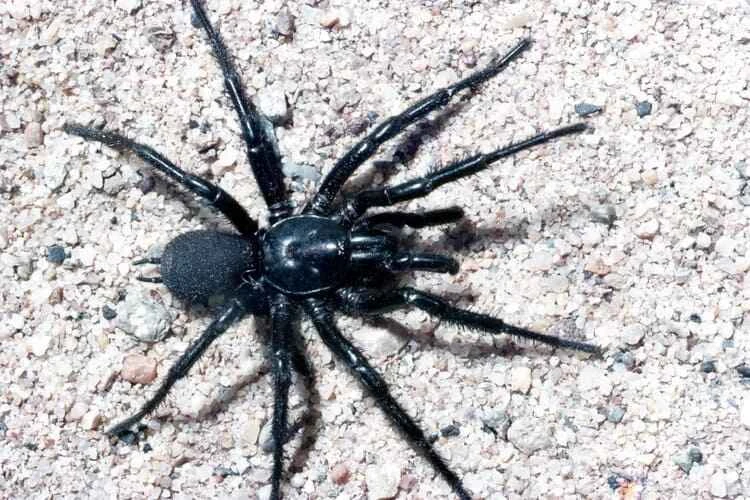
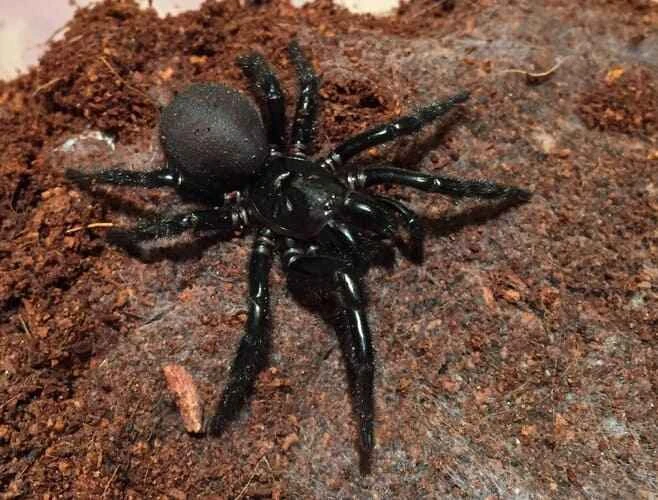
Its body is dark blue-black to blackish-brown, with a smooth and shiny head, thorax, and back plates. Its abdomen is grayish-black, with finger-like spinnerets at the end of its abdomen. It has thick fangs that can be clearly raised into an attacking posture.
Detailed introduction
The Sydney funnel-web spider ( Atrax robustus ) is one of the world's most notorious highly venomous spiders. It belongs to the family Atracidae and the genus Atrax . It is primarily found in Sydney and surrounding areas of New South Wales, Australia, and is widely known for the extreme danger its venom poses to humans and other primates.
Classification Status and Naming
Common Chinese name: Sydney funnel-web spider
English Name: Sydney Funnel-web Spider
Scientific name: Atrax robustus OP Cambridge, 1877
Genus: Arthropoda (phylum Arthropoda) → Arachnida (class Arachnida) → Araneae (order Araneae) → Atracidae (family Atracidae) → Atrax (genus Atrax)
Appearance and distinguishing features
The Sydney funnel-web spider is medium to large in size, with a glossy black body and a highly recognizable appearance.
Size: Female spiders are about 3–3.5 cm long, while male spiders are slightly smaller, about 1.5–2.5 cm long, but their limbs are relatively long;
Body color: The head, thorax and legs are dark blue-black or blackish-brown with a distinct glossy metallic sheen, while the abdomen is slightly darker and grayish-black.
Cephalothorax: The back plates are smooth and shiny, almost hairless, with strong fang bases at the front, which can be clearly raised to assume an attacking posture;
Spinnerets: The finger-like spinnerets extending from the end of the abdomen are one of the important characteristics of the funnel-web spider;
Sexual differences: Male spiders have distinct copulatory organs on their limbs, their legs are proportionally longer, and their venom is generally considered more dangerous to humans.
Distribution range and habitat
The Sydney funnel-web spider is endemic to New South Wales, Australia , and is mainly distributed in the Sydney metropolitan area, the Central Coast and the Blue Mountains, with some areas extending north to Newcastle.
Typical habitats include:
Humid forests, rainforests, and valleys;
Shady, damp slopes with thick leaf litter and dense rocks;
Suburban gardens, lawn edges, and under flagstones and sleepers;
Dark corners in residential areas, such as drainage ditches, gaps in retaining walls, and around tree roots.
They prefer cool, humid microenvironments with digging soil to maintain surface moisture and avoid dehydration in hot, dry climates.
Caves and funnel-shaped spider webs
The Sydney funnel-web spider digs a silk-lined burrow in the ground or under decaying wood or rocks. A section of silk extends from the burrow entrance, and multiple radial "tethers" spread outwards.
The caves are mostly vertical or sloping earthen caves, with the inner walls reinforced with spider silk;
The entrance to the cave was surrounded by silk, forming a slightly funnel-shaped opening;
Several threads extend outward from the cave entrance, laid out on the ground like trigger lines. Whenever a small animal passes by, the vibration is transmitted into the cave.
Female spiders typically live in the same burrow year-round; male spiders leave the burrow during the breeding season to search for females, making them more likely to come into contact with humans and cause bites.
Lifestyle and Diet
The Sydney funnel-web spider is a nocturnal ambush predator .
During the day, they spend most of their time hiding inside the cave or near the entrance to avoid direct sunlight;
They wait at the cave entrance from dusk to night, placing their forelegs on the tether to sense prey;
Its main prey includes beetles, cockroaches, myriapods, small lizards, and frogs, among other small terrestrial animals.
Once it senses a vibration, it will suddenly rush out, bite its prey, and then drag it back into the burrow to feed.
On warm, humid nights, especially after rain, male spiders are more active, sometimes entering garages, shoes, or the vicinity of homes to increase their chances of contact with people.
Toxicity and Medical Importance
The Sydney funnel-web spider is known for its extremely potent venom and is one of the most dangerous spiders known to humans. Its venom contains neurotoxins highly specific to primates, which can affect the nervous and cardiovascular systems.
Typical symptoms of severe poisoning include:
The bite wound was extremely painful, and two obvious fang marks were visible.
Rapid onset of profuse sweating, drooling, nausea, and vomiting;
Rapid heartbeat, changes in blood pressure, difficulty breathing, and muscle spasms;
If not treated promptly, it could be life-threatening, especially for children.
Since 1981, Australia has officially used a special antivenom to treat Sydney funnel-web spider bites. As long as the patient is taken to the hospital in time and receives first aid measures such as compression bandage, fatal cases are extremely rare.
First aid advice
In areas where funnel-web spiders are found in Sydney, if you suspect you have been bitten, you should immediately:
Try to remain calm and keep the injured person still and still.
According to the principles of snakebite treatment, apply pressure bandages and immobilize the bitten limb;
Contact emergency medical services as soon as possible and get to a hospital;
Preserving or photographing individual spiders under safe conditions can aid in subsequent identification.
Relationship with humans
The funnel-web spider is an important predator in the Sydney ecosystem, but due to its highly venomous nature, extra caution should be exercised near residential areas. Encounters can be reduced by sealing gaps in housing, raising shoes and toys, and clearing away piles of stones and planks.
Frequently Asked Questions
Q1: Why are funnel-web spiders in Sydney particularly dangerous?
Its venom contains polypeptide neurotoxins that are extremely toxic to humans and other primates.
It can affect the nervous and cardiovascular systems in a short period of time, and may be life-threatening if not treated in time.
Q2: Will all bites from Sydney funnel-web spiders lead to serious consequences?
Not necessarily, as it depends on many factors such as the amount of venom injected, the location of the bite, the victim's weight, and health condition.
However, due to the extremely high risk, any suspected bite injury should be treated as a medical emergency.
Q3: How can I reduce the risk of encountering a Sydney funnel-web spider at home?
It is recommended to keep the yard tidy, reduce the accumulation of clutter, and seal the gaps between doors, windows, and the ground.
Shoes and garden gloves should be inverted or hung up when not in use to avoid leaving them on damp surfaces for extended periods.
Q4: What role does the Sydney funnel-web spider play in nature?
They are high-altitude invertebrate predators, effectively controlling populations of surface insects and other small animals.
It plays an important role in ecological balance within forest and shrub ecosystems.


