Basic Information
Scientific classification
- Chinese name: Sydney Brown Burrowing Spider
- Scientific name: Arbanitis rapax (representative species of brown burrowing spider in the Sydney area)
- Classification: Arthropoda
- Family: Arbanitis rapax
Vital signs data
- Body length: Adult spiders are generally about 15–30 mm in length. Females are stout, while males are slightly slender, with a leg span that can reach several centimeters.
- Weight: Medium-sized terrestrial spider, weighing only a few grams, varying depending on individual size and sex.
- Lifespan: Female spiders can live for many years in the same burrow, with an overall lifespan of several years, while male spiders have a relatively shorter lifespan.
Significant features
A typical burrowing spider, it is adept at digging deep burrows and making camouflaged trapdoors. It ambushes prey at the burrow entrance at night and poses a relatively low risk of medical harm to humans.
Distribution and Habitat
It is mainly distributed in the Greater Sydney area and surrounding foothills and coastal areas of New South Wales, Australia, and is commonly found in woodland edges, bushes, garden soil, and under rocks.
Appearance
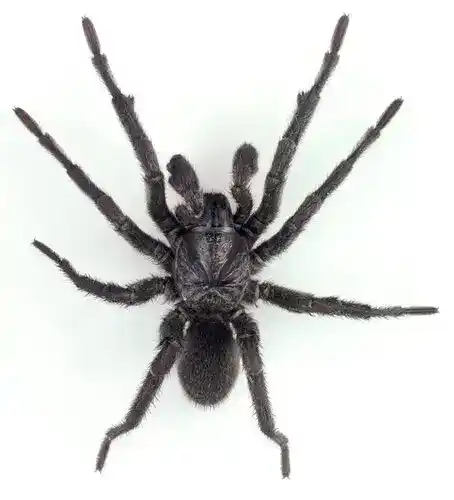
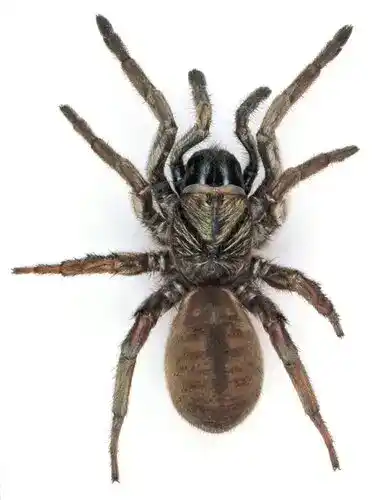
Its body color ranges from brown to dark brown, with a broad and glossy head and chest, short and powerful legs, and a rounded abdomen. The overall appearance is sturdy and dark, with few bright spots.
Detailed introduction
The Sydney Brown Trapdoor Spider is a common burrowing spider found in eastern Australia. The representative species often refers to the brown burrowing spiders living in Sydney and its surrounding areas. Its scientific name is usually * Arbanitis rapax* or related species. They belong to the family Idiopidae and are relatively robust, archaic spiders. They are adept at digging deep burrows in the soil and creating "trapdoors," hence their name.
Classification Status and Naming
Common Chinese names: Sydney brown burrowing spider, brown burrowing spider
English Name: Sydney Brown Trapdoor Spider
Representative scientific name: Arbanitis rapax (and related brown burrowing spiders in the Sydney area)
Genus: Arthropoda (phylum Arthropoda) → Arachnida (class Arachnida) → Araneae (order Araneae) → Idiopidae (family Idiopidae) → Arbanitis
Appearance and distinguishing features
The Sydney brown burrowing spider has a robust body and understated coloration, exhibiting typical burrowing spider characteristics:
Size: Adult spiders are generally 15 to 30 millimeters long. Females are more robust, while males are slightly slender and their legs can reach several centimeters in length.
Body color: The body is generally brown to dark brown, sometimes with a reddish-brown or blackish-brown sheen, and the color of the abdomen is more uniform;
Body shape: The head and thorax are broad and thick, with a prominent forehead and strong fang bases. The legs are short, thick, and powerful, suitable for digging and burrowing.
Surface texture: The cephalothorax is relatively smooth or slightly hairy, while the abdomen and feet are covered with fine downy hairs;
Sexual differences: After maturing, male spiders have distinct pedipal copulatory organs and are more likely to leave the burrow, while female spiders live in fixed burrows for a long time.
Distribution range and habitat
The Sydney brown burrowing spider is mainly distributed in eastern New South Wales, Australia , especially in the Greater Sydney area and surrounding foothills and coastal areas. It has been recorded in urban residential areas, suburban gardens, and natural woodlands.
Typical habitats include:
In the loose soil of forest edges, shrub belts, and rocky slopes;
The ground around the edges of the lawn, flower beds, and fences in the courtyard is slightly soft;
The soil layer around tree roots, under dead branches and fallen leaves, and under stones;
Well-drained slopes and embankments that are less susceptible to flooding.
They prefer digable and relatively stable soil , which makes it easier to build deep burrows and maintain their use for many years.
underground tunnels and "trapdoor" structures
The most famous feature of the Sydney brown burrow spider is its intricate burrows and "trapdoors":
Spiders dig vertical or slightly inclined burrows in the soil, which can be tens of centimeters deep.
The cave walls are reinforced with silk, and the interior is relatively smooth, making it easy to turn around quickly and preventing collapse;
The entrance to the cave is covered by a thick sheet woven from soil, plant debris, and spider silk, resembling a small door.
The edges of the valves are often fitted with hinges, allowing them to open outwards and close tightly. They are similar in color to the surrounding soil, creating a highly effective camouflage effect.
Spiders typically stay close to the inside of their burrow entrance, extending their forelegs near the trapdoor to sense ground vibrations. Once prey gets close, they quickly pounce to capture it.
Lifestyle and Diet
The Sydney brown burrowing spider is a nocturnal ambush predator .
They spend most of the day inside the cave, keeping the trapdoor tightly closed to avoid dryness and predators;
They are more active in the evening and at night, hiding behind the trapdoor and waiting for insects and other small invertebrates to pass by;
The prey includes beetles, cockroaches, snails, small lizards, and other terrestrial arthropods;
When hunting, they usually push open the trapdoor in an instant, pounce out, bite their prey with their venomous fangs, and then drag it back into the burrow to eat slowly.
Female spiders often remain in the same burrow year-round, potentially using it for many years; male spiders leave the burrow during the maturing season to find mates, making them easier to spot on the ground or paths.
Reproduction and life history
The breeding process of burrowing spiders is relatively secretive:
Mature male spiders will leave their original burrows during the humid and warm season and search for the entrance to the female spider's burrow along the ground surface;
After finding the burrow, the male spider may knock on the trapdoor at the entrance or spin silk nearby to transmit a signal to the female spider through special vibrations;
Mating takes place inside the burrow, after which the female spider will prepare an egg sac and guard it until the spiderlings hatch.
Young spiders initially live together in the mother's nest, but as they grow up, they gradually leave and dig small burrows in other locations.
Toxicity and Medical Importance
Although burrowing spiders are quite large and have relatively strong fangs, current data indicates that the Sydney brown burrowing spider is not considered a species of high medical danger . Its venom is primarily used to subdue arthropod prey.
In the few cases of bites, the symptoms are mostly:
Localized stinging and tenderness;
Mild redness and itching;
Significant full-body reactions are extremely rare.
Usually, simply cleaning the wound and observing it is sufficient. If symptoms continue to worsen or an allergic reaction occurs, seek medical attention immediately. Compared to the well-known Sydney funnel-web spider, the brown burrowing spider carries a much lower medical risk.
Relationship with humans and ecological role
The Sydney brown burrowing spider is an important surface predator in the local ecosystem, helping to maintain population balance by preying on various terrestrial insects and other small arthropods.
In residential gardens, if holes or trapdoors are found, it is generally recommended to leave them intact , as they rarely pose a personal risk as long as they are not in high-traffic areas.
Frequently Asked Questions
Q1: Do Sydney brown burrow spiders actively attack people?
Under normal circumstances, no. They spend most of their time hiding inside the cave, only waiting for prey near the entrance. When disturbed by humans, they usually choose to retreat or close the hatch tightly.
It may bite defensively only when it is forcibly dug into a hole or directly grabbed.
Q2: How to identify the entrance to a burrowing spider's burrow?
The burrow is usually a vertical circular hole, with the entrance covered by a thick mud trapdoor, and the edges are tightly fitted to the surrounding soil.
Gently brush aside the fallen leaves to reveal small, round or oval caps, sometimes with fine threads visible at the opening.
Q3: Do I need to get rid of burrowing spiders in front of my house?
In most cases, this is not necessary. If the hole happens to be located in a frequently trampled area, the spider and clod of soil can be moved to a corner of the garden under the guidance of a professional.
Avoid direct digging and contact with bare hands.
Q4: What are the differences between the Sydney brown burrowing spider and the Sydney funnel-web spider?
Both live in New South Wales, but the burrowing spider makes covered burrows, is more secretive, and is not currently considered a highly deadly species.
The Sydney funnel-web spider has shallow burrows with uncovered entrances and is highly venomous, making it a well-known high-risk spider species.