Basic Information
Scientific classification
- Chinese name: Silver Garden Spider
- Scientific name: Araneidae et al. (Silver-spotted orb-weaver spiders, such as some species of the genera Argiope and Leucauge)
- Classification: Arthropoda
- Family: Orb-weaver (Gymnodontia)
Vital signs data
- Body length: Various species have a body length of approximately 5–20 mm, with females being significantly larger than males, and their leg span reaching several centimeters.
- Weight: Weight typically ranges from tens to hundreds of milligrams, depending on the specific species and individual.
- Lifespan: Most species live for about 1 year, while some individuals in warmer regions may live for 1–2 breeding seasons.
Significant features
Its body or abdomen has silvery-white or metallic patches, and it weaves regular circular webs to catch flying insects. It is widely distributed in gardens, forest edges and wetland edges.
Distribution and Habitat
Widely distributed in gardens, farmlands, forest edges, wetland edges, and around buildings in temperate and tropical regions, it is one of the common circular net weavers.
Appearance
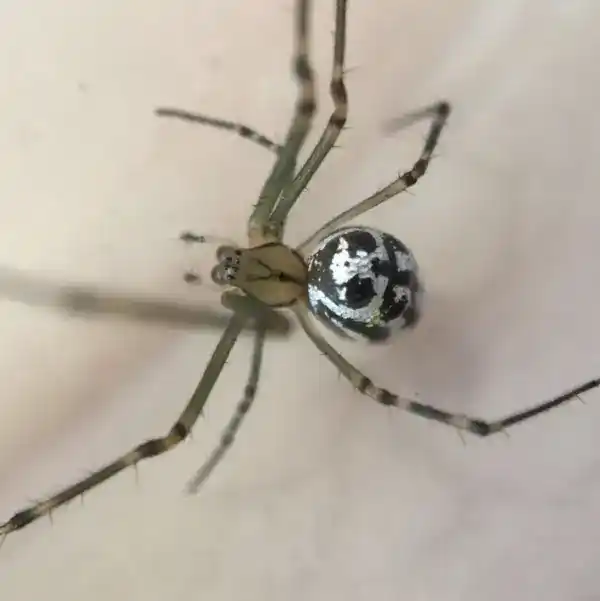
The abdomen has silvery-white patches or stripes, often interspersed with yellow, orange, or black patterns; the female spider has a larger abdomen and its legs often have ring patterns, making it highly recognizable.
Detailed introduction
Silver orb-weaving spiders are not a single species, but a general term for a group of orb-weaving spiders with a silvery sheen on their bodies or abdomens, which weave orb-weaving webs . These spiders mostly belong to the family Araneidae, including some orb-weaving spiders with silvery abdomens, silver garden orb-weaving spiders, and some long-mandated orb-weaving spiders with silvery-white sides or abdomens.
Basic Information
Representative taxonomic range: Various species of "silver orb-weaver spiders" in the family Araneidae (such as some species of the genera Argiope and Leucauge ).
Common Chinese names: Silver garden spider, silver orb-weaver spider, silver-bellied garden spider, etc. (depending on the specific species)
Common English name: Silver Orb-weaving Spiders / Silver Orb-weavers
Size: The body length is generally about 5–20 mm, with females being significantly larger than males, and their leg span can reach several centimeters.
Lifespan: Most species live for about 1 year, while some in warmer regions can live for 1–2 breeding seasons.
Appearance and Identification Features
"Silver Orb-weaver Spider" is not a strict scientific group, but rather a general term for a group of orb-weaver spiders based on their appearance. They share the common characteristic of having distinct silvery-white or metallic patches on their bodies . Common features include:
The abdomen has silvery-white or light metallic patches, stripes, or large mirror-like spots on the back or ventral side.
Some species have a raised front abdomen with silver patches interspersed with yellow, orange, or black markings, forming a striking pattern.
The legs are mostly long, with obvious rings or light-colored joints to adapt to agile movement on the net.
Like other garden spiders, the females are usually larger with bulging abdomens, while the males are smaller and often lurk at the edge of the female's web.
Orb-shaped nets and predation methods
Silver orb-weavers are typical examples of orb-weavers . They weave regular, wheel-shaped orb-like webs between branches, bushes, grass, or buildings.
The net is composed of radial support wires and spiral adhesive wires, forming an intricate concentric circle structure;
Some species weave distinctive "stabilizing lines" (X-shaped or ribbon-like white lines) on their nets to enhance camouflage or attract insects;
Spiders typically lie in wait in a hidden spot in the center or on one side of their web, sensing vibrations of their prey through the silk threads.
When a flying insect crashes into the web and gets stuck, the spider quickly crawls to its prey, bites and wraps it up, and then slowly feeds from a safe location.
Distribution range and habitat
Orb-weaver spiders, with their silvery sheen, are common in temperate and tropical regions worldwide , found in gardens, farmlands, forests, and wetland edges. Typical habitats include:
Gardens, lawns, fences, and shrubs;
Forest edges, forest clearings, and along paths;
Grasses and shrubs along riverbanks, lakeshores, and wetland edges;
Around man-made structures near eaves, streetlights, and window sills.
Many silver garden spiders prefer to weave their webs in places with some light (such as under streetlights or along garden paths) because the light attracts a large number of flying insects, thus increasing their hunting efficiency.
Diet and ecological role
Like other garden spiders, the silver garden spider primarily feeds on various flying insects.
Mosquitoes, midges, and various small dipteran insects;
Moths, small beetles, and leafhoppers, etc.;
Occasionally, they also catch larger insects, and even small spiders.
They prey on large numbers of insects by constructing large orb-like nets, making them important natural enemies in the natural environment, farmland, and gardens. They play a positive role in suppressing pest populations and maintaining ecological balance.
Toxicity and its effects on humans
Most species in the garden spider family are weakly venomous to humans, and silver garden spiders are no exception. Although they possess venom glands to paralyze insects, their size and venom quantity are insufficient to pose a serious threat to healthy adults.
In rare cases of bites, symptoms usually include only mild to moderate localized pain, redness, and transient itching, similar to a wasp or mosquito bite. Severe systemic reactions are extremely rare.
Relationship with humans
The silver orb-weaver spider's beautiful colors and neat orb webs make it highly ornamental and a common subject in nature photography and insect/spider science popularization.
In daily life, if you find their webs in the garden or in front of your house, there is generally no need to remove them. Just avoid placing them directly in front of pedestrian walkways and let them quietly hunt insects in their original spot. They will disappear naturally when the season ends or the webs age.
References
Simon-Brunet, B. 1994. *Silk Webs: A Natural History of Australian Spiders*. Reed Books.
York Main, B. 1976. *The Spider*. Australian Naturalist Library, Collins Publishing.
Connell, NT 2001. "Breeding Behavior of Wasps (Vespaeidae)". Cornell University Entomology Course 325.
Blackledge, TA and Pickett, KM 2000. Predation interactions between mud wasps (Hymenoptera, Mud Wasps) and golden spiders (Arachnidae, Arachnidae) under captive conditions. *Journal of Arachnology* http://www.americanarachnology.org/JoA_tocs/JOA_v28n2.html#211
Frequently Asked Questions
Q1: Are silver garden spiders dangerous to humans?
Normally not. Their venom is mainly used to paralyze insects, and usually causes only mild local reactions in humans.
Unless you are particularly sensitive to spider venom or insect bites, there is generally no need to worry.
Q2: Why do some garden spiders have a silvery-shine abdomen?
Silver or metallic patches may be related to the distribution of scales, reflective fine structures, or pigments on the body surface.
This may help them blend into the background and blur their silhouette in sunlight, or it may have a visually disruptive effect on potential predators or prey.
Q3: Is the silver garden spider a pest or a beneficial insect in the garden?
They prey on large numbers of mosquitoes, moths, and small pests, making them typical natural enemies of beneficial insects.
It is generally recommended to retain their nets, as this helps control pests naturally.
Q4: How should we handle the situation if we don't want the circular mesh to block the passage?
You can choose to gently damage the web in the early morning or evening, or move the spider and the branch with the web to a more secluded location on the side of the garden.
No chemical reagents are required.