Basic Information
Scientific classification
- Chinese name: Woodlice Spider
- Scientific name: *Dysdera crocata* CL Koch, 1838
- Classification: Arthropoda
- Family: Dysdera crocata
Vital signs data
- Body length: Female spiders are about 11–15 mm long, and male spiders are about 9–10 mm long. They are small to medium-sized terrestrial spiders.
- Weight: Light build, typically in the hundreds of milligrams, varying slightly with individual size.
- Lifespan: Estimated to be around 1–2 years, depending on climate conditions and predator pressure.
Significant features
A nocturnal, terrestrial hunter that preys on woodlice and sowbugs; it has only 6 eyes; it has large, protruding mandibles; it does not weave webs, but instead builds silken nests under rocks.
Distribution and Habitat
Originally from the Mediterranean-Europe region, it has now been widely introduced to Europe, America, Australia and other places. It mostly inhabits damp and shady surface environments, such as crevices under rocks, dead wood, bricks and bark, as well as urban gardens and courtyards.
Appearance
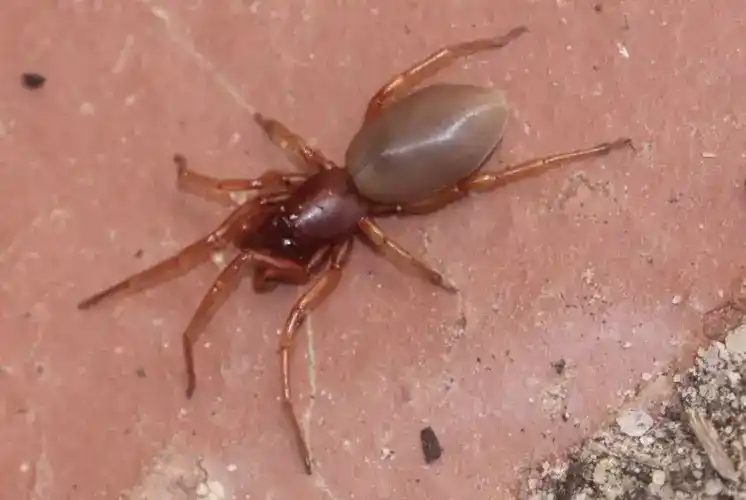
The cephalothorax and legs are orange-red to reddish-brown, the abdomen is pale cream or light gray, the body is slightly cylindrical, and a pair of large, reddish-brown jaw teeth are very conspicuous. It has only 6 eyes.
Detailed introduction
The woodlouse-eating spider ( Dysdera crocata ) is a small, terrestrial spider that preys on woodlice, sowbugs, and other damp surface crustaceans. It is commonly known as the woodlouse hunter spider . Native to the Mediterranean and European regions, it has spread to many parts of the world due to human activity and is commonly found in gardens, yards, and urban green spaces.
Classification and nomenclature
Common Chinese names: Woodlice-eating spider, Sole predator, Woodlice spider (usage may vary slightly by region)
English name: Slater-eating Spider / Woodlouse Spider / Woodlouse Hunter
Scientific name: *Dysdera crocata * CL Koch, 1838
Belongs to: Phylum Arthropoda → Class Arachnida → Order Araneae → Family Dysderidae → Genus Dysdera
Appearance and Identification Features
Woodlice spiders have a very distinctive appearance and are relatively easy to identify in gardens and under stones on the ground.
Size: Female spiders are about 11–15 mm long, and male spiders are about 9–10 mm long. They are small to medium-sized terrestrial spiders.
Body color: The cephalothorax and legs are orange-red to reddish-brown, while the abdomen is light cream, light gray or light yellowish-brown, creating a striking contrast;
Huge fangs: A pair of large, protruding mandibles (chelicerae) are much more prominent than those of a small spider, used to pierce the hard carapace of a woodlice;
Number of eyes: Only 6 eyes , closely arranged in an oval shape, unlike most spiders that have 8 eyes;
Body shape: The body is slightly cylindrical with a compact torso and relatively short legs, but it is good at moving through cracks in the ground.
Distribution range and habitat
The woodlice spider, native to the Mediterranean and Europe, has become a widespread invasive or sympatric species , recorded on multiple continents. Commonly found in:
Under the flagstones, bricks, and deadwood in urban and rural gardens, vegetable plots, and courtyards;
Damp and shady places such as parks, green belts, the base of walls, and fences;
Areas with abundant forest edges, thickets, and leaf litter;
They occasionally appear in damp crevices near basements, warehouses, or indoor corners.
It prefers damp, hidden microenvironments close to the ground , which are often areas where woodlice and sowbugs gather in large numbers.
Lifestyle and Diet
The woodlouse is a typical nocturnal, terrestrial hunter :
During the day, they mostly hide under rocks, planks, or piles of fallen leaves, or in their self-built silky "bag-like nests" to rest and molt.
At night, they leave their nests and actively roam the ground in search of prey;
Its main prey consists of terrestrial isopods such as woodlice and sowbugs , but it also preys on other small arthropods.
When it spots its prey, it pounces with agility, clamping down on it from both sides with its powerful jaws and piercing its carapace to inject venom. It then slowly feeds from a safe location. It does not rely on nets, but entirely on proactive searching and ambushes.
Reproduction and "Silk Sac" Nests
The woodlouse spider does not weave webs for prey , but instead builds a small, silken nest under rocks or in crevices for:
Hiding and resting during the day;
Provide a relatively enclosed and safe space during molting;
The female spider lays eggs and guards the egg sac.
The female spider lays dozens of eggs in the nest and seals the entrance, remaining there until the young spiders hatch and are able to move around. This behavior greatly increases the early survival rate of the young spiders.
Toxicity and its effects on humans
Because of its large mandibles, a bite from a woodlice spider can cause a noticeable stinging sensation , and may result in local redness, swelling, itching, or a brief burning sensation. However, current data indicates that its venom generally does not pose a serious medical hazard to healthy adults and almost never causes systemic poisoning.
Common suggestions include:
After being bitten, wash the wound with soap and water and avoid scratching;
Applying a cold compress locally can relieve pain and swelling;
If persistent severe pain, difficulty breathing, systemic allergic reaction occurs, or if the injured person is a child, elderly person, or person with allergies, seek medical attention immediately.
Ecological role and its relationship with humans
Woodlice spiders help control the populations of woodlice, sowbugs, and other small invertebrates in gardens, vegetable patches, and near human settlements by preying on large numbers of them. In most cases, they can be considered a beneficial predator spider .
If you find it in your home or yard, there's generally no need to panic or use insecticides. Usually, simply wearing gloves or using tools, you can gently move any individuals you encounter while turning over stones to a more secluded corner of the garden.
Frequently Asked Questions
Q1: Why is it called "slater-eating spider"?
"Slater" is the English word for woodlice or sowbugs (terrestrial isopods).
This spider primarily and most adeptly preys on small crustaceans, hence its name "slater-eating spider".
Q2: Are woodlice spiders dangerous to humans?
It has venomous fangs, and a bite can be painful, causing local redness, swelling, and itching, but it is generally not considered to pose a serious danger to healthy adults.
A very small number of people are highly sensitive to spider venom or insect bites and should seek medical attention immediately if they experience significant discomfort.
Q3: If I encounter a woodlice spider in my garden or yard, do I need to get rid of it?
Usually, this isn't necessary. They are mostly active at night, hiding under rocks and dead wood. They neither actively attack humans nor hinder human activity, and they also help reduce the population of woodlice and other small invertebrates.
It is an "invisible helper" that is fundamentally beneficial to human beings.
Q4: How to reduce the number of woodlice spiders entering the house?
Keeping the room dry, sealing wall and door cracks, and clearing away piles of clutter close to the floor can reduce the chances of woodlice and spiders getting in.
If an individual enters the room, gently cover them with a cup and a piece of cardboard and move them outdoors.