Basic Information
Scientific classification
- Chinese name: Wild dog
- Scientific names: Wild dog, Cape hound, African painted dog, spotted wolf, Star Child
- Order: Carnivora
- Genus and species: wild dog
Vital signs data
- Body length: 100 cm, tail length: 30-45 cm
- Weight: 17–36 kg
- Lifespan: 5-10 years
Significant features
They use calls to locate prey and employ cooperative group hunting methods to kill medium-sized ungulates.
Distribution and Habitat
African savanna, scrubland, and sparse woodland are mainly found in parts of East and South Africa. In addition, dingoes inhabit tropical forests, grasslands, deserts, and highlands.
Appearance
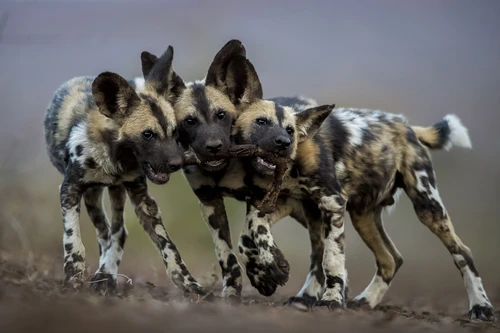
With a mottled coat including black, yellow, and white, they possess exceptional endurance and often hunt in packs, each individual exhibiting unique coat patterns. They have clawless forelimbs and large premolars capable of grinding large bones, similar to hyenas.
Detailed introduction
Wild dogs are mysterious and dangerous natural predators, a group of wild canids found all over the world, possessing high adaptability, complex social structures, and astonishing survival abilities. They are among the top predators in nature, able to survive in a variety of environments, from tropical savannas to arid deserts. Wild dogs' hunting skills, group cooperation, and unique physiological characteristics make them an indispensable part of the ecosystem.
This article will provide a detailed introduction to the types of wild dogs, their behavioral habits, survival methods, and their important roles in the ecosystem.
I. What are stray dogs?
Wild dogs are not a specific type of animal, but a collective term for various wild canine species. They share a common ancestor with domesticated dogs, but have evolved unique survival skills in the wild. Wild dogs typically live in packs and are known for their complex social structures and collective hunting.
Common types of stray dogs include:
African Wild Dog : Also known as spotted hyena, it lives in sub-Saharan Africa.
Dingo : Primarily inhabits the wilderness areas of Australia.
Asian dhole : Widely distributed in South Asia and Southeast Asia.
II. Types and Distribution of Stray Dogs
1. African Wild Dog
Physical characteristics:
African wild dogs are medium-sized with large, round ears, and typically weigh between 18 and 36 kilograms. Their coats are uniquely colored, with black, white, and tan spots, hence the name "spotted hyena." Each African wild dog's markings are unique, much like a human fingerprint.
Distribution area:
African wild dogs are mainly distributed in sub-Saharan Africa, including countries such as Botswana, Namibia, Tanzania, and South Africa. They prefer open grasslands and savannas.
Social structure:
African wild dogs have an extremely complex social structure, typically based on small family groups of 5 to 20 individuals. They hunt and raise their young cooperatively, and teamwork is crucial for their survival.
Hunting methods:
African wild dogs are excellent group hunters, adept at long chases. Their main prey includes herbivores such as gazelles and zebras. Thanks to their exceptional endurance and teamwork, African wild dogs boast a hunting success rate of up to 80%, far exceeding that of other large carnivores like lions.
2. Dingo
Physical characteristics:
Dingoes are small dogs with reddish-yellow fur, erect ears, slender bodies, long and agile legs, and weigh between 13 and 20 kilograms. They resemble domestic dogs but are more wild.
Distribution area:
Dingoes are mainly distributed in the deserts, tropical forests, and grasslands of Australia. They are adapted to a variety of harsh environments, and can be found from arid inland areas to humid coastal regions.
Unique behavior:
Dingoes are highly solitary predators, capable of hunting alone or in small groups. They are nocturnal animals, preferring to hunt at night, and their prey includes small mammals, birds, and reptiles.
Environmental impact:
In Australia, dingoes have a significant impact on the local ecosystem. While sometimes considered pests that threaten agriculture and livestock due to their predation on small mammals and livestock, they also play a crucial role in controlling the populations of animals such as rabbits and kangaroos.
3. Asian Dhole
Physical characteristics:
Asian jackals are similar in size to medium-sized domestic dogs, weighing approximately 10 to 20 kilograms. They have reddish-brown or yellowish-brown fur, a bushy tail, and slightly rounded ears.
Distribution area:
The Asian dhole is widely distributed in South and Southeast Asia, including India, Nepal, Thailand, and Malaysia, and its habitats include forests, grasslands, and mountains.
Group hunting:
Like African wild dogs, Asian dholes primarily hunt in packs. Their main prey includes deer, wild boar, and other medium to large herbivores. Dholes cooperate extremely closely within their groups, employing complex tactical divisions to surround and capture prey.
Threats and Protection:
The Asian dhole is currently listed as an endangered species, and its population has declined sharply due to habitat loss and threats from human activities.
III. Behavior and Habits of Stray Dogs
1. Social behavior
Wild dogs are highly social animals, typically living in family packs. Members of the pack cooperate closely, demonstrating the advantages of collective teamwork in everything from hunting and sharing food to caring for pups. African wild dogs, in particular, prioritize caring for sick or elderly members, a social behavior rarely seen in other predators.
2. Hunting Techniques
Wild dogs employ slightly different hunting methods depending on the species, but they all excel at teamwork. By utilizing collective intelligence and speed, wild dogs can quickly surround and capture prey. African wild dogs tend to choose weaker prey, chasing them and then sharing the kill cooperatively, while dingoes and Asian jackals may act alone, quickly eliminating smaller prey.
3. Territoriality
Wild dogs have a strong sense of territorial protection. They mark and defend their territory by using urine, feces, and barking to avoid conflicts with other wild animals or groups.
IV. The role of wild dogs in the ecosystem
As apex predators, wild dogs play a vital role in maintaining ecological balance. By preying on large herbivores, they effectively control prey populations and prevent excessive depletion of vegetation. Furthermore, their hunting behavior helps to eliminate weak or sick animals, thus promoting the reproduction of healthy species.
In some areas, the decline or extinction of wild dog populations has led to food chain imbalances and ecological disasters. Therefore, protecting wild dog populations is crucial for maintaining ecosystem stability.
V. Current Status of Stray Dog Conservation
Although wild dog populations remain relatively stable in some areas, they face an increasingly severe survival crisis due to habitat loss, expansion of human activities, disease transmission, and increased conflict with humans. African wild dogs and Asian jackals, in particular, have seen their numbers decline dramatically over the past few decades and are now listed as endangered species.
Protective measures include:
Habitat protection : Protect wild dog habitats from human encroachment by establishing nature reserves and national parks.
Reduce conflict with humans : Reduce conflicts caused by stray dogs preying on livestock by educating local communities.
Disease control : Monitoring and preventing the spread of canine diseases, such as canine distemper and other infectious diseases that threaten stray dog populations.
Wild dogs are important predators in nature, and their existence is crucial for maintaining the balance of ecosystems. Although they face many challenges globally, with effective conservation measures, we still have hope of ensuring the continued survival and prosperity of their populations.
VI. The Reproduction Methods and Process of Stray Dogs
Wild dogs reproduce in a similar way to domestic dogs, but because they live in the wild, their reproductive behavior is more restricted and influenced by natural conditions. The following is a detailed introduction to wild dog reproduction:
1. Reproductive cycle and estrus period
mating season : Stray dogs typically go into heat twice a year (more common in spring and autumn), but this can vary depending on climate and food availability.
Characteristics of estrus : When a female dog enters estrus, she will emit a specific scent to attract male dogs, and male dogs may fight fiercely for mating rights.
Mating : The winning male dog will mate with the female dog. Usually, only the larger and stronger male dogs have a better chance of reproducing.
2. Pregnancy and childbirth
Gestation period : The gestation period for a female dog is approximately 58-65 days , with an average of 63 days.
Habitat selection : The mother dog will choose a secluded and safe place (such as a cave, bush or abandoned building) as a den for giving birth and raising puppies.
Litter size : Each litter typically produces 4-10 puppies , depending on the mother's health and environmental conditions.
3. The growth process of cubs
Lactation period : The mother dog will nurse her puppies with her own milk for the first 4-6 weeks. During this stage, the puppies are completely dependent on the mother dog and cannot move independently.
Weaning and Learning : Around 6-8 weeks old, the puppies begin to be weaned and gradually learn foraging and social behaviors. The mother dog and other adult wild dogs may teach the puppies basic survival skills, such as hunting and avoiding danger.
Independent living : Around 3-4 months old, the cubs begin to try to move around independently, and usually become completely independent around one year old.
4. Reproduction success rate and limiting factors
Food resources : When food is plentiful in the wild, the breeding success rate is higher; conversely, if food is scarce, the mother dog may not have enough energy to nurse her puppies, leading to their death.
Predators and environment : The survival rate of cubs is low, and they are easily threatened by predators (such as foxes, eagles, etc.) or severe weather.
Diseases and parasites : Stray dogs have poor health, and diseases (such as rabies and canine distemper) are a major limiting factor for reproduction.
5. Pack breeding behavior of wild dogs
Wild dogs typically live in small groups, and some groups may have a dominant individual. In situations of resource scarcity, a dominant female dog may restrict the reproduction of other female dogs, thereby ensuring the survival of the pups.
When wild dog populations expand too rapidly, it can lead to food shortages or conflicts with humans, which is why many areas implement sterilization to control wild dogs.
Wild dogs have a high reproductive rate, but their population fluctuates greatly due to limitations imposed by the natural environment and resources. Understanding their reproductive behavior can help us develop better strategies for protecting or controlling wild dog populations.
The Reproduction Methods and Processes of Stray Dogs
Wild dogs reproduce in a similar way to domestic dogs, but because they live in the wild, their reproductive behavior is more restricted and influenced by natural conditions. The following is a detailed introduction to wild dog reproduction:
1. Reproductive cycle and estrus period
mating season : Stray dogs typically go into heat twice a year (more common in spring and autumn), but this can vary depending on climate and food availability.
Characteristics of estrus : When a female dog enters estrus, she will emit a specific scent to attract male dogs, and male dogs may fight fiercely for mating rights.
Mating : The winning male dog will mate with the female dog. Usually, only the larger and stronger male dogs have a better chance of reproducing.
2. Pregnancy and childbirth
Gestation period : The gestation period for a female dog is approximately 58-65 days , with an average of 63 days.
Habitat selection : The mother dog will choose a secluded and safe place (such as a cave, bush or abandoned building) as a den for giving birth and raising puppies.
Litter size : Each litter typically produces 4-10 puppies , depending on the mother's health and environmental conditions.
3. The growth process of cubs
Lactation period : The mother dog will nurse her puppies with her own milk for the first 4-6 weeks. During this stage, the puppies are completely dependent on the mother dog and cannot move independently.
Weaning and Learning : Around 6-8 weeks old, the puppies begin to be weaned and gradually learn foraging and social behaviors. The mother dog and other adult wild dogs may teach the puppies basic survival skills, such as hunting and avoiding danger.
Independent living : Around 3-4 months old, the cubs begin to try to move around independently, and usually become completely independent around one year old.
4. Reproduction success rate and limiting factors
Food resources : When food is plentiful in the wild, the breeding success rate is higher; conversely, if food is scarce, the mother dog may not have enough energy to nurse her puppies, leading to their death.
Predators and environment : The survival rate of cubs is low, and they are easily threatened by predators (such as foxes, eagles, etc.) or severe weather.
Diseases and parasites : Stray dogs have poor health, and diseases (such as rabies and canine distemper) are a major limiting factor for reproduction.
5. Pack breeding behavior of wild dogs
Wild dogs typically live in small groups, and some groups may have a dominant individual. In situations of resource scarcity, a dominant female dog may restrict the reproduction of other female dogs, thereby ensuring the survival of the pups.
When wild dog populations expand too rapidly, it can lead to food shortages or conflicts with humans, which is why many areas implement sterilization to control wild dogs.
VII. Social Structure and Group Behavior of Stray Dogs
Stray dogs typically live in small groups, forming a relatively loose but somewhat structured social organization. The following is a detailed analysis of the social behavior and group characteristics of stray dogs:
1. Social Structure: Hierarchy and Role Allocation
Core Individual :
Wild dog packs are typically led by one or more experienced adult dogs (usually females or strong males) who are responsible for guiding the pack to find food and protect their territory.Group size :
Wild dogs typically form groups of 2 to 10 individuals , but in areas with abundant food or safer habitats, groups can be larger.Group cooperation :
Cooperative hunting : Although not as highly organized as wolves, wild dogs will cooperate to hunt small prey, especially in resource-scarce environments.
Puppy protection : The mother dog may share the responsibility of protecting and feeding the puppies with other adult dogs, increasing their survival rate.
Individuals living alone :
Some stray dogs, after failing to secure mating opportunities or being expelled from their packs, choose to live alone and are known as "stray dogs." These solitary individuals may try to join other groups or continue living independently.
2. Territoriality and Group Interaction
Territory Scope :
Wild dogs have a wide range, typically covering several square kilometers . They mark their territory boundaries with urine, feces, and scratches.Territory Conflict :
When the territories of different groups of wild dogs overlap, fights may occur, but in most cases, they will avoid direct conflict through threatening barks and body language.Group relationships :
Wild dog packs have loosely defined relationships, and the level of intimacy between individuals varies depending on resource availability. When food is plentiful, the pack is more stable; when resources are scarce, individuals may conflict over food.
3. Group behavior: foraging and hunting
Foraging mode :
Wild dogs tend to forage opportunistically, with food sources including carrion, human garbage, and small animals.
On the outskirts of the city, they appear in groups at garbage dumps or in the back alleys of restaurants.
In rural or wild areas, they may prey on small animals such as rabbits, birds, and rodents.
Cooperative hunting :
Although wild dogs do not possess the sophisticated cooperative skills of wolf packs, they divide the tasks of chasing prey. For example, some individuals are responsible for driving the prey, while others are responsible for ambushing it.
4. Social behavior and communication methods of stray dogs
Language and Signals :
Stray dogs communicate through barking, growling, and body language. For example:A growl : a threat or warning.
Tail position : A tail held high indicates confidence, while a tail tucked between the legs indicates submission.
Licking : used to show goodwill or ease tension.
Social interaction :
Playful behavior occasionally occurs among group members, especially puppies. This interaction helps strengthen the bond between individuals.
5. The group advantages and weaknesses of wild dogs
Advantages :
Resource sharing : Group living increases the success rate of foraging and defense.
Clump protection : Groups are able to more effectively protect their young from predators.
weakness :
Disease transmission : Densely populated living conditions can easily lead to the rapid spread of parasites and diseases (such as canine distemper and rabies).
Food competition : When resources are scarce, competition for food may lead to division within a group.
6. The social behavior of stray dogs and their relationship with humans
Contact with humans :
Stray dogs often roam around cities or rural areas in search of food. Due to their diverse behaviors, their interactions with humans may include the following:Positive aspect : Humans feed stray dogs, forming a dependency relationship.
Negative : Stray dogs may attack poultry, rummage through garbage, and even threaten human safety.
Response strategies :
Proper sterilization and vaccination of stray dog populations can help control their numbers and reduce the spread of disease.
To improve human understanding of stray dog behavior and reduce conflict.
While the social structure of wild dogs is not as complex as that of wolves, it still exhibits a degree of hierarchy and cooperation. Understanding their group behavior helps in developing better management and protection measures, especially in areas with dense human activity, where a balanced and coordinated relationship with wild dogs is essential.
8. The difference between stray dogs and domestic dogs
Although both wild dogs and domestic dogs belong to the genus *Canis* , they exhibit significant differences in appearance, habits, and social relationships due to variations in living environment, degree of domestication, and behavioral characteristics. The following is a detailed explanation of the main differences:
1. Origin and Domestication
Stray dogs :
Stray dogs are usually descendants of dogs that have been freed from human control for a long time, and may be a hybrid of domestic or wild breeds. Their behavior and characteristics are more adapted to the wild environment, giving them a stronger ability to survive.Domestic dogs :
Domestic dogs, through thousands of years of domestication, have developed a close symbiotic relationship with humans, focusing intently on human commands and habits. 2. HabitatStray dogs :
Their habitats are wide-ranging, including forests, grasslands, wastelands, and urban fringe areas. They are more dependent on the resources of the natural environment.Domestic dogs :
They primarily live in human households, relying on their owners for food, shelter, and care.
3. Dietary habits
Stray dogs :
They primarily forage opportunistically, feeding on carrion, small animals, and human waste. When hungry, they will attack poultry or other small animals.Domestic dogs :
Their diet is determined by their owners, usually consisting of specialized dog food or formulated meals, and they do not possess the ability to hunt in the wild.
4. Social Behavior
Stray dogs :
Wild dog packs have a loose hierarchical structure with limited interaction among members. Individual behavior is primarily driven by survival needs.Domestic dogs :
Domestic dogs rely more on interactions with their owners and other dogs, exhibiting clear intimacy and obedience.
5. Differences in appearance and body shape
Stray dogs :
Their appearance is more androgynous, with a medium build, and they typically have short hair and camouflage colors of brown or gray to adapt to their environment.Domestic dogs :
Due to long-term artificial breeding, the breeds have diversified, with great variations in body shape, coat color, and characteristics, ranging from toy dogs to working dogs.
Comparison table of differences between stray dogs and domestic dogs
| characteristic | stray dogs | domestic dog |
|---|---|---|
| origin | Dogs or hybrid offspring that have escaped human control | Dog breeds that have been domesticated by humans over a long period of time |
| Habitat | Natural environment, urban fringe, etc. | In the home or in areas where people live |
| Dietary habits | Rotten flesh, garbage, small animals, etc. | Specially formulated dog food or human food |
| social behavior | Loose group structure, low level of cooperation | Highly interactive with its owner and other members of its own species, exhibiting a high degree of obedience. |
| physical characteristics | Uniform coat color, adapted for camouflage; medium body size | Diverse breeds, rich in body shape and coat color |
The above comparison shows that wild dogs are more feral and adaptable, while domestic dogs exhibit a high degree of dependence on humans. This difference is the result of the combined effects of long-term domestication and rewilding processes.
9. How to train and manage stray dogs
Training and managing stray dogs is more complex than training domestic dogs because they typically lack trust in humans and are accustomed to survival in the wild. Effective management of stray dog behavior usually requires professional intervention and patience. Here are some common methods and strategies:
1. Capture and Adaptation Phase
Capture and Safe Environment :
Because wild dogs have lived in the wild for a long time, they are usually afraid of humans. Therefore, safety must be the top priority when dealing with wild dogs directly. Typically, after capturing a wild dog, it needs to be placed in a safe and enclosed environment, such as a specialized animal sanctuary, so that it can adapt to human surroundings.Building trust :
Once the stray dogs are captured, the next step is to build trust. Regular feeding and gentle contact can help them adjust to a relationship with humans. This process may take weeks or even months, gradually reducing their fear.
2. Behavior Modification and Training
Basic command training :
When training stray dogs, first ensure they are accustomed to basic commands (such as "sit" and "come"). Use rewards (such as food or treats) to reinforce positive behaviors and avoid punitive methods to prevent triggering defensive responses in the dogs.Avoid aggressive behavior :
Guide their behavior through positive reinforcement, such as rewarding quiet or non-aggressive behavior instead of punishing aggressive behavior. Stray dogs may develop aggression towards strangers due to long-term survival stress, so behavioral training must be gradual.Group Management :
For wild dogs living in packs, conflict can be reduced by guiding their pack behavior. For example, dividing them into smaller groups or limiting food resources can prevent conflicts arising from competition for resources.
3. Socialization training
Contact with other animals :
Socialization training is especially important for stray dogs, particularly those who lack normal contact with other animals from a young age. In a suitable environment, they can be gradually introduced to interact with other dogs, poultry, and even humans to reduce their aggression towards the outside world.Interaction with humans :
Allow stray dogs to gradually come into contact with people of different ages and genders, especially gentle people, to help them build trust and dependence on humans. Long-term positive interactions can help them transform into more docile individuals.
10. The impact of stray dogs on humans
The impact of stray dogs on humans can be discussed from multiple perspectives, including both positive and negative effects.
1. Negative Impacts
Health risks :
Disease transmission : Stray dogs may carry a variety of infectious diseases, such as rabies, canine distemper, and parvovirus. These diseases not only endanger their own health but can also be transmitted to humans or domestic animals through bites or contact.
Parasites : Stray dogs often carry parasites such as fleas, ticks, and roundworms, which can cause health problems such as skin diseases and respiratory diseases.
Security Question :
Aggressive behavior : Some wild dogs can become aggressive when they feel threatened, especially when they come into contact with humans. If a pack of wild dogs feels invaded or is protecting its pups, they may attack humans or other animals.
Conflicts and fights : When stray dogs and human settlements overlap, conflicts may occur with poultry and pets, and may even threaten human safety.
Environmental damage :
Competition for food resources : Stray dogs sometimes compete with humans for food, especially in urban or rural garbage dumps. They may also damage crops or poultry, affecting the lives of local residents.
2. Positive Impacts
Ecological role :
Wild dogs play a role in the ecosystem in some areas, particularly in controlling the populations of small animals such as rodents. Their predation helps maintain ecological balance and prevents certain species from overproducing.Cultural and educational values :
In some cultures, wild dogs are seen as symbols of courage and adaptability, inspiring respect for the survival wisdom of animals. Furthermore, studying the behavior and survival strategies of wild dogs contributes to a better understanding of animal behavior and ecology.
Stray dogs differ significantly from domestic dogs, and training and managing their behavior requires specialized skills and patience. While stray dogs may pose some health and safety risks to humans, they also play an important role in the ecosystem. Through proper training and management, their negative impact on humans can be reduced, while simultaneously enhancing harmonious coexistence with humans.
Summarize
Wild dogs have a high reproductive rate, but their population fluctuates greatly due to limitations imposed by the natural environment and resources. Understanding their reproductive behavior can help us develop better strategies for protecting or controlling wild dog populations.
Frequently Asked Questions
5 common questions about stray dogs
What are stray dogs? What are the differences between stray dogs and domestic dogs?
Stray dogs generally refer to dogs that live freely in the wild without owners. They may be descendants of stray domestic dogs or dogs that have adapted to the wild environment over a long period of time. Compared to domestic dogs, stray dogs are usually more independent, alert, and their behavior is more driven by survival instincts, such as hunting small animals or scavenging in garbage, rather than relying on humans for food.
Where do stray dogs usually live?
Stray dogs are widely distributed and can adapt to almost any environment, including urban suburbs, rural areas, wilderness, and tropical rainforests. Urban stray dogs tend to frequent garbage dumps, abandoned buildings, and parks, while rural or wild stray dogs may inhabit caves, bushes, or riverbanks.
Do stray dogs attack humans?
Wild dogs are generally wary of humans and will not attack them unprovoked. However, they may become aggressive if they feel threatened, are provoked, or are protecting their pups. Furthermore, packs of wild dogs are potentially more threatening than lone wild dogs, especially when foraging.
What do wild dogs eat? What are their main food sources?
Small animals : such as birds, rodents and insects.
Carrion : They feed on the carcasses of dead animals.
Human garbage : In urban areas, rummaging through garbage is a common way for stray dogs to find food.
Plants : Fruits or plant roots are also occasionally eaten, especially when food is scarce.
Wild dogs are omnivorous and have a diverse diet, typically including:
How to deal with stray dogs? What should you do if you encounter a pack of stray dogs?
Stay calm : Don't panic and run, as running may trigger their chasing instincts.
Avoid provocation : Do not look directly into a dog's eyes, and do not try to drive or attack them.
Retreat slowly : Leave their activity area in a calm and unhurried manner.
Avoid feeding them : Feeding them may cause stray dogs to gather, creating a safety hazard.
If you encounter a pack of stray dogs, it is best to find a high place or a closed area to take shelter, and at the same time call the police or contact a professional rescue organization as soon as possible.
If you encounter stray dogs, the following methods can help you protect yourself: