Basic Information
Scientific classification
- Chinese name: Caiman
- Scientific name: Central American alligator, spectacled alligator
- Order: Carnivora
- Family: Alligator
Vital signs data
- Body length: 1.2-1.8 meters
- Weight: 40 kg
- Lifespan: 30-40 years
Significant features
Top predator, fierce in nature
Distribution and Habitat
Primarily found in southern and central America, they inhabit the edges of rivers and bodies of water and are excellent swimmers.
Appearance
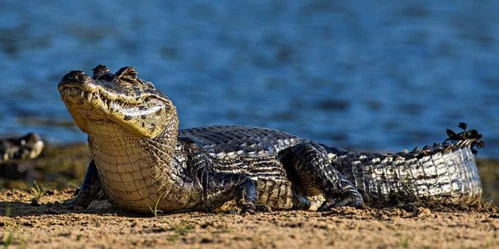
The eyes are large, with a transverse bony ridge between the anterior margins of the eyes; the forehead is high, with bony walls between the nostrils; the snout is particularly narrow, slightly elongated, and slightly raised at the tip; both jaws have grooved conical teeth, which are not visible; the bony plates on the ventral scales are well-developed and overlap. Their bodies are mainly dark olive green, with relatively bright skin color.
Detailed introduction
Caiman: The stealthy predator of tropical waters
The caiman is a crocodile reptile that inhabits freshwater rivers, lakes, and wetlands in Central and South America, renowned for its powerful hunting abilities and adaptability. As a member of the crocodile family, the caiman not only occupies an important position in the ecosystem but also attracts attention for its unique appearance and lifestyle. This article will provide a detailed introduction to the caiman's habits, habitat, and importance in the ecosystem.
1. Species and Distribution of Caimans
Caimans belong to the genus *Caimanus* within the family Alligatoridae. They comprise several different species, the most common of which include:
Broad-snouted caiman (Caiman crocodilus): This is the most widely distributed species, mainly inhabiting rivers, swamps, and lakes in Central and South America.
Black Caiman (Melanosuchus niger): This caiman is enormous and is one of the largest members of the caiman family. It is found in the Amazon basin.
Flat-snouted caiman (Paleosuchus palpebrosus): Small in size, it inhabits forest rivers and streams and is distributed in South America.
Caimans primarily inhabit freshwater environments in tropical and subtropical regions, particularly preferring quiet, shallow wetlands and riverine areas. They are widely distributed in the Amazon rainforest, the Orinoco River basin, and Panama, among other places in South America.
2. Appearance and characteristics of caimans
Caimans resemble other crocodiles in appearance, but they have some unique characteristics. Compared to crocodiles and alligators, caimans have wider heads and their eyes are located on the top of their heads, making them better suited for observing prey underwater. Their skin is covered with thick scales, which not only provide them with defense but also help them adapt to living in environments filled with vegetation and mud.
The size of adult caimans varies by species; black caimans can grow to 5 meters or even longer, while flat-snouted caimans are typically only about 1.5 meters long. Caimans' powerful jaws and sharp teeth allow them to easily capture and crush their prey.
3. Caiman predation behavior
Caimans are cold-blooded animals and primarily carnivorous. Their hunting strategy usually involves ambush. Caimans will quietly hide in the water, with only their eyes and nostrils above the surface. Once prey approaches, they will quickly strike and drag it into the water.
Caimans have a diverse diet, preying on fish, birds, small mammals, amphibians , and other reptiles. Sometimes, they also prey on smaller crocodiles or other caimans in the water. They are most active at night, relying primarily on their excellent vision in the dark to hunt.
Juvenile caimans primarily prey on insects, small fish, and small invertebrates, but as they grow larger, their prey expands accordingly.
4. Caiman Reproduction and Survival
Caimans nest and breed in wetlands and along rivers. Female caimans dig burrows in moist mud or vegetation to lay their eggs, typically laying 15-40 eggs at a time. They are very protective of their nests, guarding the vicinity to ensure the eggs are not attacked by predators.
Caiman eggs typically hatch in 60 to 90 days , and temperature determines the sex of the hatchlings. Higher temperatures produce males, while lower temperatures produce females. This temperature-dependent sex determination is similar to that of other crocodiles.
Newborn caimans are very vulnerable and susceptible to attacks from predators such as birds, larger fish, or mammals. However, the mother caiman will actively protect her young until they are able to support themselves.
5. The role of the caiman in the ecosystem
Caimans play a vital predator role in ecosystems, particularly in controlling fish and small animal populations in their habitats. By preying on these animals, caimans help maintain a balance in the food chain, preventing the overpopulation of certain species.
Caimans' impact on ecosystems extends beyond predation. By scouring riverbeds and disturbing the sediment, they alter water flow, influencing plant distribution and water quality. This behavior makes caimans act as "ecological engineers" in their habitats, promoting biodiversity.
Furthermore, caiman carcasses provide an important food source for other scavengers and insects. This energy cycle further solidifies the caiman's crucial role in the ecosystem.
6. The current status and challenges of caiman conservation
Although caimans remain widely distributed across many parts of Central and South America, they face threats from habitat loss and illegal hunting. The destruction of wetlands and rainforests has reduced caiman habitats, making it difficult for them to survive and reproduce.
Some species of caimans, such as the black caiman, have seen their numbers drastically reduced due to large-scale hunting by humans. In the past, they were overhunted primarily for their leather. Although caiman hunting is now strictly regulated by law, illegal hunting still occurs.
Conservation measures for caimans include habitat restoration, strengthened law enforcement, and the development of ecotourism. These measures can help reduce habitat destruction and help caimans recover their populations.
7. The relationship between caimans and humans
While caimans primarily inhabit remote wetlands, they do have some contact with humans. In some areas, caimans are found in waters close to human settlements. Although they are generally not a threat to humans, occasional conflicts, especially when they feel threatened, can trigger aggressive behavior. Therefore, people living near caimans need to be vigilant and ensure they do not disturb their habitat.
On the other hand, caimans are also a popular subject for ecotourism, with many nature enthusiasts and adventurers traveling to the wetlands and rivers of South America to observe this mysterious predator. Through ecotourism, people can not only learn about the habits of caimans but also help promote local environmental protection efforts.
Caimans, as ancient predators, play an irreplaceable role in the freshwater ecosystems of Central and South America. They not only maintain the balance of the food chain through predation but also promote biodiversity by altering their habitats. However, due to habitat destruction and illegal hunting, the survival of caimans is challenged. By strengthening conservation measures and raising public awareness of environmental protection, the future of caimans and their habitats can be secured.
The following table shows the main species of caimans and their distribution:
| Caiman species | Latin name | body shape | Main distribution area |
|---|---|---|---|
| broad-snouted caiman | Caiman crocodilus | 1.5-2.5 meters | Rivers, swamps, and lakes in Central and South America |
| Black Caiman | Melanosuchus niger | 4-5 meters | Amazon basin (Brazil, Peru, Colombia, Ecuador) |
| Flat-snout caiman | Paleosuchus palpebrosus | 1-1.5 meters | Forests, rivers, and streams in South America, including Brazil, Guyana, and Peru. |
| Spectacled Caiman | Caiman yacare | 2-3 meters | Swamps and rivers in Argentina, Bolivia, Paraguay, and Brazil |
| Paraguayan caiman | Caiman latirostris | 2.5-3 meters | Wetlands and rivers in Argentina, Brazil, and Uruguay |
This table summarizes the main species of caimans, their Latin names, body sizes, and geographical distribution, which helps to provide a more intuitive understanding of the living environments and characteristics of various caiman species.
Caiman crisis and its status as a food source
Although caimans are widely distributed across many parts of Central and South America, they face various threats, primarily from habitat destruction, illegal hunting, and killing for food. These factors have a significant impact on the long-term survival of caiman populations.
1. The Caiman Crisis
Habitat destruction : Due to urban expansion, agricultural development, and the construction of water conservancy projects, the natural habitats of caimans, such as wetlands and rivers, are constantly decreasing. Particularly in the Amazon basin, rainforest deforestation is shrinking the caiman's habitat. Wetland destruction directly impacts the survival and reproduction of caimans.
Illegal hunting : Caiman leather was once a sought-after luxury item. Although hunting crocodiles is now strictly restricted or prohibited in many countries, illegal hunting still exists. Caiman leather products, such as bags and shoes, are still traded on some illegal markets.
Pollution : Pollutants in rivers and wetlands, including agricultural chemicals and industrial wastewater, have impacted the caiman's habitat. These pollutants not only disrupt the caiman's food sources but also negatively affect their health.
Climate change : Global warming is also impacting water temperature and rainfall in caiman habitats. In particular, temperature fluctuations during incubation can lead to sex imbalances, which may affect the future health and balance of caiman populations.
2. Which countries use caimans as food?
Despite facing a major habitat crisis, caimans are still hunted for food in some countries. Caiman meat is considered a delicacy in certain cultures and regions; the following are some countries and regions where caimans are consumed:
Brazil : In parts of the Amazon basin, caiman meat is used as a protein source by local indigenous peoples and riverside communities. Although large-scale hunting is discouraged by the authorities, caimans are still hunted for food in some remote areas.
Bolivia : In Bolivia, caiman meat occasionally appears on the tables of rural and remote areas, especially around the Amazon basin. This meat is considered a game animal, and some believe it to be delicious and nutritious.
Peru : In the Peruvian Amazon, caiman meat is sometimes used in the daily diet, especially in riverside villages. Although the Peruvian government has imposed certain restrictions on caiman hunting, locals still engage in small-scale, subsistence hunting.
Colombia : In Colombia, caiman meat is occasionally used for food, especially in remote Amazonian communities. The government has taken measures to protect these endangered species, but local hunting practices remain difficult to eradicate completely.
3. International efforts to protect caimans
Many countries and international organizations are taking steps to protect caimans and their habitats, and to reduce their overhunting for food and leather products:
The Convention on International Trade in Endangered Species of Wild Fauna and Flora (CITES) : CITES has listed many caiman species in its appendices, prohibiting or severely restricting their international trade. This means that large-scale hunting of caimans for their leather and meat for international sale is illegal.
Nature Reserves and Ecotourism : Some countries have established nature reserves to ensure the protection of caiman habitats. Furthermore, developing ecotourism not only helps protect caiman habitats but also provides a sustainable economic source for local communities.
Education and Advocacy : By educating the public, especially communities living around caiman habitats, help them recognize the importance of caimans in the ecosystem and reduce illegal hunting of them.
Caimans, as important predators in the ecosystem, are facing threats from habitat destruction, pollution, and illegal hunting. Although people in some areas still rely on caimans for food, their survival is expected to improve through strengthened conservation measures and international cooperation. Conservation efforts in various countries not only aim to save caiman populations but also to help people coexist peacefully with this ancient predator through ecotourism and other means.