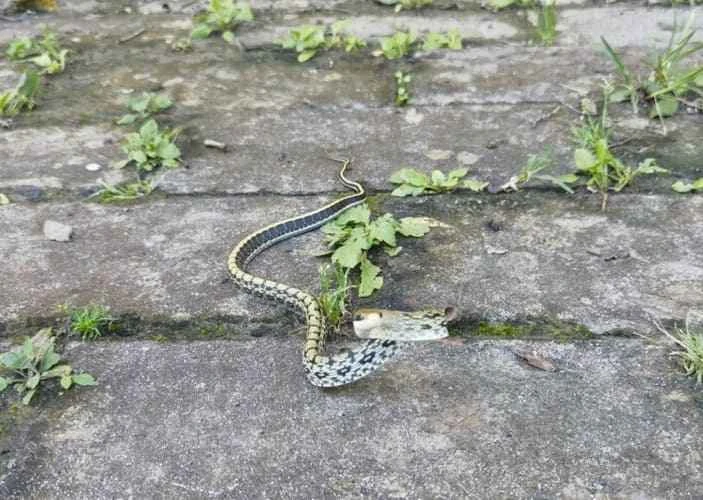
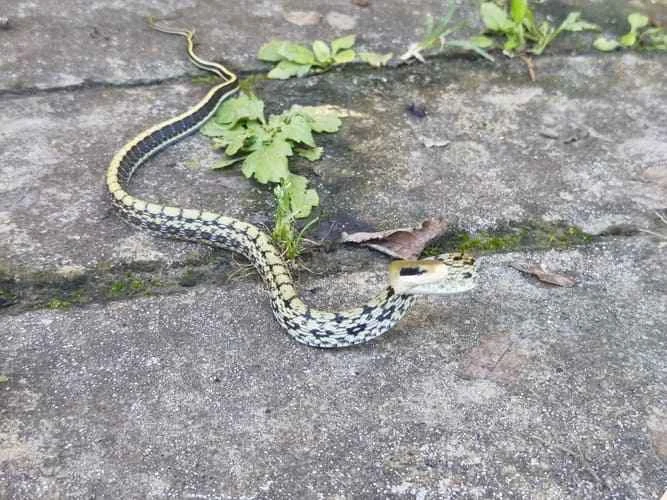
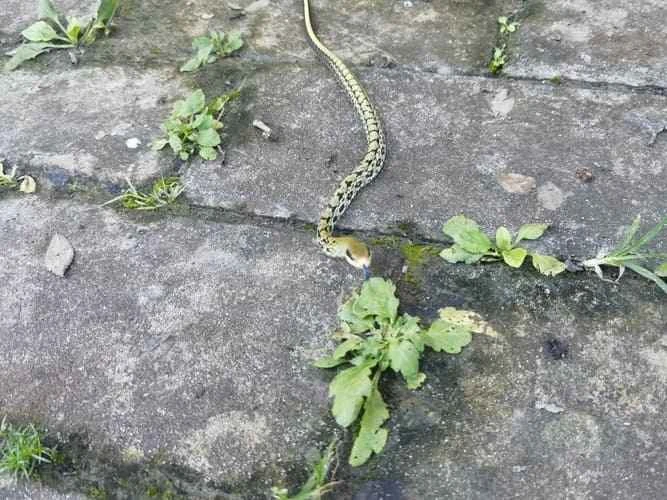
Basic Information
Scientific classification
- Chinese name: Black-browed Rat Snake
- Scientific name: Orthriophis taeniurus
- Classification: Squamata
- Family and genus: Colubridae, Rat Snake
Vital signs data
- Body length: Commonly 1.5–2.2 meters (some are even longer)
- Weight: 0.8–1.5 kg (varies with body length)
- Lifespan: Estimated 10–15 years in the wild; can live longer in captivity.
Significant features
Non-venomous; adept at climbing and burrowing; thick black eyebrow stripe behind the eye; diurnal (active at dawn and dusk); beneficial for rodent control.
Distribution and Habitat
Forest edges, agroforestry areas, caves, and villages in southeastern China, Taiwan, Vietnam, Laos, Thailand, and Myanmar.
Appearance
Yellowish-brown to olive; black eyebrow stripes on the sides of the head extending to the sides of the neck; dark horizontal bands on the hindquarters; yellowish-white abdomen.
Detailed introduction
The Black-browed Rat Snake ( Orthriophis taeniurus , formerly genus Elaphe ), also known as the "Beautiful Rat Snake/Cave Racer," is a non-venomous colubrid snake species widely distributed in East and Southeast Asia. Its distinctive feature is the black eyebrow stripe extending from behind its eye to the side of its neck. It has a slender body, is an excellent climber, and primarily preys on rodents and birds. IUCN: Least Concern (LC) .
Ecology and Behavior
They are found in forest edges, agroforestry areas, caves, and near villages. They are diurnal and more active at dawn and dusk; they are skilled climbers and cave dwellers. Their diet consists mainly of rodents, bird eggs and chicks, and they also eat lizards; when startled, they shake their tails and release musk gland scent to intimidate others.
Morphology and Recognition
Adults typically reach 1.5–2.2 meters in length (some may be longer), with a body color ranging from yellowish-brown to olive. They have thick, black eyebrow stripes on the sides of their heads, dark horizontal bands on the posterior half of their bodies, and a yellowish-white belly. Compared to similar species such as the King Rat Snake, their eyebrow stripes are thicker and extend to the sides of their necks, and the color bands on their sides are more distinct.
Reproduction
Oviparous: Mating occurs in spring and summer, with 6–18 eggs laid in summer. Incubation takes approximately 50–70 days (depending on temperature).
distributed
The mountainous and hilly areas and suburban forests of southeastern China, Taiwan, north-central Vietnam, Laos, Thailand, and Myanmar are mostly resident, moving between forests and farmlands depending on the season and altitude.
Threats and Protection
Overall, the distribution is widespread and stable, but localized areas are affected by habitat fragmentation and road-related deaths; "rodent control and snake benefit" education and the establishment of road crawling passages in suburban areas can reduce conflict.
Frequently Asked Questions
Q1: Is it poisonous? No, it will vibrate its tail and release an odor when threatened.
Q2: How to distinguish it from other rat snakes? Thick black "eyebrow stripes" behind the eyes extend to the side of the neck, and there are obvious transverse bands on the hindquarters.
Q3: What do they eat? They mainly eat rodents, but also bird eggs, chicks, and small reptiles.
Q4: Can I keep them as pets? Please comply with local laws, prioritize artificially bred individuals, and do not purchase wild-caught animals.