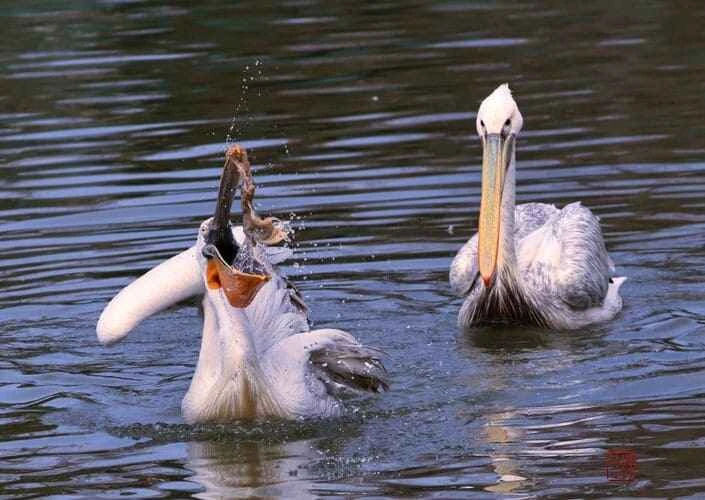
Basic Information
Scientific classification
- Chinese name: Pelican (General overview of the genus)
- Scientific name: Pelecanus (genus)
- Classification: Waterfowl
- Family and genus: Pelicanidae, Pelicanus
Vital signs data
- Body length: 1.2–1.8 meters (depending on the species)
- Weight: 4–15 kg (depending on species and season)
- Lifespan: 15–25 years in the wild, individuals can live longer.
Significant features
Long beak with an expandable throat pouch; coordinated hunting or scooping; gregarious breeding; fully webbed toes; long-distance gliding.
Distribution and Habitat
Lakes, estuaries, and coastal wetlands in tropical to temperate regions around the world.
Appearance
Wingspan 2–3.5 meters; prominent throat pouch; retracted neck during flight; fully webbed toes.
Detailed introduction
Pelicans (genus * Pelecanus *) are large waterbirds with an expandable throat pouch and a long beak, belonging to the family Pelicanidae . There are eight species currently found worldwide, distributed across tropical to temperate zones in lakes, estuaries, and coastal wetlands. They primarily hunt by cooperative hunting or surface scooping, although a few species, such as the brown pelican, are adept at swooping down from high altitudes to hunt.
Ecology and Behavior
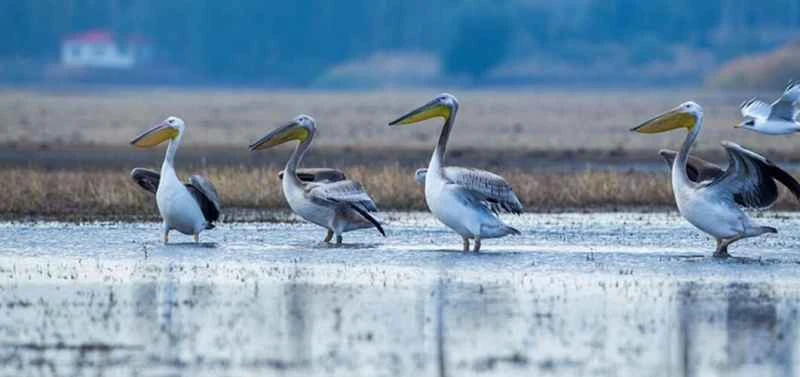
They primarily feed on fish, but also consume crustaceans and amphibians. They typically forage in groups , driving fish to shallow waters and then extracting them with their throat pouches. They breed in groups on islands, sandbars, or reed beds, with both parents jointly incubating and raising their young.
Morphology and Recognition
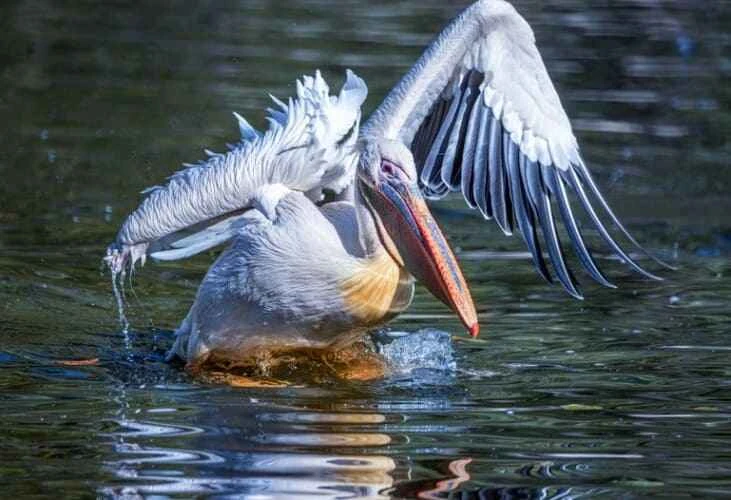
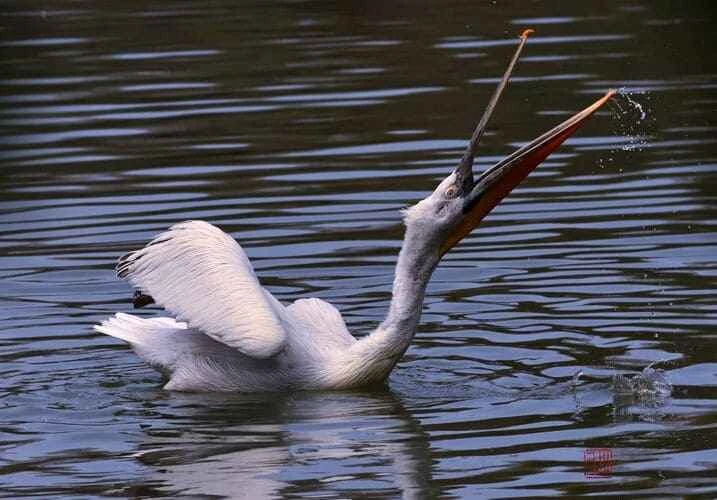
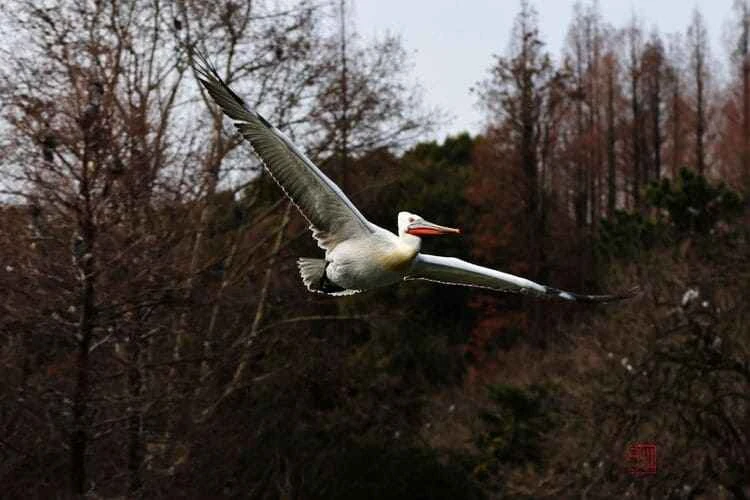
Body length 1.2–1.8 meters; wingspan 2–3.5 meters; elastic throat pouch that can expand to store water and then filter it out during retrieval; during flight, the neck is retracted, gliding and flapping alternate; the toes are fully webbed.
Threats and Protection
Wetland loss and hydrological changes: reclamation, river damming and excessive water extraction.
Pollution interacts with fisheries: toxins, tangled fishing lines/hooks.
Breeding site disturbances: tourism, boats, and drones.
Measures: Breeding ground buffering/seasonal visit restrictions, wetland restoration and water quality monitoring, and cooperation with fisheries to promote anti-tangling devices and lead-free equipment.
Frequently Asked Questions
Q1: Is the throat pouch a water storage bag? It is mainly a hunting tool and "filter", not a long-term water storage bag.
Q2: Do all pelicans swoop down? No, most pelicans dart from the surface; only brown pelicans and a few others swoop down from high altitudes.
Q3: Genus-level conservation status? This page provides an overview of the genus level ; the overall conservation status is not yet assessed. IUCNs vary by species; see the species page for details.


