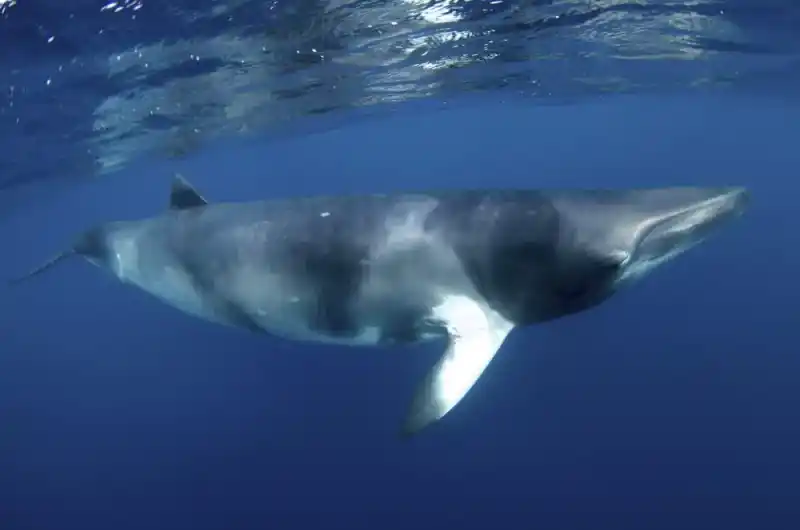
Basic Information
Scientific classification
- Chinese name: Minke whale (common minke whale)
- Scientific name: Balaenoptera acutorostrata
- Classification: Giant fish
- Family and genus: Baleen whales (family Baleen whales)
Vital signs data
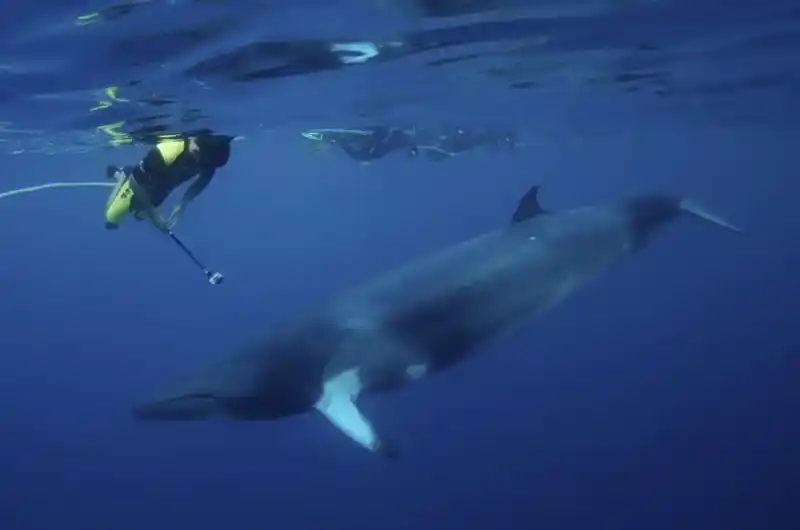
- Body length: 7–10.7 meters
- Weight: Approximately 4.5–10 tons
- Lifespan: Approximately 30–50 years (estimated)
Significant features
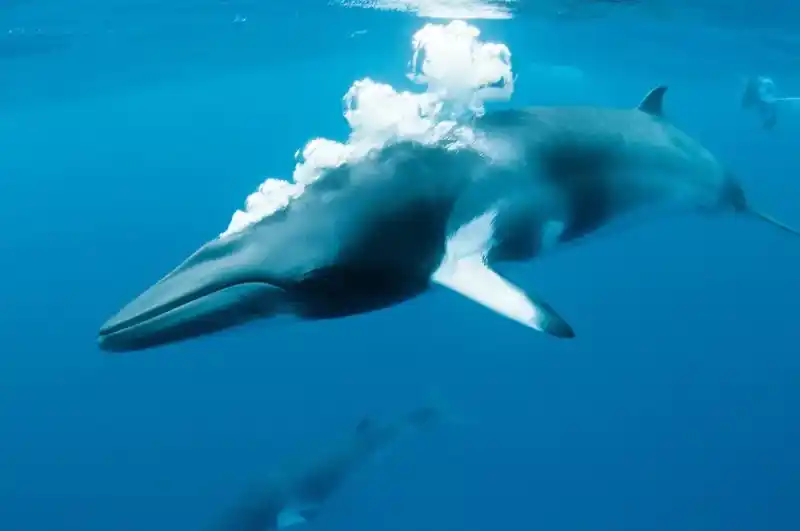
One of the smallest baleen whales; white bands on pectoral fins; solitary or in small groups; sprints with open mouth and filter feed through throat folds.
Distribution and Habitat
They are found in the North Atlantic and North Pacific; they forage at high latitudes in summer and in mid-to-low latitudes in winter; they can be found both near the coast and offshore.
Appearance
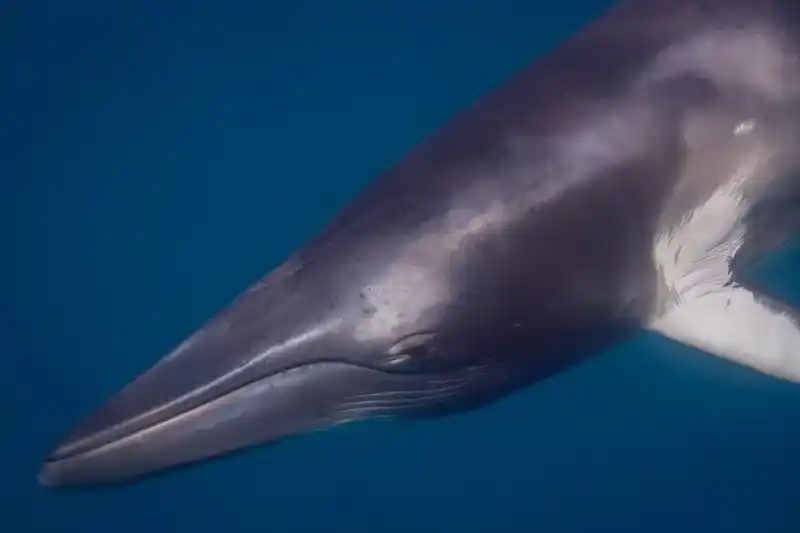
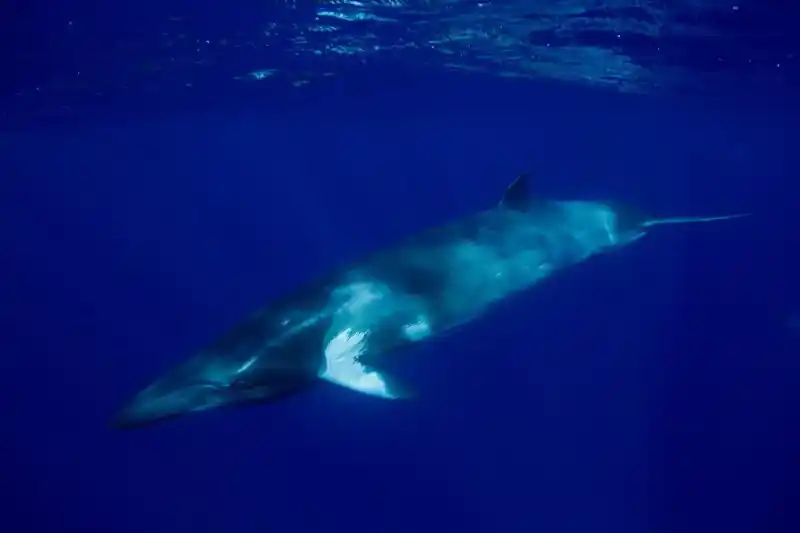
Grayish-black back and white belly; sickle-shaped and forward-positioned dorsal fin; 50–70 throat folds; low jet of water.
Detailed introduction
The minke whale ( Balaenoptera acutorostrata ) is one of the smallest baleen whales, belonging to the family Baleen whales and the genus Baleen whale . It is widely distributed in the North Atlantic and North Pacific, migrating to higher latitudes for feeding in summer and moving to mid-to-low latitudes in winter. Its diet consists mainly of small, schooling fish and krill , which it filters through by sprinting with its mouth open and expanding its throat folds . IUCN: Least Concern (LC) .
Morphology and Recognition
Body length 7–10.7 meters, weight approximately 4.5–10 tons; back dark gray to black, belly white; pectoral fins often with white bands ; dorsal fin sickle-shaped and positioned forward ; throat with 50–70 longitudinal, expandable larynx . Spray jet low and inconspicuous.
Ecology and Behavior
They prey on sand eels, herring, capelin, mackerel, and krill; they are often seen alone or in small groups , flanking or chasing prey at tidal fronts and in bays; they usually dive for several minutes, but can dive for up to 15 minutes.
Threats and Protection
Historical and contemporary whaling pressures (in some areas, there are still disputes over fishing/scientific research fishing).
Risks of fishing gear entanglement and collision with vessels.
Underwater noise and climate change are causing changes in baiting grounds and habitats.
Recommendations: Dynamic management of key foraging grounds and migration routes, optimization of navigation speed/route, noise reduction, and pilot projects for cordless fishing gear.
Frequently Asked Questions
Q1: How to distinguish it from the Antarctic minke whale? The Antarctic minke whale is B. bonaerensis (Southern Hemisphere); B. acutorostrata often has white bands on its pectoral fins, which is a key identification point.
Q2: Does it come close to the coast? Commonly found in bays, fjords and coastal tidal fronts, it is one of the more frequently seen baleen whales near the shore.
Q3: Do they hunt in groups? They usually hunt alone or in small groups, but when the prey density is high, they may gather together and forage with seabirds/dolphins.


