Basic Information
Scientific classification
- Chinese name: Nautilus
- Scientific name: Nautiloidea
- Classification: Molluscs
- Family: Cephalopoda Nautiloidea
Vital signs data
- Body length: 16–25 cm in diameter at maturity (depending on species)
- Weight: Varies depending on the individual and shell thickness; there is no uniform value.
- Lifespan: Approximately 10–20+ years
Significant features
It has an external multi-chamber shell and iris tube for buoyancy; multiple arms without suckers; no ink sac; late maturity and low reproduction rate.
Distribution and Habitat
On the slopes and outer edges of the reefs of the Indo-Pacific islands, the depth is 200–600 m during the day and can rise to less than 200 m at night.
Appearance
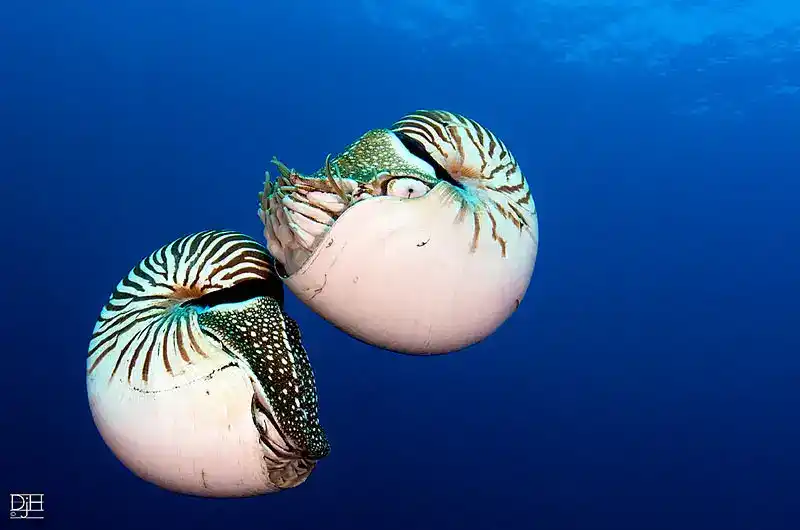
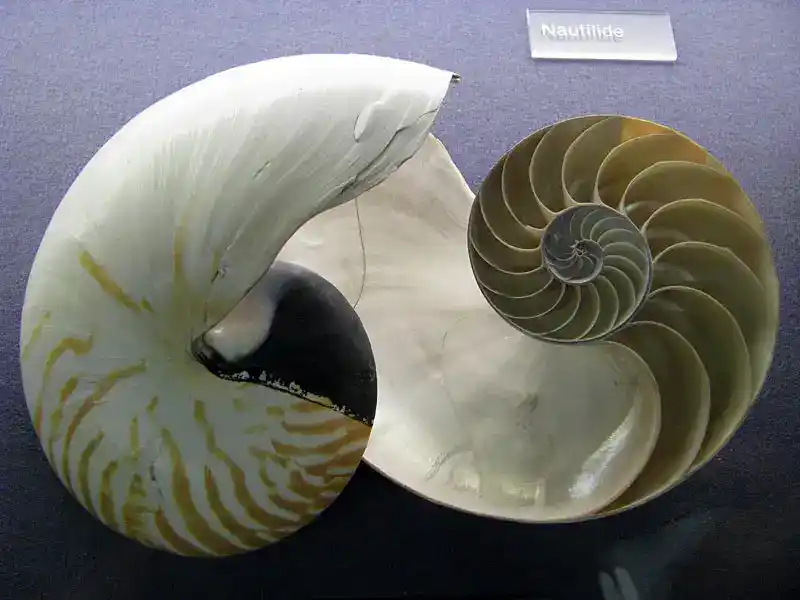
The shell has equal pitch, septa, and patterns; pinholes; a horny beak; and body color and shell patterns vary depending on the population.
Detailed introduction
The subclass Nautiloidea belongs to the class Cephalopoda within the phylum Mollusca. It is an ancient cephalopod lineage, with only a few extant species remaining today, such as the genera * Nautilus * and * Allonautilus *. The majority of the rest are fossils. Extant nautiluses are renowned for their spiral-chambered shells , their siphons that pass through the shell, and their ability to regulate buoyancy , and are considered "living fossils."
Ecology and Biology
Breathing and buoyancy: Neutral buoyancy and fine vertical migration are achieved by regulating gas and water in the shell chamber through the siphon .
Feeding: It mainly preys on benthic crustaceans, carrions, and small invertebrates; it uses dozens of arms and its sense of smell to locate its prey and tears it apart with its horny beak .
Reproduction and growth: Slow growth and late maturity (rare among cephalopods); lays large, tough eggs , and the larvae have miniature shells upon hatching.
Morphology and Recognition
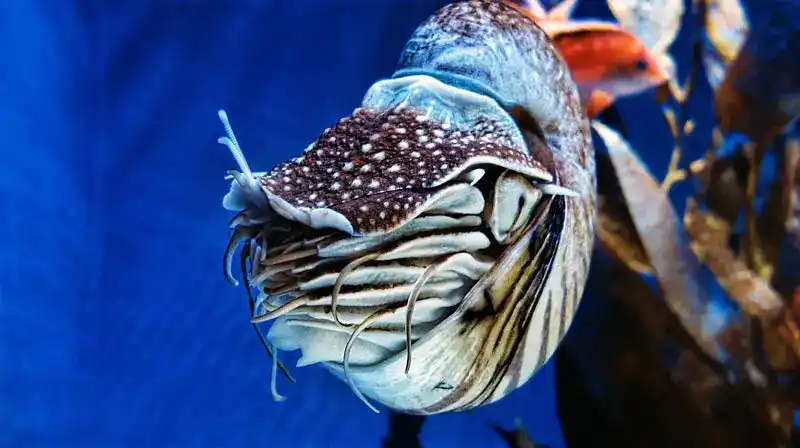
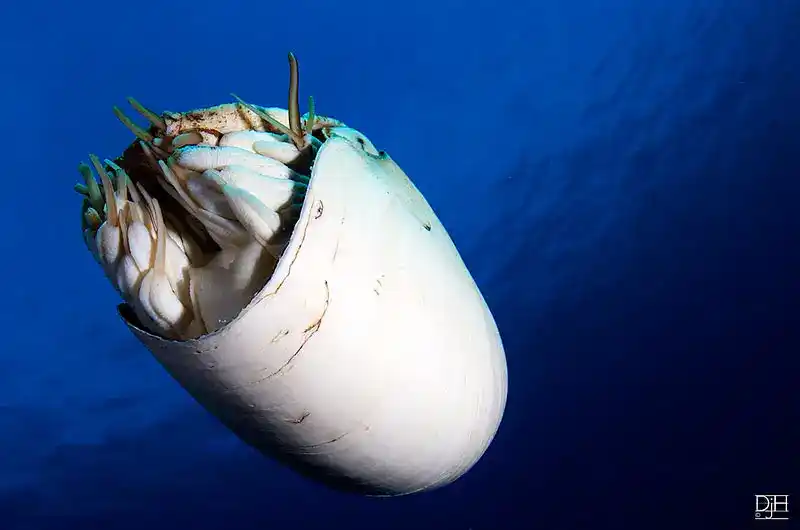
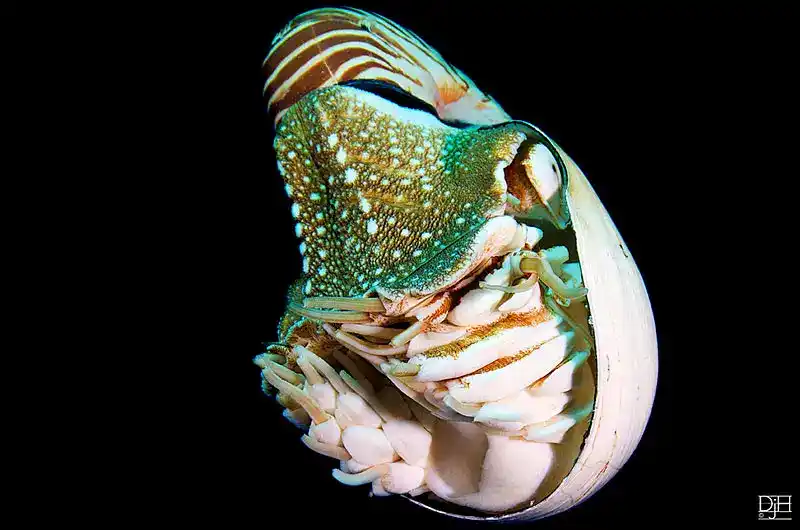
The shell is mostly flat and planispiral , with multiple chambers visible in cross-section; the shell surface often has radial/wavy colored bands . The head has numerous arms (no suckers, mostly adhesive pads), and the eyes are pinhole-type ; it has no ink sac, which is significantly different from squid/octopus.
Body size and lifespan
Body length: Shell diameter is usually 16–25 cm , and larger individuals can be even larger (depending on the species).
Lifespan: Up to 10–20+ years , far exceeding that of most cephalopods.
Distribution and Habitat
They are currently distributed on steep island slopes and the outer edges of coral reefs in the tropical western Pacific and Indo-Pacific waters . During the day, they are mostly active at depths of 200–600 m , and at night they can swim up to shallower depths of less than 200 m to forage.
Conservation and Threats
Threats: Shell product trade, bycatch/trapping, habitat destruction, and ocean acidification.
Key management points: Due to their late maturity and low reproduction rate , human stress can easily lead to a decline in the population; many countries have strengthened trade and fishing controls.
IUCN: This entry is a general overview at the subclass level ; specific conservation status requires assessment at the species level. This site marks it as Unassessed (NE) .
Frequently Asked Questions
Q1: Why is it called a "living fossil"? Nautiluses retain early cephalopod features such as their shells and multiple arms , and their lineage can be traced back to the Paleozoic era.
Q2: What are the differences between nautiluses and squid/octopuses? Nautiluses have an outer chambered shell and no ink sac , and have many arms but no suckers; squid have cuttlebone , squid have an inner shell with horny feathers , and octopuses have no inner shell.
Q3: Can it live in very deep waters? It can move at depths of hundreds of meters , but there are upper limits to its shell's pressure resistance and buoyancy adjustment. It usually migrates vertically with the day and night.
Q4: Can they be artificially bred? There are some individual research and demonstration cases, but the incubation is slow, the growth is slow , and the requirements are demanding, making it difficult to scale up.


