Basic Information
Scientific classification
- Chinese name: Giant Tridacna
- Scientific name: Tridacna gigas
- Classification: Molluscs
- Family and genus: Tridacnidae Tridacna
Vital signs data
- Body length: Shell length 60–100 cm, maximum ~120 cm
- Weight: Up to 200 kg+ (including shell)
- Lifespan: Over 100 years
Significant features
Dual energy of photosynthesis and filter feeding; larvae attach to byssal threads; adults are semi-embedded; broadcast oviposition in groups; large size and long lifespan.
Distribution and Habitat
Tropical Indo-Pacific shallow reefs and lagoons, 1–20 m deep, with hard-bottomed settlements.
Appearance
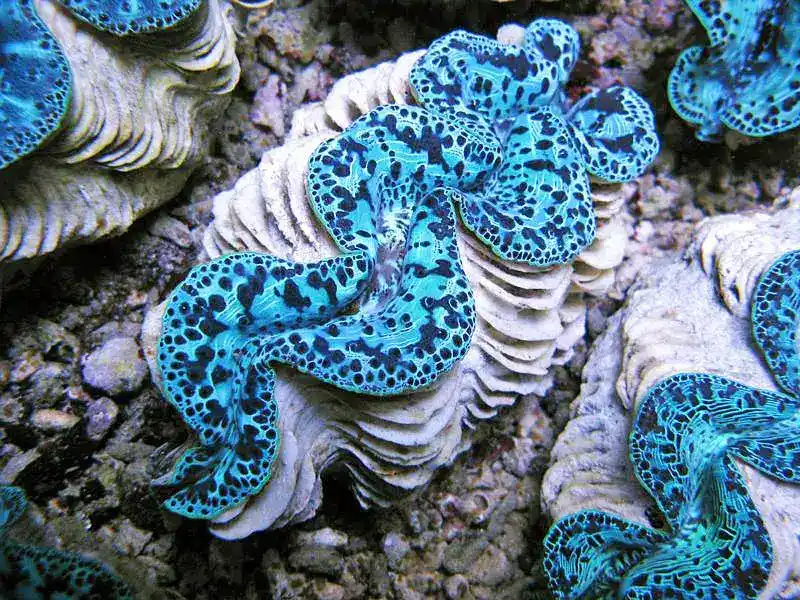
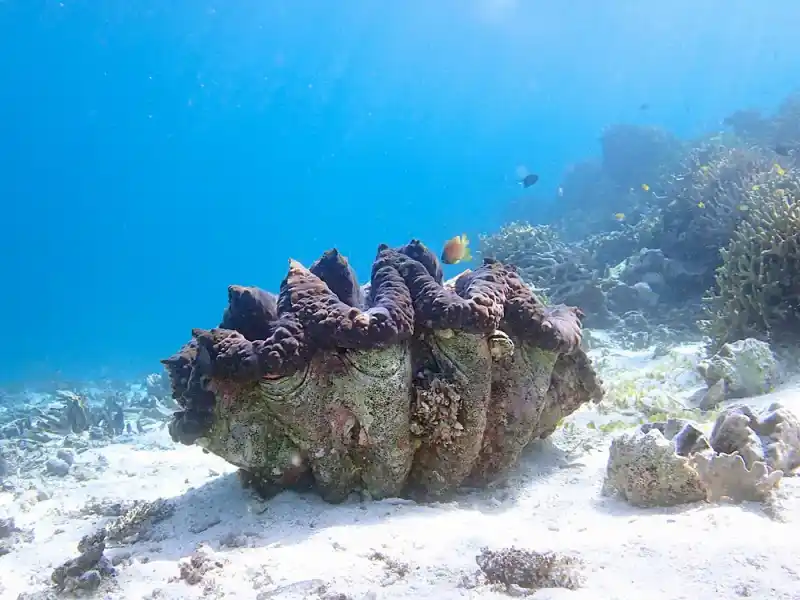
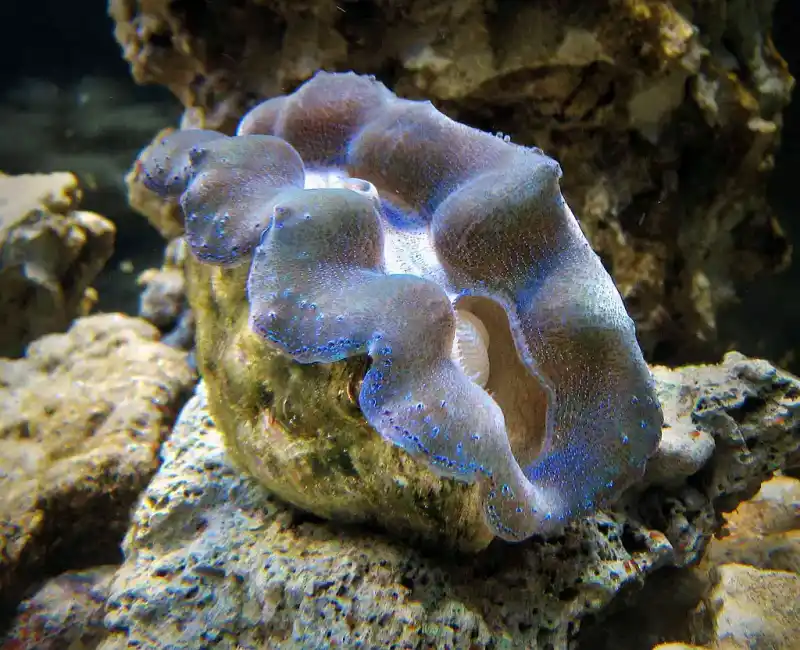
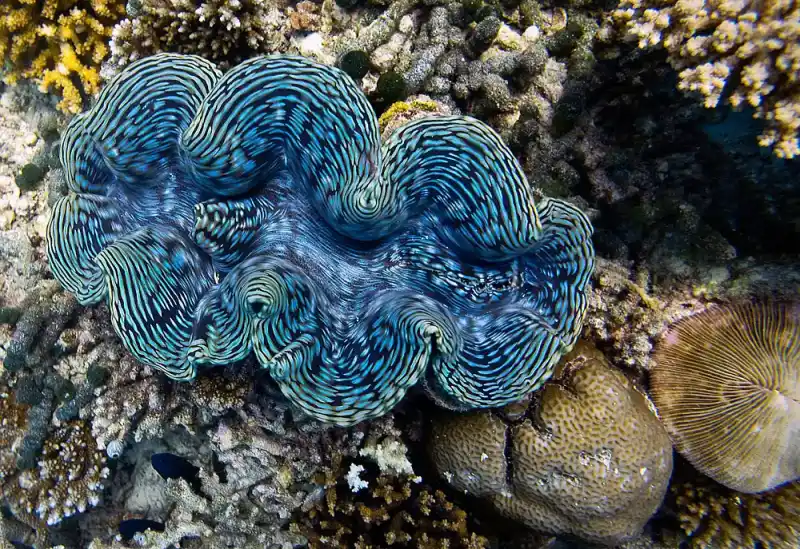
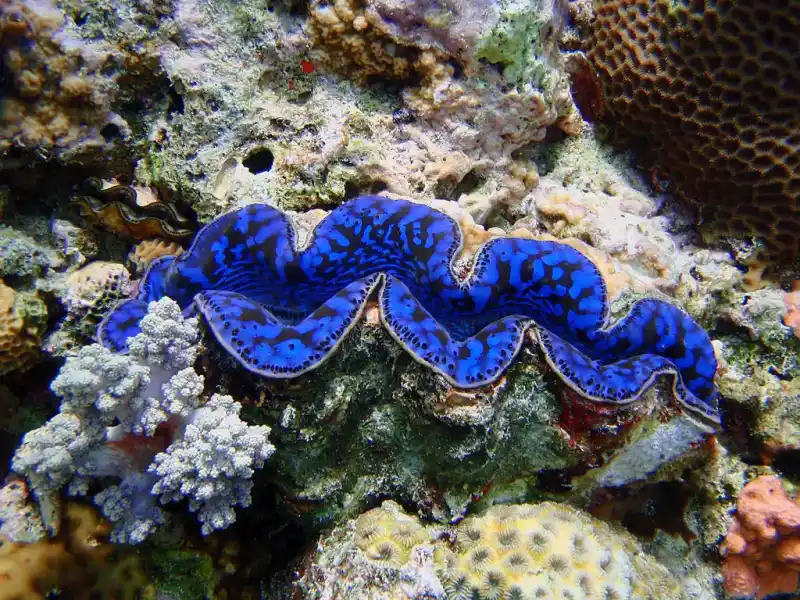
It has a very thick shell with large folds; the mantle is mottled with blue/green/brown; it has strong hinges and well-developed adductor muscles.
Detailed introduction
Giant tridacna ( Tridacna gigas ) is one of the largest living bivalves, belonging to the family Tridacnidae . Its mantle lives in symbiosis with zooxanthellae . During the day, it exposes its brightly colored mantle to obtain energy through photosynthesis , while simultaneously filtering planktonic particles. It is an important " photosynthetic + filter-feeding dual-energy " engineered species in coral reefs.
Ecology and Biology
Symbiosis and nutrition: The mantle is rich in symbiotic algae and iridoblasts , which can provide energy through photosynthesis and also supplement nutrition through filter feeding.
Fixation and growth: During the larval stage, the organism attaches itself to the byssal threads ; in adults, it is often semi-embedded in the basal layer; growth is slow.
Reproduction: Hermaphroditic with heterozygous sexes , laying eggs in groups via broadcasting ; larvae first float in the air and then settle in the ground.
Morphology and Recognition
The shell is huge and thick, with coarse folds/tooth-like protrusions on the edge; the mantle unfolds into a highly saturated pattern of blue, green, and brown , formed by microstructural interference and symbiotic algae.
Body size and lifespan
Body length: Shell length 60–100 cm , maximum up to ~120 cm .
Weight: Up to 200 kg (including shell).
Lifespan: Over 100 years .
Distribution and Habitat
Widely distributed in the tropical Indo-Pacific , they are often found in shallow, bright reef slopes and lagoons (approximately 1–20 m ), settling among hard substrates and coral blocks.
Conservation and Threats
Key threats: overfishing (for food, crafts, and ornamental purposes), habitat degradation, pollution, and marine heat waves.
Management: Many countries implement closed areas/closed periods, size restrictions, fishing bans during the breeding season , and trade controls; artificial breeding and stock enhancement are used for restoration.
IUCN: Commonly listed as Vulnerable (VU) ; this site labels it based on the latest authoritative assessment.
Frequently Asked Questions
Q1: Why is the mantle so colorful? It is because the symbiotic algae and the iridescent microstructure work together to both facilitate photosynthesis and manage incident light.
Q2: Will it pinch and hurt people? The adductor muscles are strong, so never put your hand into the shell crevices; also avoid touching or turning the individual.
Q3: Can it be artificially propagated? There are mature seedling and transplantation techniques, but they have high requirements for water quality, light, and symbiotic algae conditions.
Q4: How to distinguish it from other giant clams? T. gigas is the largest and has thicker shell folds; it is necessary to make a comprehensive judgment by combining the shell shape, folds and mantle patterns.