Basic Information
Scientific classification
- Chinese name: Acanthaster planci
- Scientific name: Acanthaster planci
- Classification: Echinoderms
- Family: Acanthasteridae Acanthaster
Vital signs data
- Body length: 25–60 cm in diameter, maximum 80 cm+
- Weight: Varies from person to person (related to number of arms/tissue water content)
- Lifespan: Approximately 3–8 years
Significant features
It has many venomous, long spines and arms; it feeds exclusively on reef-building corals; it has a high reproductive rate; and it can cause outbreaks and become a disaster.
Distribution and Habitat
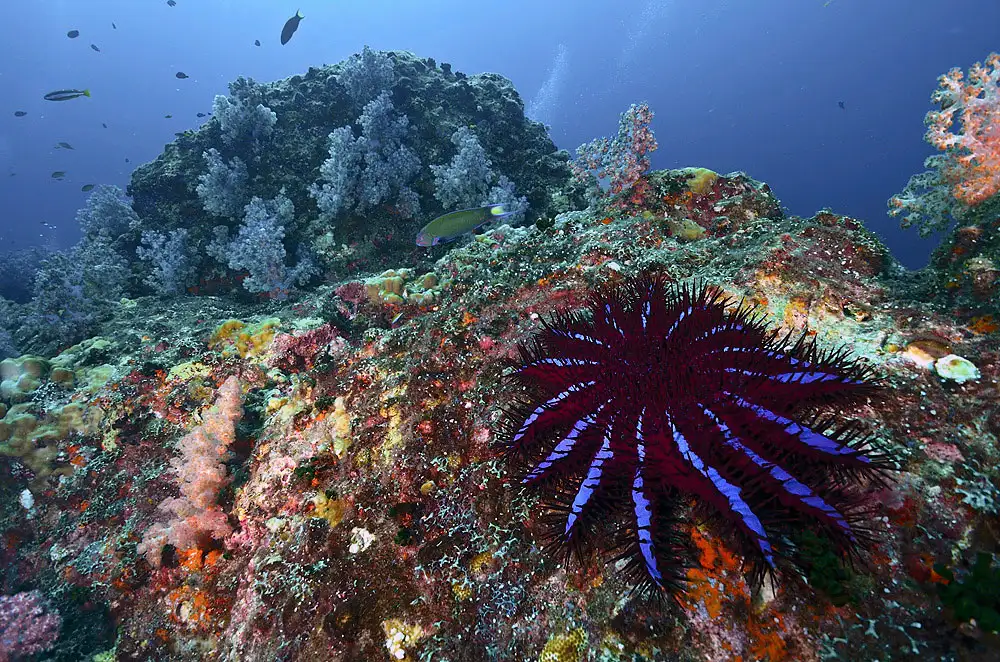
The shallow reef slopes, platforms, and reef edges of tropical Indo-Pacific coral reefs.
Appearance
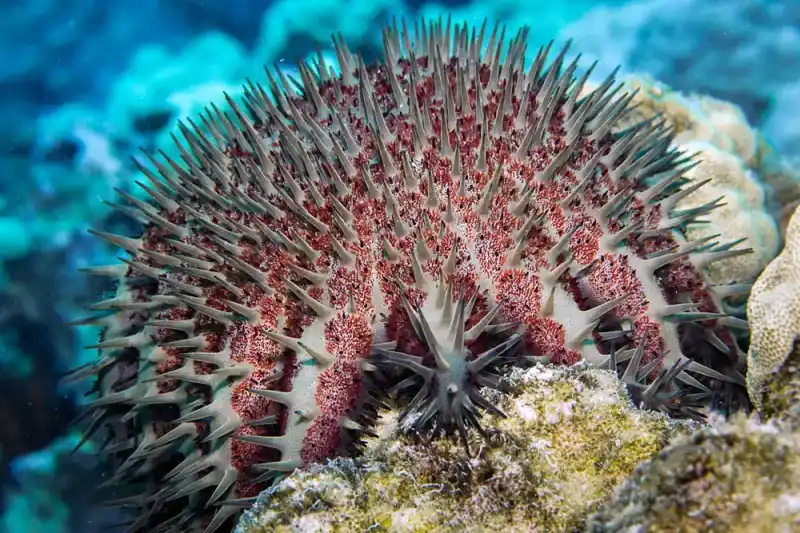
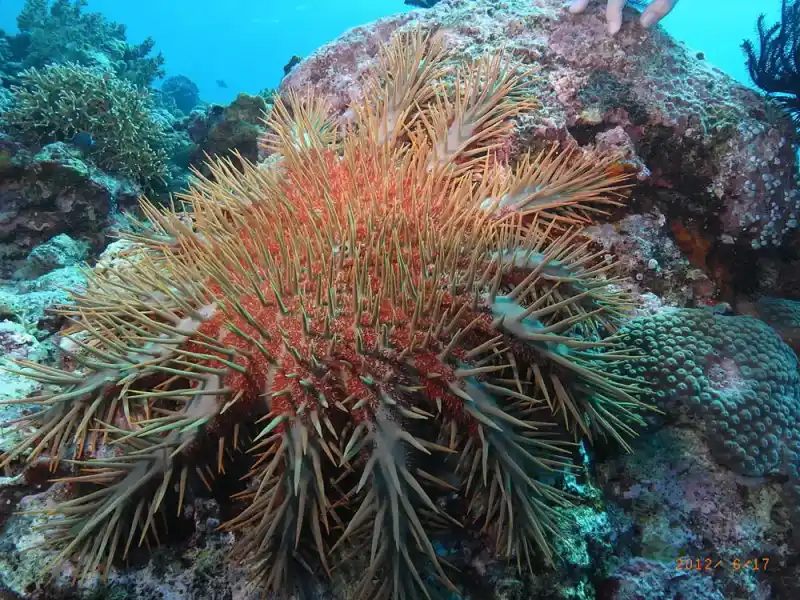
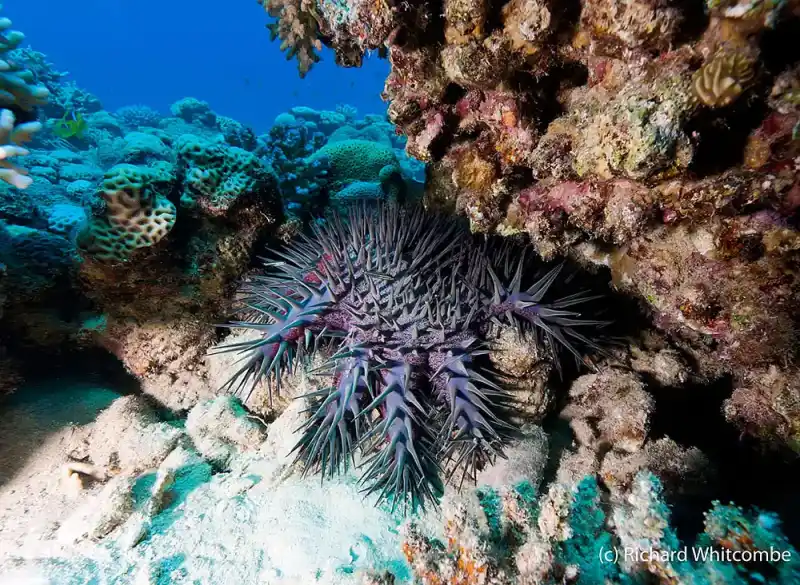
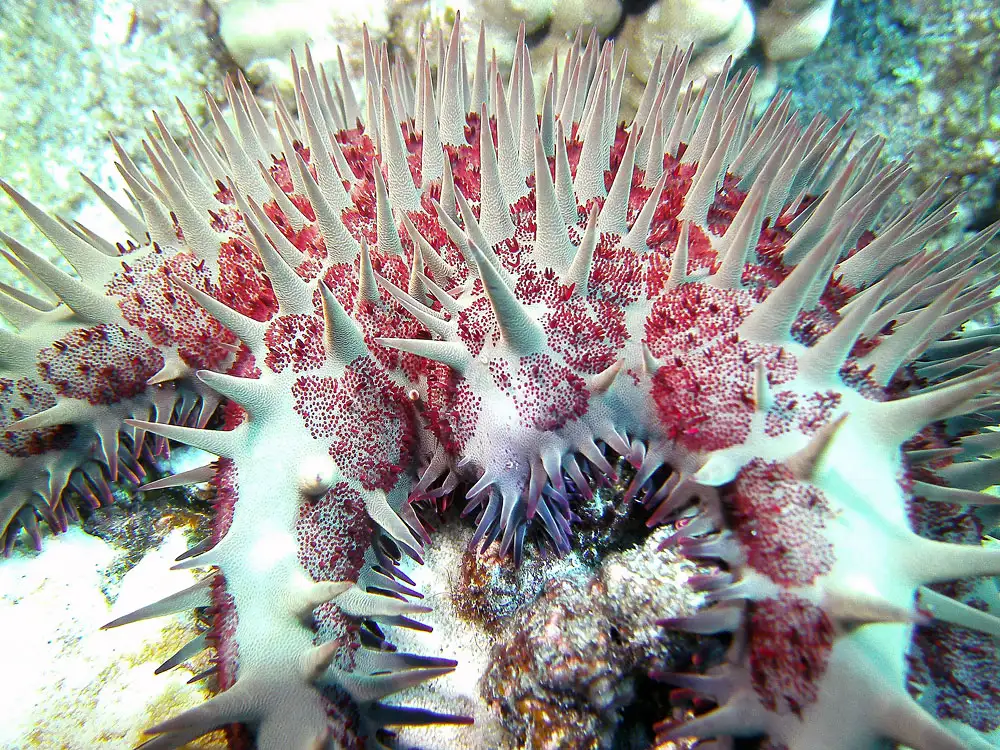
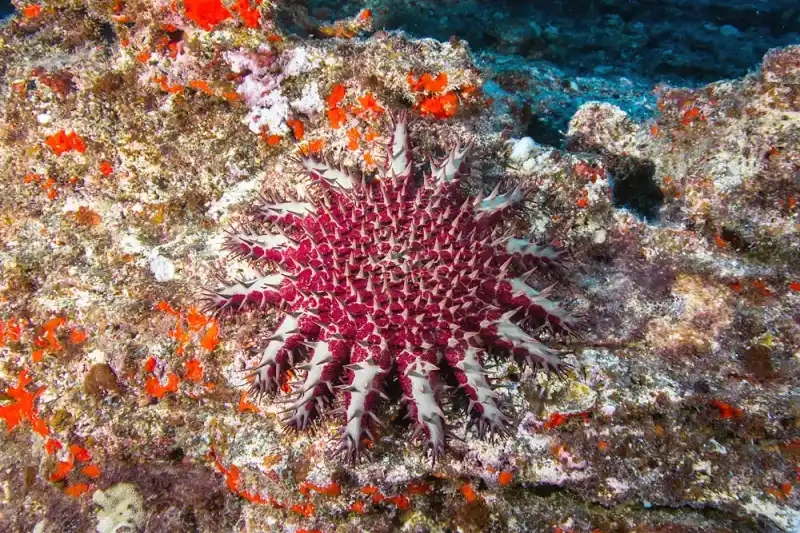
The disc is broad, with 12–20 arms commonly found; the back is densely covered with long spines, and the body color is grayish-purple/reddish-brown/blue-green, etc.
Detailed introduction
The crown starfish ( Acanthaster planci ) is one of the most notorious reef-building coral predators in the tropical Indo-Pacific reefs, belonging to the phylum Echinodermata, class Starfish, and family Acanthasteridae . Its dorsal surface is densely covered with venomous spines , and it typically has ≥12 arms, which it uses to feed on stony corals (Scleractinia) via its everted stomach. At normal densities, it helps maintain coral diversity, but during an outbreak, it rapidly consumes large areas of coral, causing reef degradation.
Ecology and Biology
Diet: It prefers reef-building corals (branching/staghorn corals, etc.) and digests surface living tissues through an everted stomach .
Reproduction: Spreading eggs through external fertilization ; a single female can produce a large number of eggs; the larvae are planktonic and disperse with the water mass.
Natural enemies include giant tritons , Napoleon wrasse (Cheilinus undulatus) , pufferfish, and king shrimp.
Causes of the outbreak (comprehensive research perspective): Eutrophication leads to high juvenile survival, reduced natural predators (overfishing), and sea conditions triggering juvenile transport and landing on shore, among other factors.
Morphology and Recognition
The body is broad with numerous arms (usually 12–20 arms , ranging from about 7–23 ), and the dorsal side is densely covered with long, sharp, venomous spines ; the body color varies from grayish-purple and reddish-brown to blue-green, depending on the sea area and individual differences. The ambulatory groove and tube feet are well-developed on the ventral side.
Body size and lifespan
Body length: The diameter of the arm tip is usually 25–60 cm , and large individuals can reach 80 cm+ .
Lifespan: Approximately 3–8 years , influenced by food and environment.
Distribution and Habitat
Widely distributed in tropical Indo-Pacific coral reefs: from the Red Sea and Indian Ocean to Pacific islands and reefs; mostly found on shallow reef slopes, platforms, and reef edges .
Conservation and Management
Ecological impact: Outbreaks can significantly reduce coral cover over weeks to months, affecting reef fish and ecosystem services.
Management measures: Targeted removal by divers (mechanical trapping) and injection methods (such as proven solutions like acetic acid/citric acid/bile salts); watershed pollution control and natural enemy protection are long-term strategies.
IUCN: This group is subject to classification revision (regional morphology/close relatives), and its status may differ in different regions; the general description on this site is marked as Unevaluated (NE) .
Frequently Asked Questions
Q1: What should I do if I get pricked by a thorn? First, rinse with seawater and remove any visible thorns; you can soak in warm water to relieve the pain; if there is severe pain/redness or allergic reaction, you should seek medical attention as soon as possible (this is a science tip, not medical advice).
Q2: Is it a "harmful species"? At natural densities , it can promote coral regeneration through selective predation; the problem lies in the combination of outbreaks and human stress.
Q3: How to distinguish it from a regular starfish? It has significantly more arms and its back is covered with long, venomous spines ; its body color varies, but its overall shape is "spiky disc".
Q4: Should management rely solely on manual removal? In the short term, removal/injection control is necessary, while in high-incidence areas, a combination of eutrophication management and protection of key natural enemies is required.