Basic Information
Scientific classification
- Chinese name: sea urchin
- Scientific name: Echinoidea
- Classification: Echinoderms
- Family: Echinodermata Echinoidea
Vital signs data
- Body length: Shell diameter 1–10 cm, maximum ~20 cm+ (a few deep-sea species are even larger).
- Weight: Varies by species (related to shell thickness and spine length)
- Lifespan: Generally 3–30 years; a few can exceed 100 years.
Significant features
Calcareous bony plates with active spines; tube feet for adsorption/movement; five-spoked symmetry; "Aristotelian lantern" mouthparts; broadcast-style oviposition.
Distribution and Habitat
From the intertidal zone to the deep sea; rocky reefs, seagrass beds, coral reefs, and sandy/muddy bottoms.
Appearance
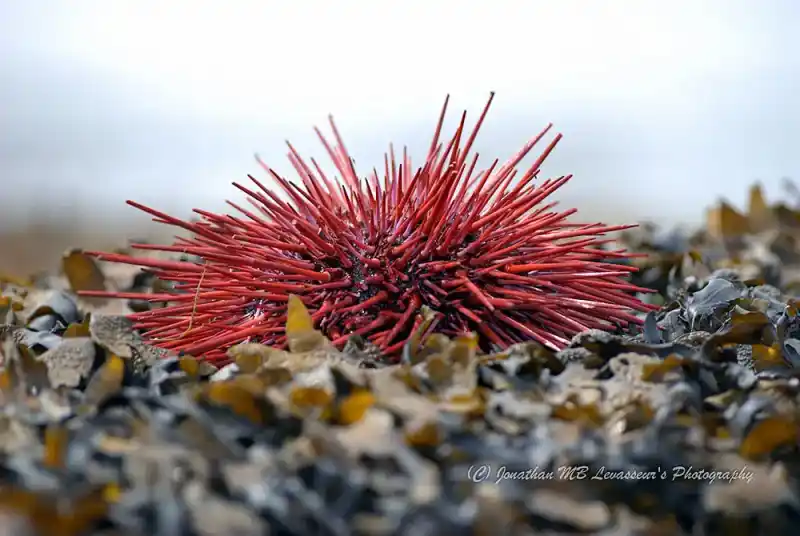
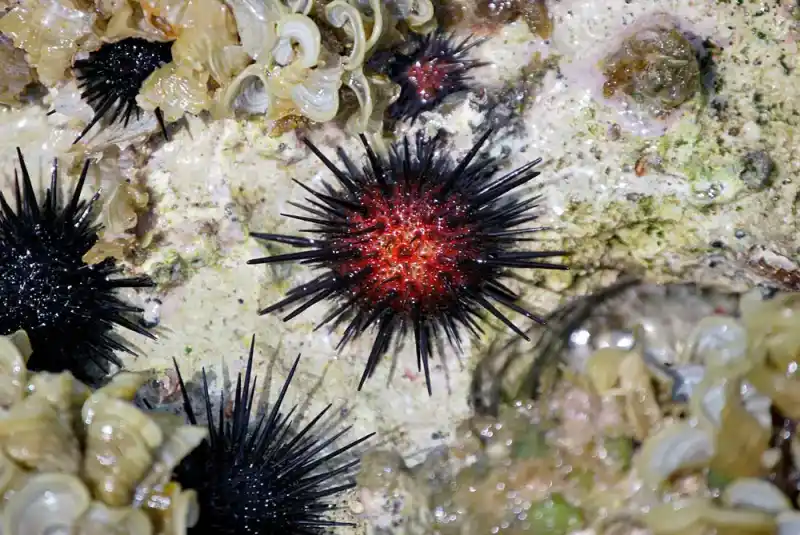
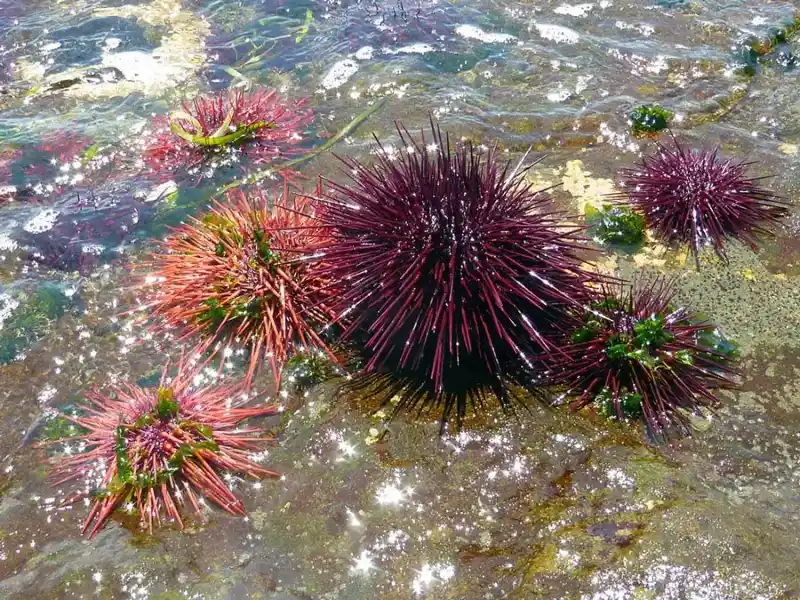
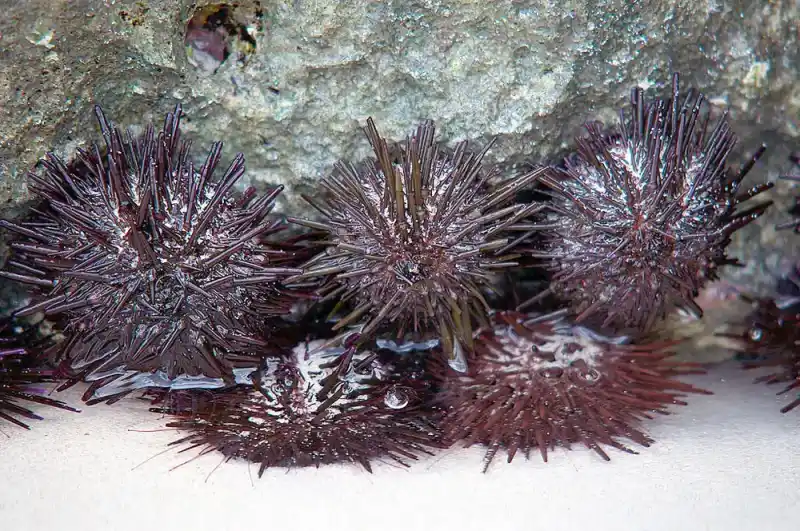
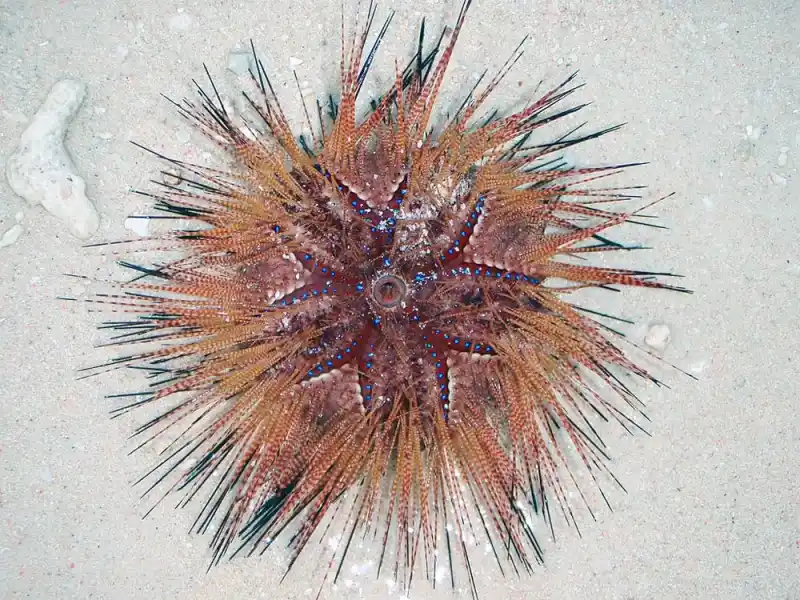
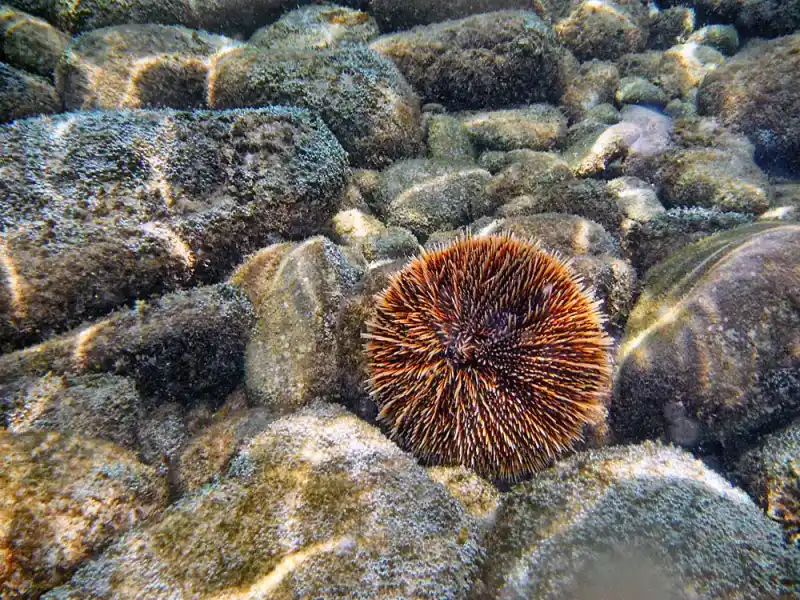
Spherical/flat shell, densely covered with spines and pores; various colors; sand coin/heart-shaped sea urchin, flat or heart-shaped.
Detailed introduction
Sea urchins (Echinoidea) belong to the phylum Echinodermata and include well-known species such as sea urchins, sand urchins, and heart-shaped sea urchins. Their bodies are covered with a skeleton composed of calcareous plates , densely covered with movable spines and ambulatory tube feet . Their mouthparts are the famous "Aristotelian lantern," and they grind their food with five sets of jaw teeth. Sea urchins play a crucial role as predators/sediment disturbers in marine ecosystems, both maintaining clean reef substrates and potentially creating "urchin barrens" when predators decrease.
Ecology and Biology
Feeding: Rock reef sea urchins mainly feed on algae and biofilms ; sand urchins/heart-shaped sea urchins feed on organic particles and small benthic organisms in the sediment.
Behavior and movement: They crawl and attach themselves using a combination of spines and tube feet ; some species gather shells/seaweed for shade when waves are high or the sun is intense.
Reproduction: mostly through external fertilization and broadcast spawning ; the larvae are planktonic larvae , which later transform into benthic adults.
Morphology and Recognition
Sea urchin (spherical): The shell is nearly spherical, with the mouth located in the center of the ventral side and the anus located at the dorsal pole; the spines vary in length.
Uneven sea urchins (flat): such as sand urchins/heart-shaped sea urchins , with flat or heart-shaped shells adapted for burrowing and sifting through sediment.
Mouthparts: The “Aristotelian lantern” consists of five pairs of jaw teeth supported by tendons, and is suitable for eating and carving.
Body size and lifespan
Body length/shell diameter: Mostly 1–10 cm , large ones can reach ~20 cm+ ; a few deep-sea species are even larger.
Lifespan: Commonly 3–30 years ; some species (such as large red sea urchins) can live for over a century .
Distribution and Habitat
It is widely distributed in the oceans around the world, from the intertidal zone to the deep sea ; it is commonly found on rocky reefs, seagrass beds, coral reefs, and sandy or muddy bottoms.
Ecological role and human-sea interaction
Ecology: Controls algae and promotes substrate regeneration; high density may cause sea urchin desert and affect seaweed/kelp forests.
Human interaction: Partially edible (raw/processed), spines can cause injury and should be handled with care; the shell and spines are also found in education and crafts.
IUCN: This is a class-level overview ; conservation status needs to be assessed at the species level . This site's overview is marked as Unassessed (NE) .
Frequently Asked Questions
Q1: What should I do if I get stung by a sea urchin? First, rinse with seawater to remove any remaining spines; small, broken spines can be softened by soaking in vinegar before treatment; if there is significant redness/swelling/pain, please seek medical attention (this is a general health tip, not medical advice).
Q2: Why do some sea urchins "raise their umbrellas"? Some species collect shells/pebbles/seaweed to shield themselves from light and waves, reducing ultraviolet radiation and impact.
Q3: Why do sea urchins bloom into deserts? When predators decrease or changes in seawater lead to high sea urchin density, over-eating causes the kelp forests to degrade.
Q4: What is the difference between sea urchins and sand urchins? The former are mostly nearly spherical and feed on rocks and reefs; the latter are flat or heart-shaped and are good at digging in sand and sifting through sediment.