Basic Information
Scientific classification
- Chinese name: Percebes (goose barnacle - Overview)
- Scientific name: *Pollicipes pollicipes* (commonly referred to)
- Classification: Arthropoda
- Family: Cirripedia Pollicipes
Vital signs data
- Body length: shell 2–6 cm; stalk 3–7+ cm
- Body weight: Individual mass varies with environment and density.
- Lifespan: Several years (affected by temperature and nutrition)
Significant features
They attach to rocky shores in strong waves; filter feed with tentacles and feet; live in dense communities; have high economic value and are subject to strict fisheries management.
Distribution and Habitat
Strong wave rocky coast of the eastern northeastern Atlantic Ocean, in the middle and upper intertidal zone; closely related species are distributed along the west coast of Africa and the eastern Pacific Ocean.
Appearance
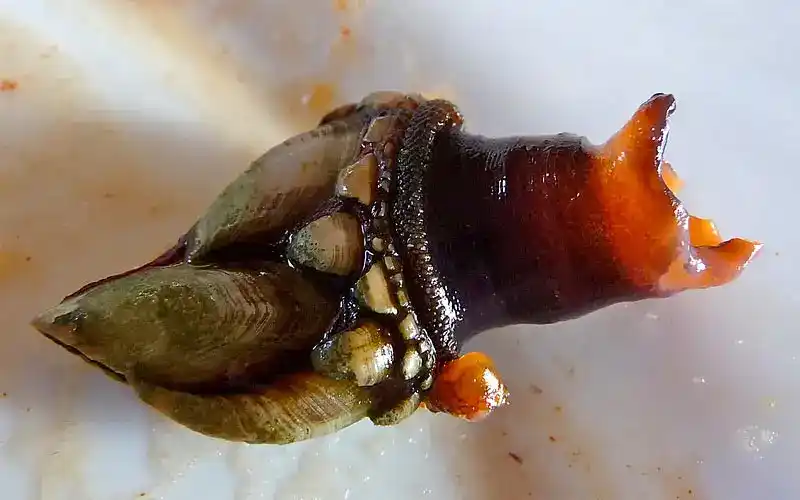
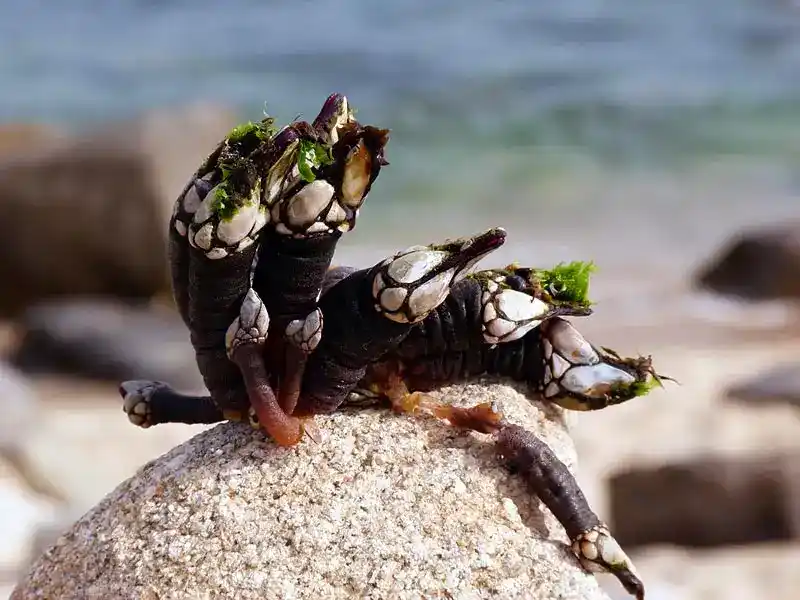
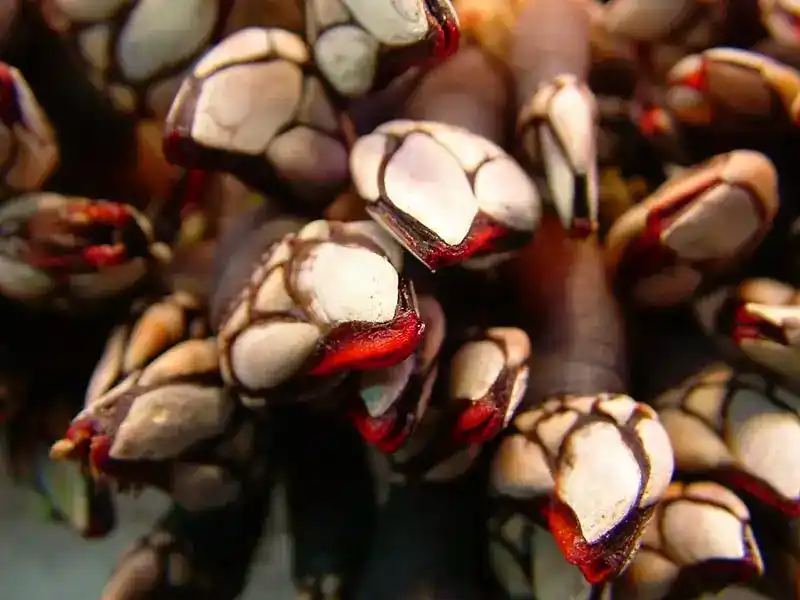
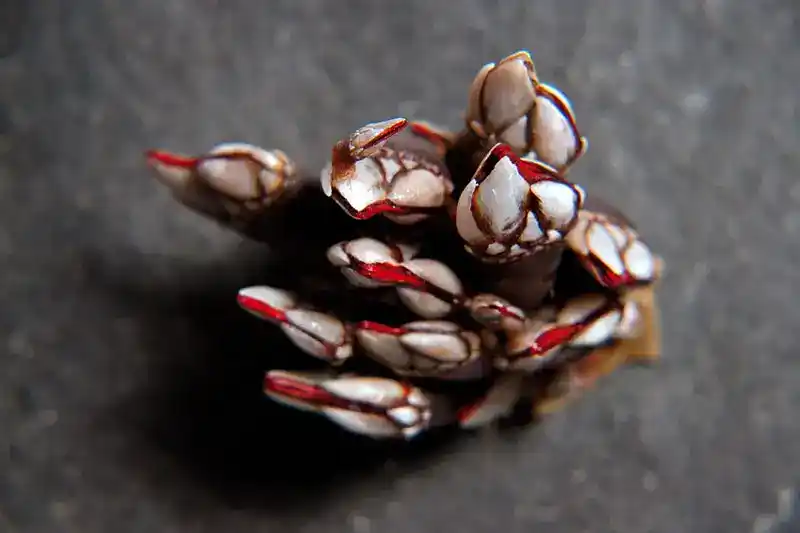
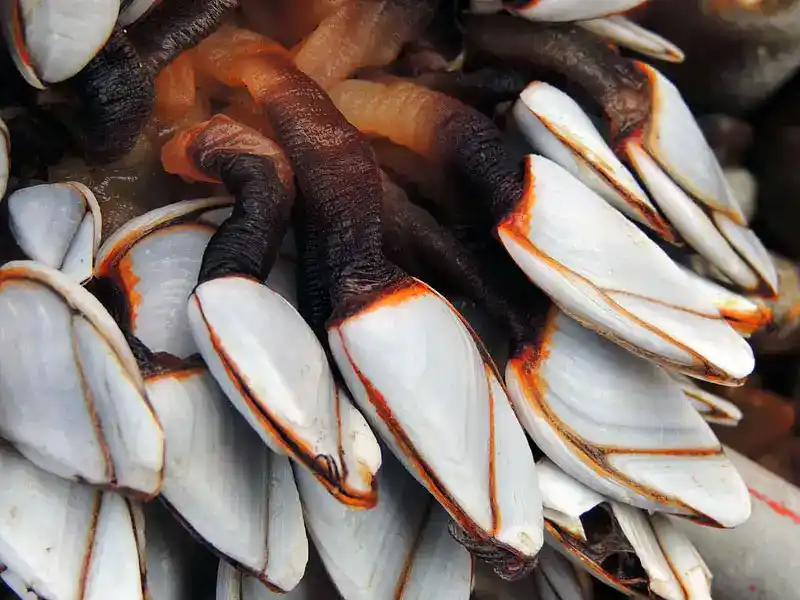
The shell is made of white-grey plates and has a dark brown leathery stalk; feathery tentacles can be seen retracting at the opening.
Detailed introduction
Percebes usually refers to goose barnacles , but in European culinary contexts, it specifically refers to *Pollicipes pollicipes* (European goose barnacles). It belongs to the phylum Crustacea, class Cirripedia, order Pedunculata, and genus *Pollicipes* . Adults attach themselves to rocky shores battered by strong waves using peduncle- like appendages, and filter-feed on plankton and particulate organic matter using a bundle of retractable cirri .
Ecology and Biology
Feeding: A typical filter feeder , it feeds on zooplankton, phytoplankton, and sea snow; its tentacles repeatedly extend and retract in the water flow to capture food.
Life cycle: Fertilized eggs hatch into nauplius larvae , which molt multiple times to become areca nut larvae (cyprid) ; after finding a suitable substrate, the cyprid attaches and transforms into an adult.
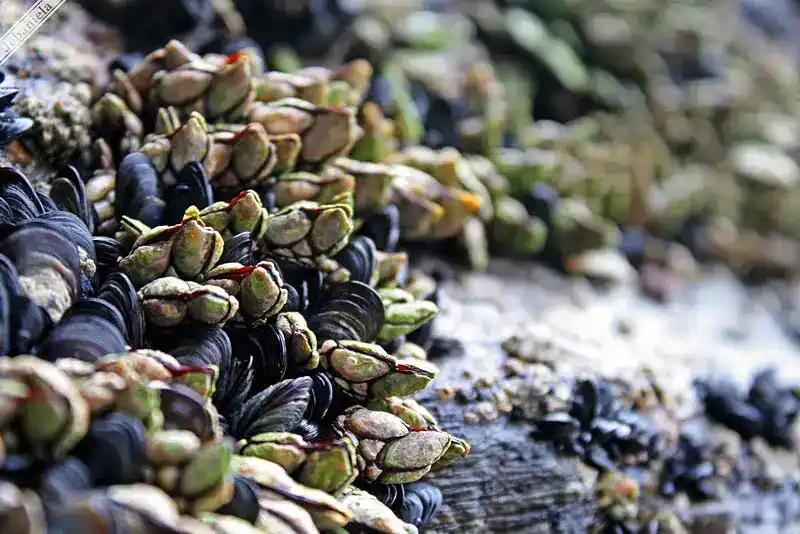
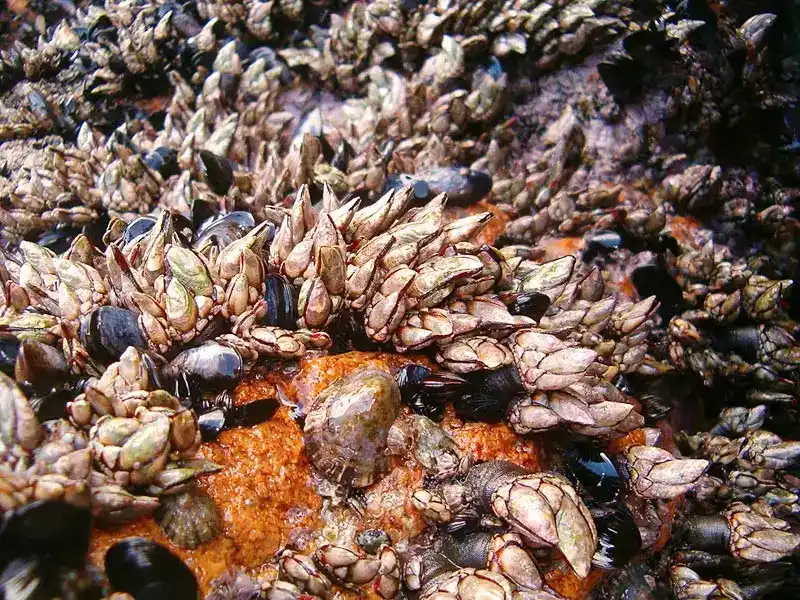
Settlements: often form high-density communities , together with mussels, barnacles, and seaweed, forming the wave zone biozone.
Human-sea interaction: In Galicia, Spain, Portugal and other places, it is a precious seafood, and its harvesting is strictly controlled by human intervention and access regulations.
Morphology and Recognition
The adult consists of two parts: a capitulum and a stalk . The capitulum is covered with multiple white to gray calcareous plates . The stalk is leathery and dark brown , rich in protein fibers to enhance adhesion and tensile strength. Feathered tentacles can be seen extending from the opening.
Body size and lifespan
Body length: The shell is mostly 2–6 cm long, and the stalk can be 3–7+ cm long (depending on wave height and density).
Lifespan: Usually several years ; growth rate is significantly affected by water temperature and nutrients.
Distribution and Habitat
Pollicipes is mainly distributed along the eastern coast of the Northeast Atlantic (France-Spain-Portugal-Morocco-Western Sahara), preferring strong waves, oxygen-rich environments, and exposed rocky shores in the middle and upper intertidal zones; closely related species also exist along the west coast of Africa and the eastern Pacific Ocean.
Conservation and Threats
Threats: Overfishing and illegal harvesting, coastal engineering, oil spills and pollution, extreme storms and heat waves.
Management: Quota/time/license limits and closed seasons are implemented in many areas; sustainable fishing and habitat protection are promoted.
IUCN: This site's entries provide an overview of food and general knowledge, and are marked as Not Evaluated (NE) . Please refer to the individual species' evaluation for specific information.
Frequently Asked Questions
Q1: Are Percebes the same as "goose barnacles"? In the context of dining, it often refers to European goose barnacles ( Pollicipes pollicipes ).
However, "goose barnacles" also broadly includes other stalked barnacles from other Pollicipes or closely related genera.
Q2: Why do they mostly grow in the most dangerous wave zones? Strong hydrodynamics bring abundant planktonic food and reduce sedimentation, making them suitable for filter feeding and attachment, but also increasing the risk of collection.
Q3: Can they be artificially bred? Research and small-scale trials exist, but due to the complexity of their ecological niche and attachment requirements , commercialization remains limited.
Q4: How safe is it to eat? It is recommended to ensure that the source is traceable, complies with regulations and the fishing ban season , and pay attention to red tide/shellfish poisoning warnings (science popularization tips, not medical advice).