Basic Information
Scientific classification
- Chinese name: Octopus family (general overview)
- Scientific name: Octopodidae
- Classification: Molluscs
- Family and genus: Octopodidae Octopoda
Vital signs data
- Body length: mantle 2–30+ cm; wrist span 10–100+ cm
- Weight: Varies greatly (from tens of grams to several kilograms)
- Lifespan: Primarily 1–3 years; larger species may live for several years.
Significant features
Eight arms without tentacles; strong camouflage; jet propulsion and inkjet printing; multiple single-use reproduction.
Distribution and Habitat
Global sea areas; from rocky reefs, seagrass beds, sandy and muddy bottoms to continental slopes/seamounts, active at night and resting during the day.
Appearance
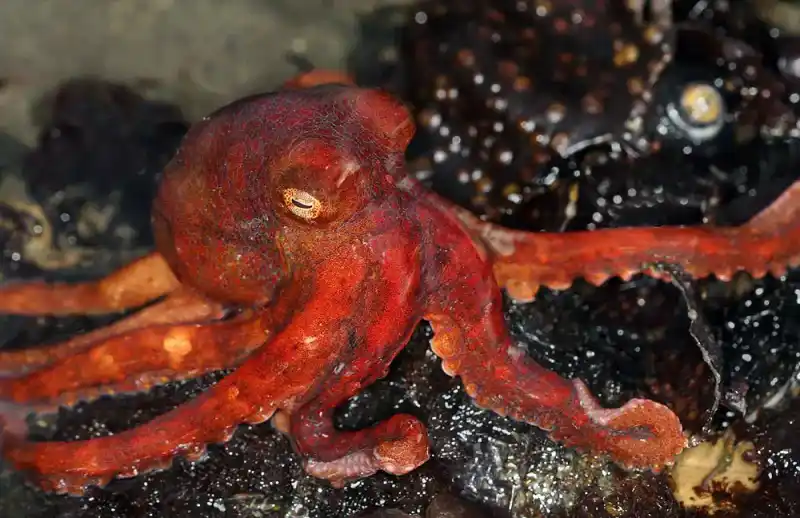
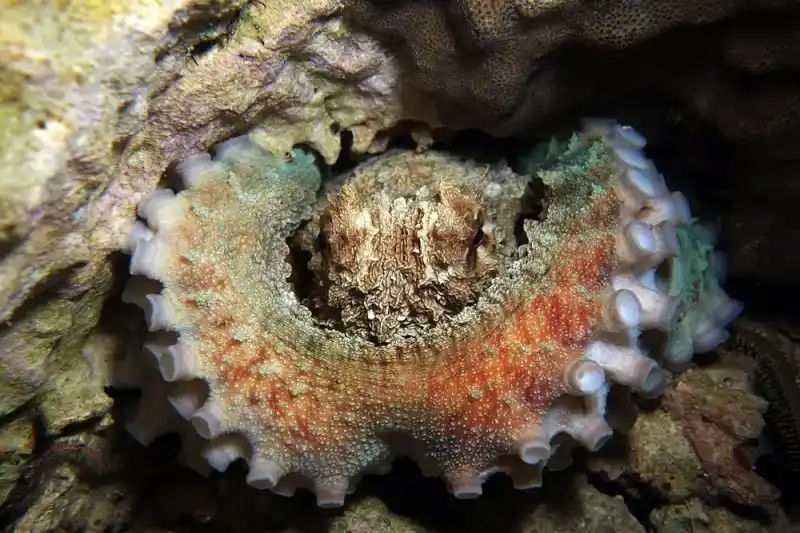
No shell; large eyes and well-developed beak; arms and feet covered with suckers, intercarpal membranes vary from species to species.
Detailed introduction
Octopus (Octopodidae) belong to the order Octopoda in the class Cephalopoda. They are the main family of "true octopuses," widely distributed in oceans around the world, from the intertidal zone to deep waters on the land slope. They are known for their high intelligence, instantaneous camouflage, and flexible tentacles, and are adept at solving puzzles, escaping, and ambushing.
Ecology and Biology
Feeding: It preys on crustaceans, mollusks, and small fish; it subdues and digests its prey with its beak and enzyme/poison-containing saliva.
Movement: Primarily crawling , using jet propulsion and spraying ink to harass predators when necessary.
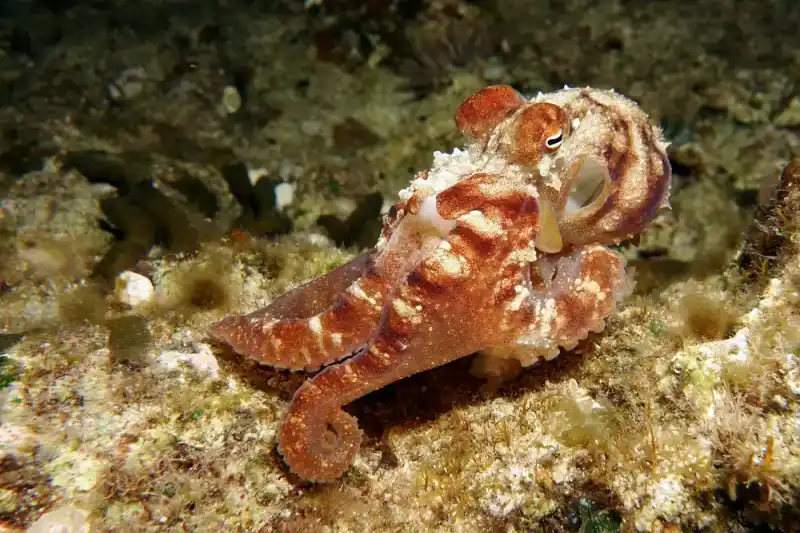
Camouflage: Relying on pigment cells, iris cells, and papillae to achieve rapid color changes and alter skin texture.
Reproduction: Mostly single reproduction ; males transfer spermatophores via their copulatory arms , and females carry the eggs until hatching and then die.
Morphology and Recognition
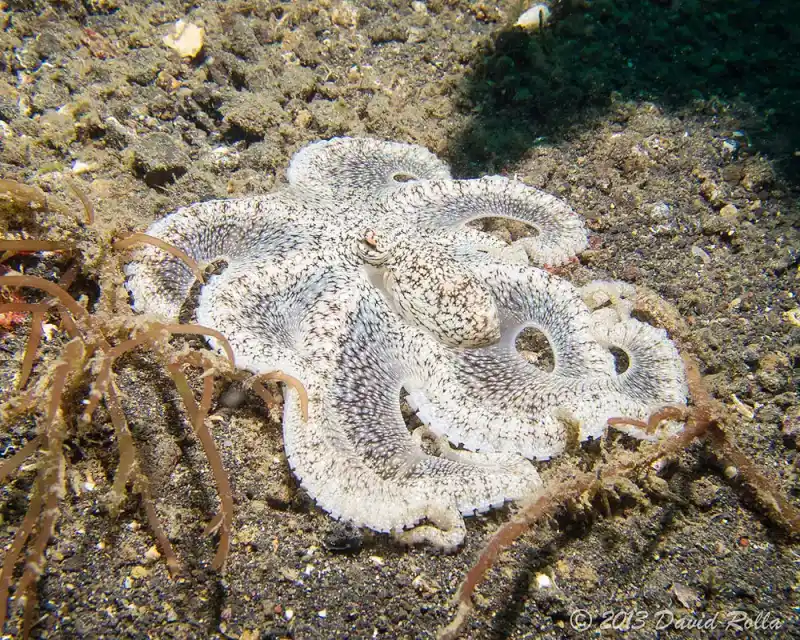
It has eight arms (without tentacles), no outer shell and a degenerate inner shell; the brain and compound eyes are well-developed, and the arms are covered with suckers (generally without keratinous rings).
Body size and lifespan
Body length: mantle 2–30+ cm; arm span 10–100+ cm (varies by species).
Lifespan: 1–3 years for small to medium-sized species, and several years for large species.
Distribution and Habitat
Global tropical-temperate-arctic seas: rocky reefs, seagrass beds, sandy and muddy bottoms to continental slopes/seamounts ; mostly nocturnal, living in caves or digging their own nests.
Conservation and Threats
Fisheries pressure: Nearshore species are often the target of fisheries and require quota/size/closed season management.
Environmental changes: Coastal pollution, plastics, and rising sea temperatures may affect behavior and reproduction.
IUCN: Family-level overview; status needs to be assessed at the species level ; this site treats it as unassessed (NE) .
Frequently Asked Questions
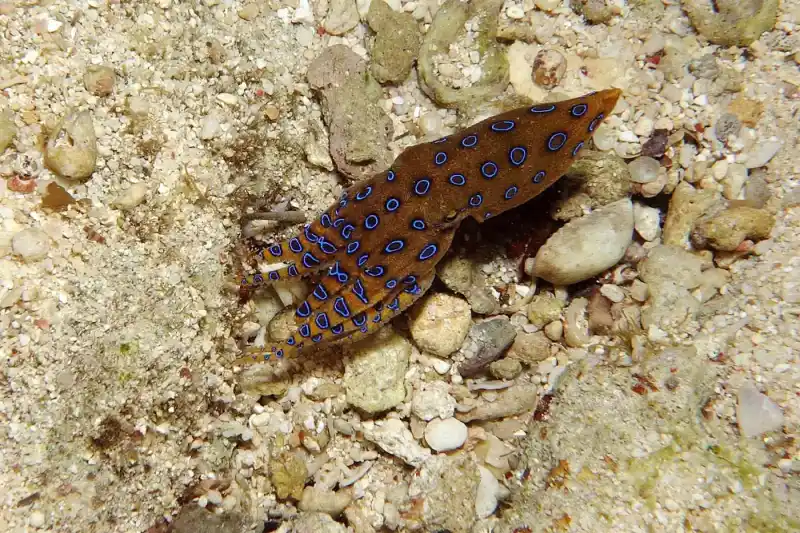
Q1: Are they all poisonous? Most are only mildly toxic to subdue their prey; a few, such as the blue-ringed octopus , contain tetrodotoxin , which poses a potential danger to humans.
Q2: Why is the camouflage so strong? It is achieved by rapidly changing the color and skin roughness through pigment cells and papillae , combined with body shape mimicry.
Q3: Can they move out of the water? Intertidal species can crawl briefly between tide pools, but they need to stay moist and quickly return to the water.
Q4: Can they learn and remember? Octopuses have learning and memory abilities; they can open containers, recognize shapes, and form experiences.