Basic Information
Scientific classification
- Chinese name: Australian giant squid
- Scientific name: Sepia apama
- Classification: Molluscs
- Family and genus: Sepiidae Sepia
Vital signs data
- Body length: mantle to ~50 cm; total length nearly 1 m
- Weight: Large individuals can reach ~10 kg
- Lifespan: Approximately 1–2 years; dies of old age after reproduction.
Significant features
Millisecond-level color changes and undulating camouflage; breeding and gathering in winter; using tentacles to strike prey with lightning-fast thrusts; possessing cuttlebone in its body to adjust buoyancy.
Distribution and Habitat
Rocky reefs, seagrass beds, and gravelly bottoms in the temperate waters of southern Australia; the nearshore waters of Waila are a well-known breeding ground.
Appearance
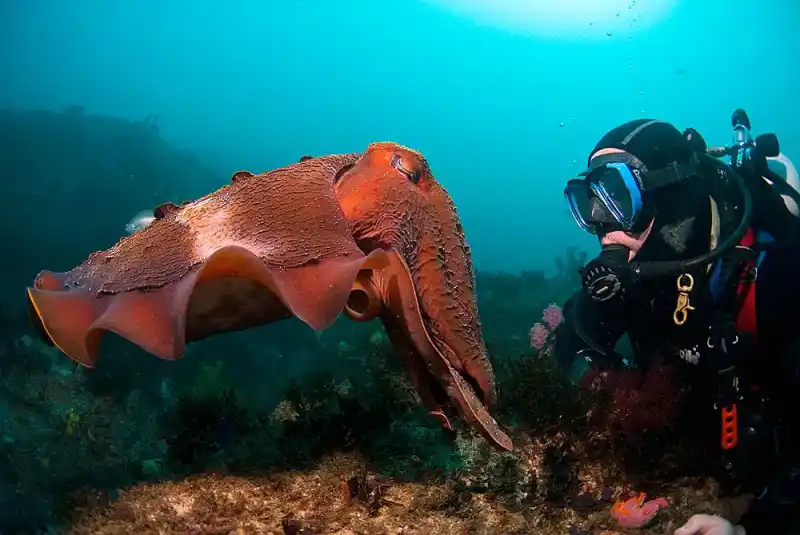
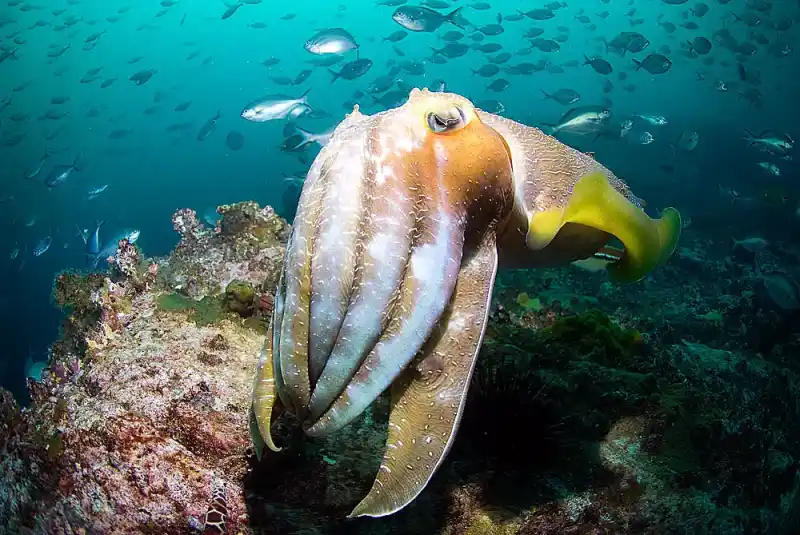
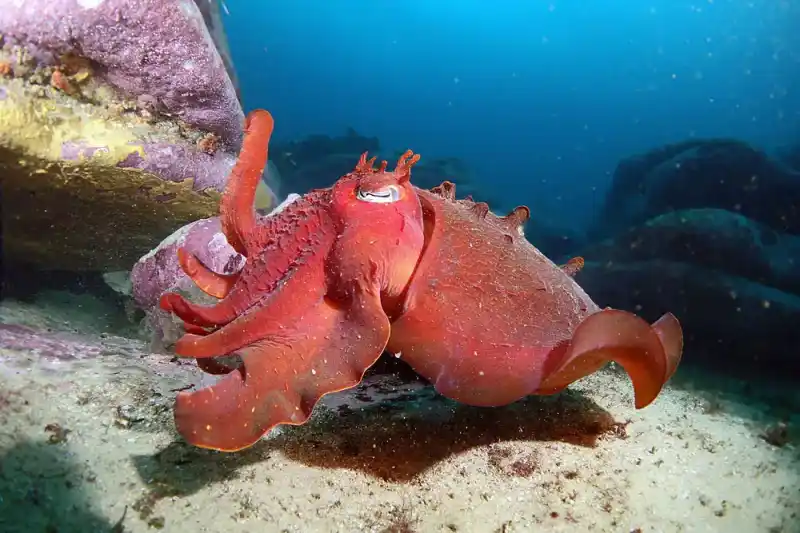
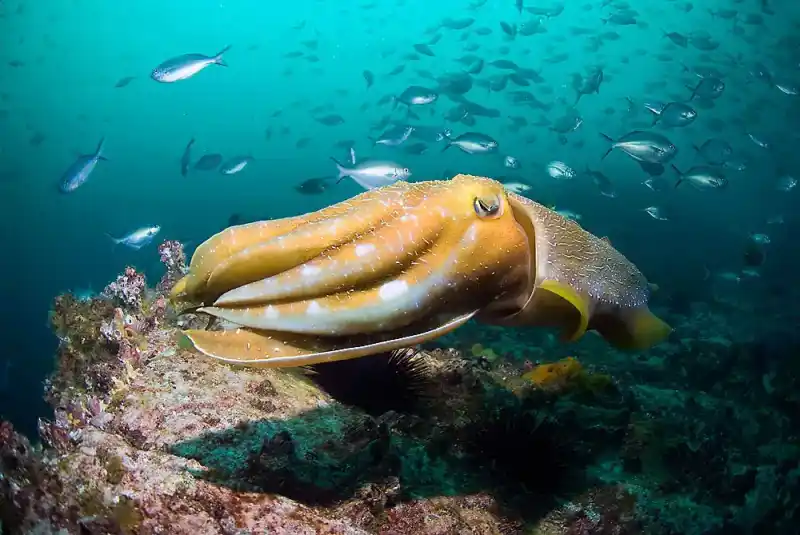
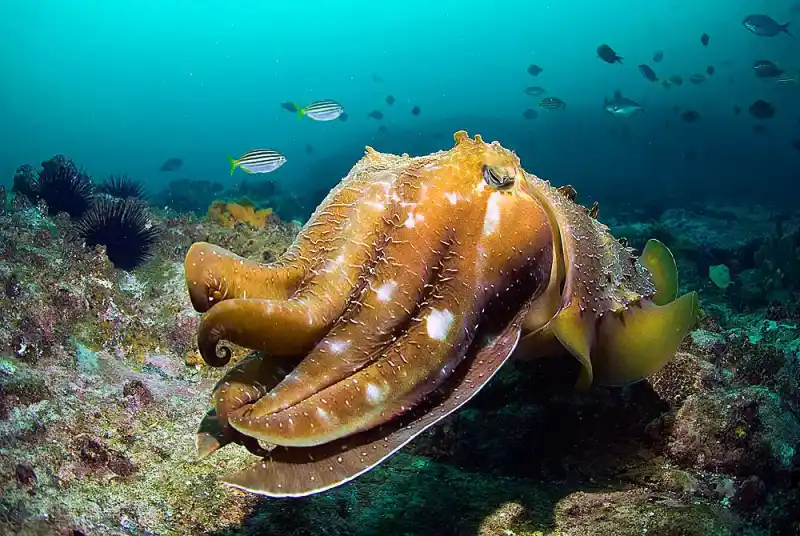
The body is flat and broad, with lateral fins running through it; eight arms and two tentacles; large eyes with W-shaped pupils; and skin with erect papillae that give it a rough appearance.
Detailed introduction
The Australian giant squid ( Sepia apama ) is one of the largest known squid, belonging to the class Cephalopoda, order Sepiidae . It is renowned for its astonishing ability to change color and texture , switching between colors and patterns in milliseconds, and raising papillae to alter skin contours, achieving highly effective camouflage and courtship displays. Its massive winter breeding populations in Spencer Gulf, South Australia, are particularly famous.
Ecology and Biology
Diet: Carnivorous, preying on small fish, crustaceans, and polychaetes; uses its two tentacles to thrust and pull prey to its beak-like jaws.
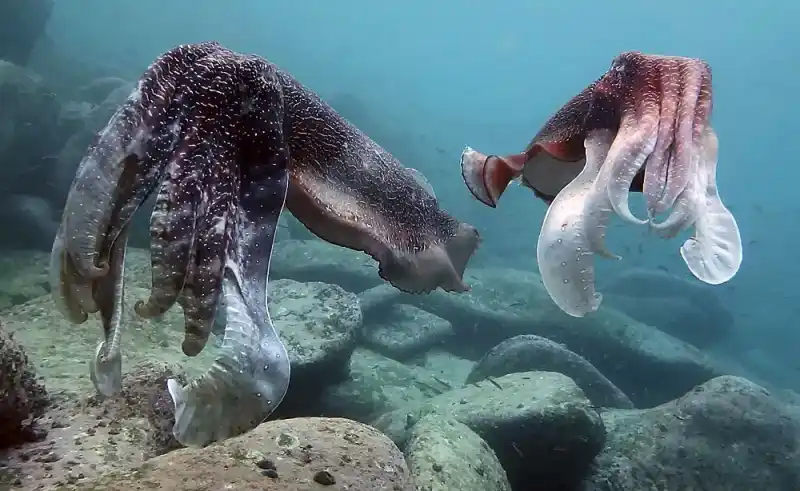
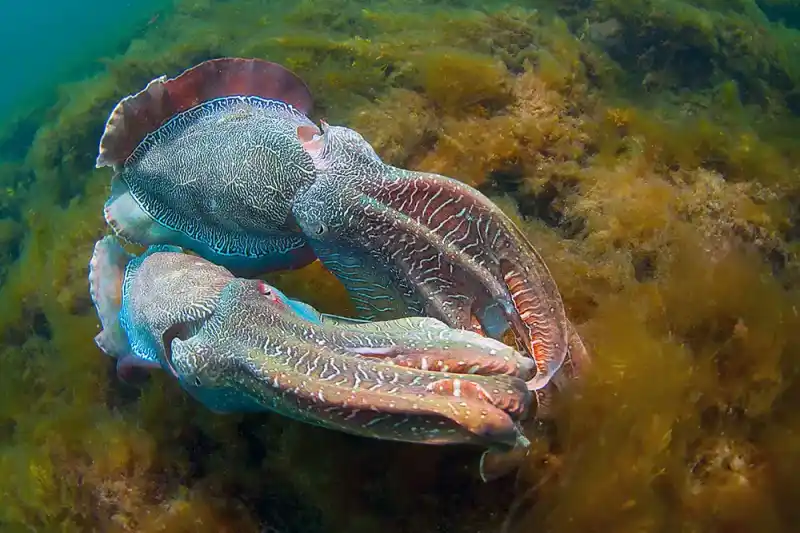
Reproduction: They gather to breed in the reef areas near the shore during winter; males display strong body coloration and patterns and compete for mates, while females attach fertilized eggs to rock crevices and seaweed.
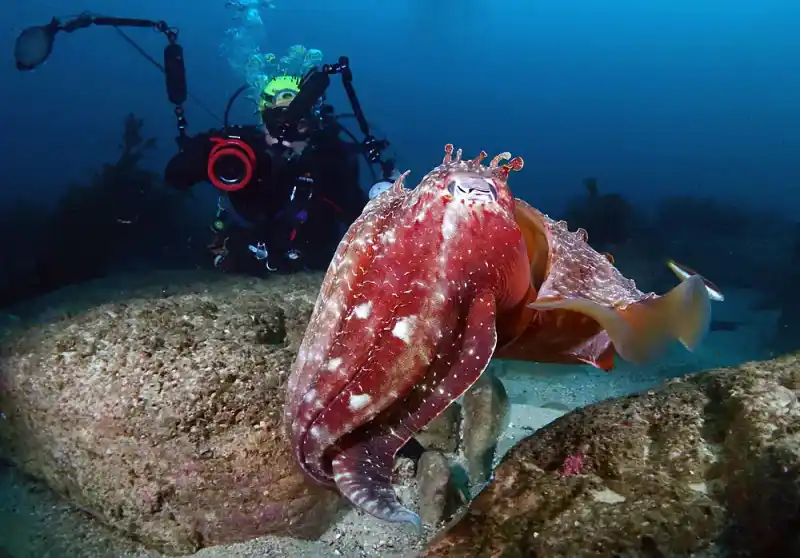
Behavior: Possesses high learning and memory abilities; can quickly combine patterns such as color stripes, checkerboard patterns, and ripples based on the background, lighting, and opponent.
Morphology and Recognition
It has a large calcareous "cuttlebone" inside its body to regulate buoyancy; its body is flat and broad, with lateral swimming fins running along its sides. It has eight arms and two tentacles (the tentacles are usually tucked into a pouch between the arms), large eyes with "W"-shaped pupils; its body surface can be covered with erect papillae, forming a rough or nodular appearance.
Body size and lifespan
Body length: Mantle can reach ~50 cm; total length can approach 1 m.
Weight: Large individuals can reach around 10 kg (regional variations).
Lifespan: mostly 1–2 years (typically short lifespan for cephalopods), they die of old age after reproduction.
Distribution and Habitat
Distributed in the temperate waters of southern Australia (Western Australia–South Australia–New South Wales coastal waters), commonly found on rocky reefs, seagrass beds, and gravelly bottoms , at depths of approximately 1–50+ m. The nearshore area of Whyalla in the northern part of Spencer Bay is a well-known breeding ground.
Conservation and Threats
Threat factors: nearshore engineering and emissions, overfishing/bycatch, tourism disturbance, habitat degradation and ocean warming.
Management recommendations: Implement fishing bans/speed limits/diving restrictions and water quality monitoring during the core breeding season and core habitats; popularize the "no-touch" principle for diving.
IUCN: To be consistent with the internal standards, it is marked as Unassessed (NE) here (subject to the latest authoritative assessment).
Frequently Asked Questions
Q1: Why does the color change instantly? It is controlled by the combined action of pigment cells, iris cells and white cells (leukocytes) , plus changes in skin papillae to alter surface roughness.
Q2: What are the differences between squid and octopus? Cuttlefish have a cuttlebone inside their bodies and lateral fins running along their sides; squid mostly have an arrow-shaped body and a slender triangular tail fin; octopus have no internal shell and only eight arms.
Q3: Why do they gather in winter? For reproduction ; males display their patterns and compete for mates, while females lay their eggs in reef crevices and on seaweed.
Q4: Is it poisonous? Cuttlefish saliva contains enzymes and certain toxic components to subdue prey, but unlike the blue-ringed octopus , it poses a lower danger to humans; however, it is still necessary to avoid handling or disturbing it.


