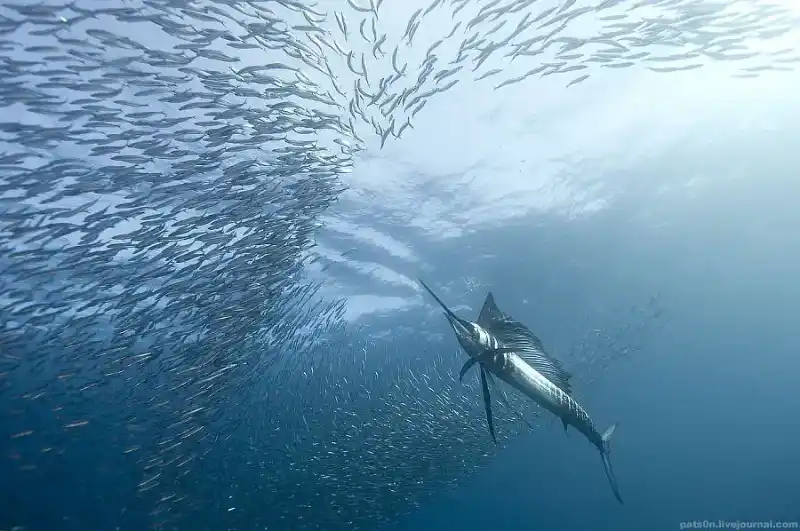
Basic Information
Scientific classification
- Chinese name: Sailfish (also known as sailfish)
- Scientific name: Istiophorus platypterus
- Classification: Large fish
- Family and Genus: Sailfish (family Sailfishidae)
Vital signs data
- Body length: Commonly 1.7–2.5 m; Maximum ~3.2–3.4 m (including the rostrum)
- Weight: Commonly 30–60 kg; can reach up to 80–100+ kg
- Lifespan: Approximately 10–15 years
Significant features
High-speed migratory predation; high sail-shaped dorsal fin and long snout; spawning in batches; highly correlated with warm water fronts and baitfish balls.
Distribution and Habitat
Global tropical and subtropical offshore waters and continental shelf margins; primarily surface layer, moving vertically with the bait.
Appearance
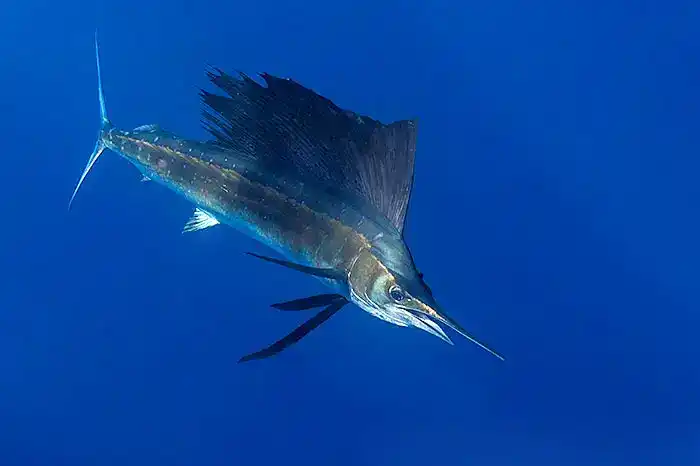
Blue-gray body with blue stripes; first dorsal fin is very high with a black spot; snout is slender; pectoral fins can be close to the body.
Detailed introduction
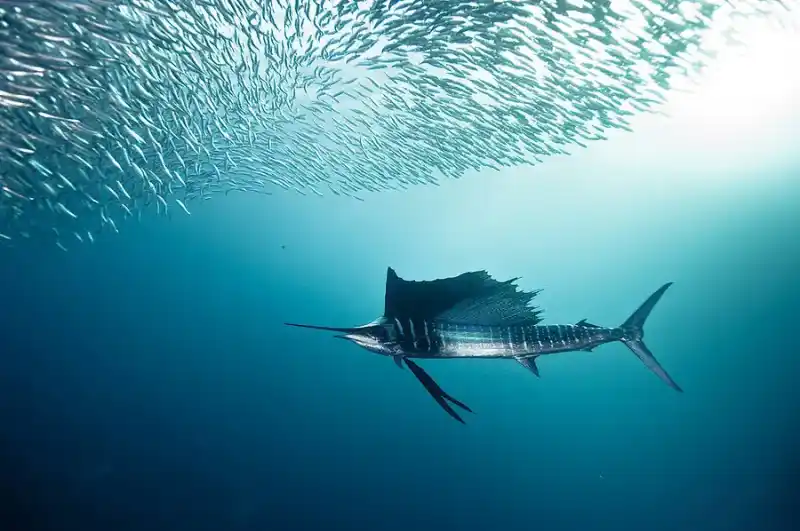
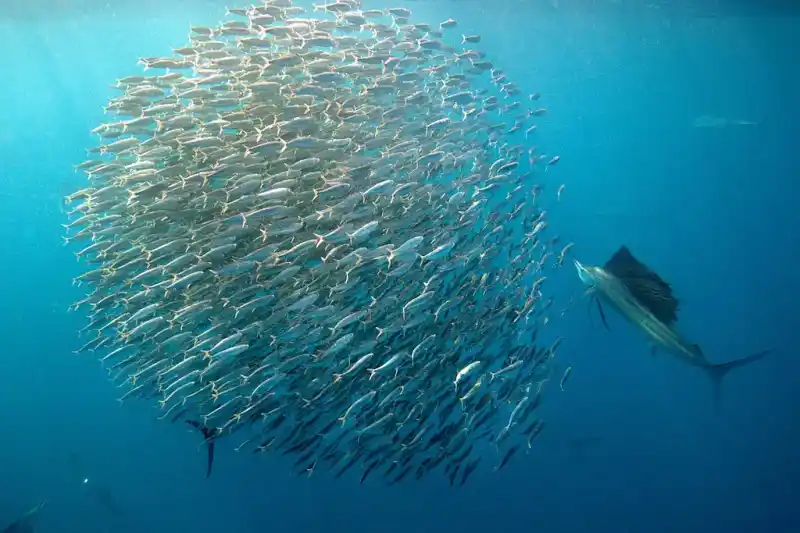
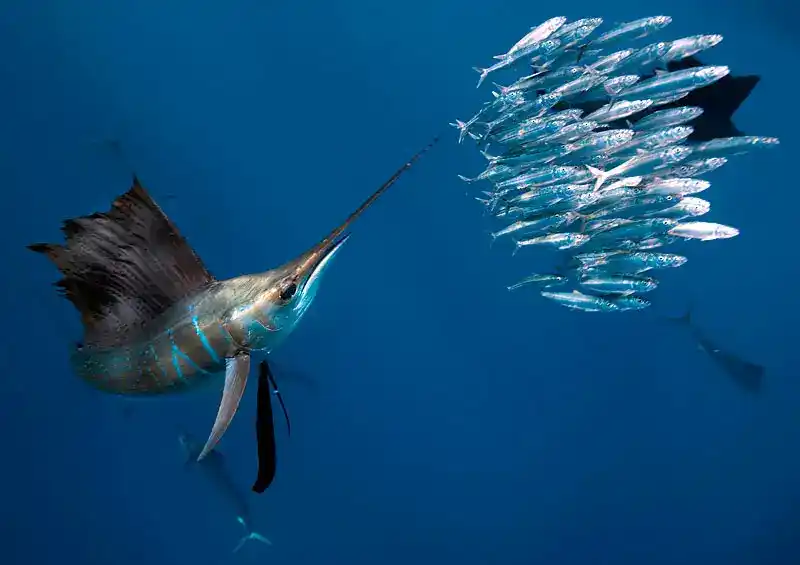
The sailfish ( Istiophorus platypterus , also known as the sailing marlin ) is a well-known high-speed migratory marine predator belonging to the family Istiophoridae . Its distinctive features include a large, sail-like dorsal fin and a slender snout ("sword") , used to disrupt schools of fish and reduce water resistance. Sailfish primarily inhabit the surface to upper layers of the open ocean , chasing schools of fish such as sardines and mackerel, as well as cephalopods.
Ecology and Behavior
Typical diurnal ambush predator ; often associated with warm water fronts, currents/upwells, seamounts, and the outer edges of coral reefs. Possesses regional thermoregulation capabilities (red muscle insulation), facilitating high-speed bursts of activity. Reproduction is oviparous , with spawning in batches in warm waters; eggs and larvae are pelagic and pelagic.
Morphology and Recognition
The body is elongated and streamlined, with a slender snout; the first dorsal fin is extremely high like a sail, with numerous small black spots, which often stand erect and turn purplish-blue when excited/hunting; the sides of the body have irregular blue vertical stripes/bands ; the pectoral fins are relatively long and can lie close to the body. The upper jaw has a bony snout, while the lower jaw is normal.
Body size and lifespan
Body length: Commonly 1.7–2.5 meters (total length including snout); maximum can reach about 3.2–3.4 meters.
Weight: Commonly 30–60 kg; large individuals can reach 80–100+ kg.
Lifespan: Approximately 10–15 years (regional variations).
Distribution and Habitat
They are widely distributed in tropical and subtropical offshore waters worldwide (Atlantic, Indian Ocean, Pacific Ocean), and are usually active in the surface layer of 0–50 m. They also move vertically with the bait. Seasonally, they migrate with warm currents and baitfish, and are often seen gathering in groups to hunt "bait balls".
Threats and Protection
Fisheries stress: longline fishing, trolling and recreational fishing; by-catch and accidental hooking.
Habitat and climate: Abnormal sea temperature affects spawning and prey distribution; floating debris and tangled fishing lines.
IUCN Global Assessment: Least Concern (LC) . Management Recommendations: Best practices for release (no barbs/round hooks, short tow, photo and immediate release), size/quota management, peak season pressure control, establishing tag-recapture and citizen scientific records.
Frequently Asked Questions
Q1: What are the differences between sailfish, marlin, and tuna? All belong to the sailfish family; sailfish have a very high dorsal fin like a sail with dense black spots, and blue stripes are common on their sides; marlin have a lower dorsal fin and a more robust body.
Q2: Is it really "the fastest at sea"? The sprint speed of the sailfish is extremely high, with actual measurements often in the tens of knots; the specific extreme value is affected by the measurement method.
Q3: Meat quality and utilization? It is an important economic and recreational catch, but many fishing areas have implemented release and quota systems to maintain the sustainability of the population.
Q4: Will it approach the shore? It mostly operates in the open sea and on the outer edge of reefs, and will also follow bait to the edge of the continental shelf and the upwelling zone.


