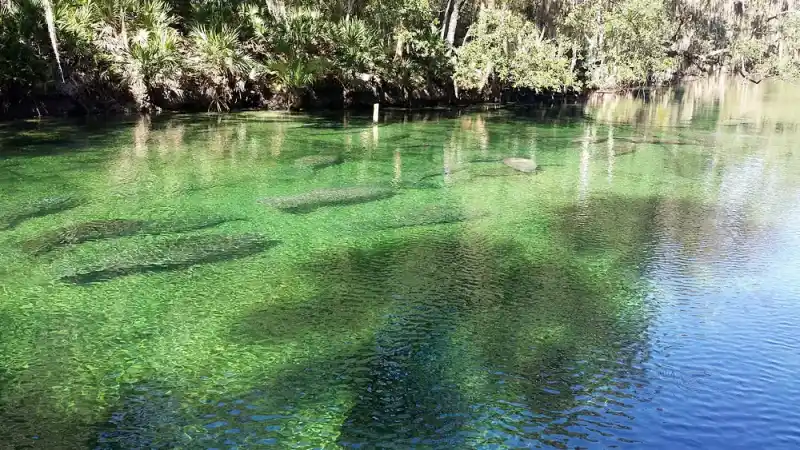
Basic Information
Scientific classification
- Chinese name: Manatee
- Scientific name: Trichechus (genus)
- Classification: Large fish
- Genus and family: Order Manatellidae
Vital signs data
- Body length: approximately 2.5–4.0 meters (genus range)
- Weight: Approximately 300–1,000+ kg
- Lifespan: Approximately 30–50 years (some > 60 years)
Significant features
Seagrass diet; warm, shallow waters and seagrass/aquatic plant zones; close mother-offspring relationship and long gestation period; rounded tail blades.
Distribution and Habitat
Shallow pastures and slow-flowing waters in the Atlantic and Amazon basins of the Americas, and inland water bodies along the West African coast, estuaries, and inland areas.
Appearance
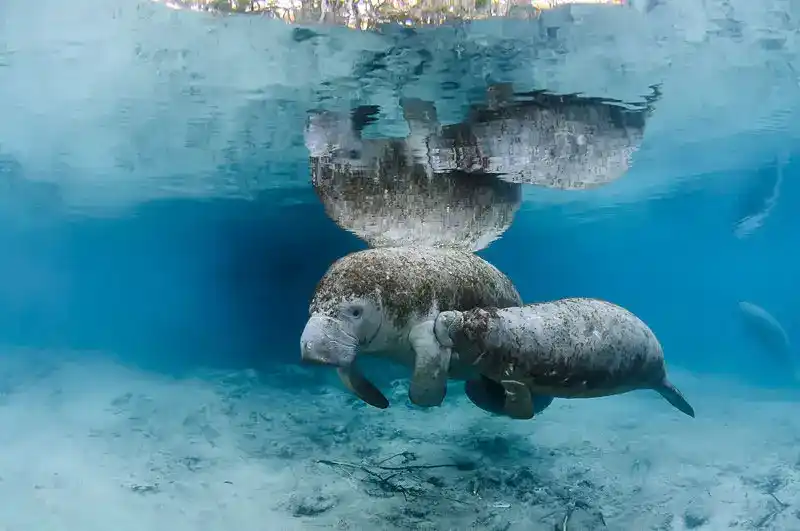
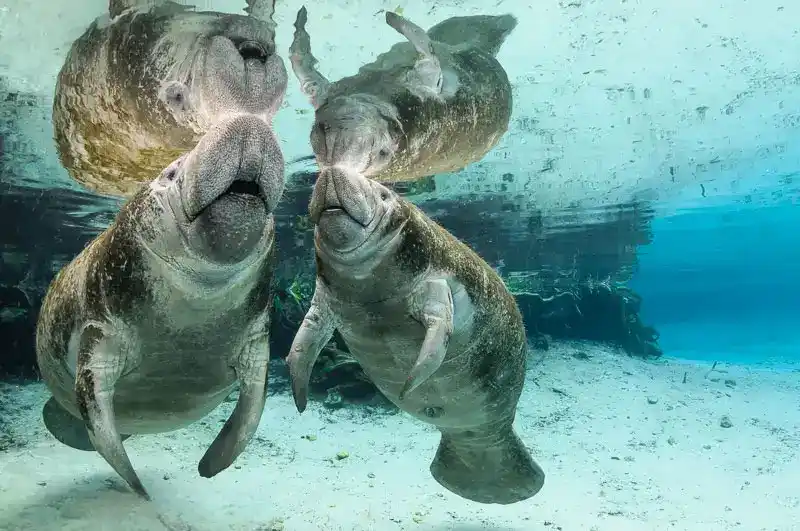
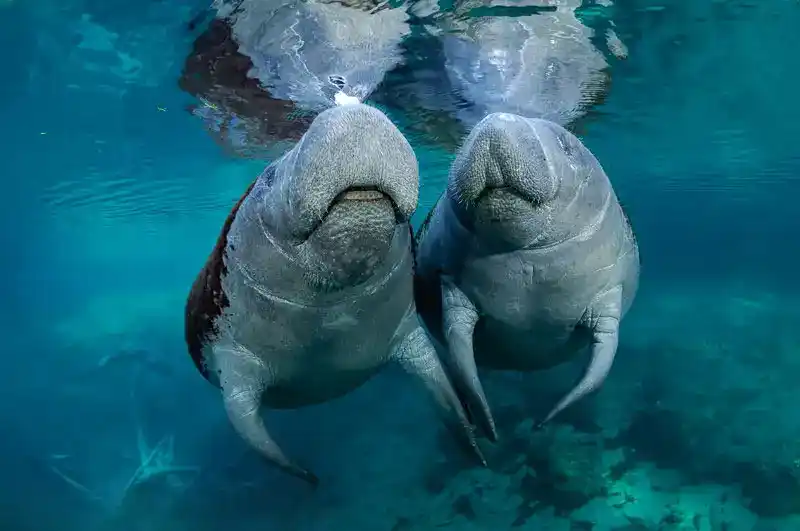
It has a stout, spindle-shaped body; tentacles at the tip of its snout; paddle-shaped forelimbs; and a rounded tail lobe. Its skin is grayish-brown and often covered with algae.
Detailed introduction
The genus * Trichechus * belongs to the order Sirenia and the family Trichechidae. It comprises large, extant marine herbivorous mammals, commonly known as "manatees." Three species are currently recognized in this genus: the West Indian manatee ( *T. manatus *, including the Florida and Antilles subspecies), the Amazon manatee (* T. inunguis *), and the African manatee (* T. senegalensis *). It is distinguished from the dugong ( *Dugong dugon *), which belongs to the same order but a different family.
Ecology and Behavior
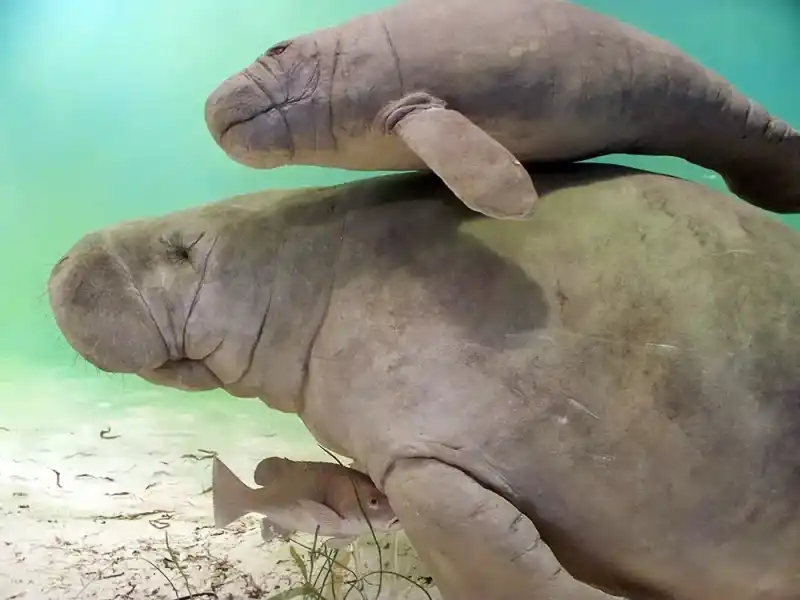
Their diet consists mainly of seagrass, freshwater/brackish water plants , and algae, with a daily intake reaching 4–10% of their body weight. They are most commonly found in shallow, slow-flowing, and highly transparent waters; they often exhibit seasonal migration and temperature preferences (such as overwintering near warm springs/power plant drainage). Mothers and offspring have a close bond, with a gestation period of approximately 12–14 months , usually one litter, and offspring stay with their mother for 1–2 years.
Morphology and Recognition
It has a robust, spindle- shaped body, a round head, and bristly barbels on its snout; its forelimbs are paddle-shaped flippers , while its hind limbs are reduced; its tail is a broad, round paddle blade (unlike the crescent-shaped tail of the dugong). Its skin is grayish-brown and covered with coarse hairs and algae; its incisors are reduced, and it has a continuously replacing row of molars ("tooth conveyor belt").
Size and lifespan (genus level)
Body length: approximately 2.5–4.0 meters (varies among different populations/individuals).
Weight: Approximately 300–1,000 kg or more (larger females are even heavier).
Lifespan: Commonly found in the wild for 30–50 years, with some exceeding 60 years.
Distribution and Habitat
T. manatus : Seagrass beds/estuaries/inner bays along the Northwest Atlantic-Caribbean-Gulf of Mexico coast.
T. inunguis : Amazon River basin freshwater system (river channels, lakes, floodplains).
T. senegalensis : West African coastal-estuary-inland waters , often associated with mangroves and seagrass belts.
Threats and Protection
Ship collisions and propeller damage ; high risk in waterways and areas with high concentrations of cruise ships.
Fishing gear entanglement and accidental catch (drift nets, traps).
Habitat degradation (seagrass bed decline, mangrove destruction, pollution and water extraction projects).
Extreme weather and cold waves can cause mass unnatural deaths (when there is insufficient heated habitat).
Key management points: temporal and spatial protection of critical warm wintering grounds and foraging hotspots ; speed limits and buffer zones; fishing gear improvement and rescue networks; aquatic plant-seagrass belt restoration and water quality management; public education and collaboration with rescue centers.
Frequently Asked Questions
Q1: How to distinguish them from dugongs? Manatees have round, paddle- like tails, while dugongs have crescent-shaped tails; manatees can mostly enter freshwater, while dugongs tend to live near seagrass beds.
Q2: Will it attack people unprovoked? It is docile and will not attack unprovoked; however, you should keep your distance and avoid feeding or touching it.
Q3: What is the conservation status? This page provides a general overview at the genus level , and is " not assessed "; the IUCN status varies for each species (e.g., the regional assessment of common EN/VU for West Indian manatees).
Q4: What is the main food? Seaweed and freshwater/brackish water aquatic plants, which can supplement the intake of algae and deciduous plants.


