


Basic Information
Scientific classification
- Chinese name: dolphin
- Scientific name: Delphinidae (family)
- Classification: Large fish
- Family and genus: Dolphinidae, Dolphin
Vital signs data
- Body length: approximately 1.2–9.0 meters (varies by species)
- Weight: Approximately 40–6,000+ kg
- Lifespan: Small: 20–40 years; Large: 60–90+ years
Significant features
Highly social and echolocation; cooperative hunting and learning transmission; wide distribution and adaptation to diverse ecological niches.
Distribution and Habitat
The global ocean area from the coast and continental shelf to the open ocean and deep sea; related to ocean structures such as fronts, upwellings, and eddies.
Appearance
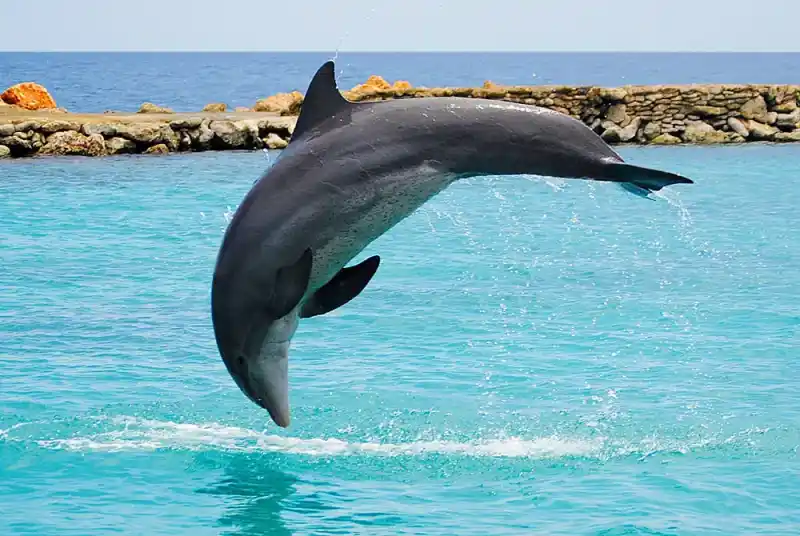
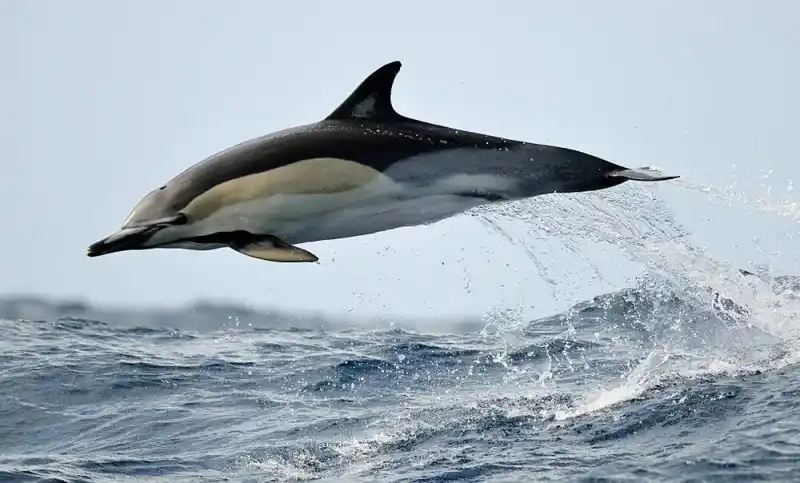
Streamlined body shape, prominent dorsal fin and beak; multiple conical teeth; single blowhole.
Detailed introduction
The Delphinidae family is the most diverse and widely distributed family of toothed whales in the order Cetacea, encompassing over 30 genera and more than 90 extant species, including true dolphins, killer whales (orcas), false killer whales, spinner dolphins, and bottlenose dolphins . They are renowned for their high sociality, echolocation , and complex behaviors, and are apex or secondary predators in the ocean, playing a crucial role in food web structure and energy flow.
Ecology and Behavior
Diet: Primarily feeds on mid-to-upper-level fish and cephalopods , with some larger species (such as killer whales) also preying on other marine mammals and seabirds.
Social structure: ranging from small groups to large "supergroups", with special matrilineal or mixed kinship networks; exhibiting cooperative hunting, inheritance and learning, and dialectal calls.
Echolocation: Utilizes the melon to focus a sound beam to detect the environment and prey; interspecific acoustic libraries and signal diversity.
Migration and residence: Some populations migrate seasonally, while there are also resident populations and offshore/nearshore lineages.
Morphology and Identification (Common Characteristics at the Departmental Level)
Sizes range from 1.2 meters (small spinner dolphins) to 8–9 meters (killers); streamlined body shape with a distinct dorsal fin and rostrum (killers and others have short rostrums); multiple conical teeth; single blowhole; subcutaneous fat layer and muscles adapted for high-speed, long-distance swimming.
Body type and lifespan (at the departmental level)
Body length: approximately 1.2–9.0 meters (depending on the species).
Weight: Approximately 40 kg to 6,000+ kg (orca).
Lifespan: Small true dolphins live 20–40 years, while large species (such as orcas) can live 60–90 years or even longer.
Distribution and Habitat
Except for some enclosed polar regions, they can be found in almost all oceans around the world , with different species distributed from the coast and continental shelf to the high seas and deep sea. Nearshore types are often associated with estuaries, upwellings and continental shelf fronts, while pelagic types are associated with warm pools, eddies and leading edge systems.
Threats and Protection
Secondary catches and entanglement: drift gillnets, longline fishing, purse seines, etc.; sonar deterrents, weak breaks, and release regulations can mitigate these issues.
Noise and Vessels: Shipping, military sonar, and seismic exploration affect communication and foraging; vessel collision risk.
Pollution and food web changes: Persistent pollutants, plastics, and climate variability alter baitfield patterns.
Unhealthy tourism and harassment: close-range chasing, feeding, and stalking lead to impaired energy budgets and behavior.
IUCN: This page provides a family-level overview and is "unassessed" overall; there is significant variation in species/population levels (LC–CR). Key measures include: improved and avoidance of fishing gear, noise management, speed/route optimization, spatiotemporal protection of key habitats and migration routes, and long-term acoustic-photographic identification monitoring and citizen science data.
Frequently Asked Questions
Q1: What is the difference between dolphins and whales? Taxonomically, they both belong to the order Cetacea and the group of toothed whales, but "dolphins" are mostly smaller toothed whales;
Although killer whales and other whales are called "whales," they belong to the dolphin family.
Q2: Do they all leap out and surf? Many dolphins leap out, ride waves, and ride the bow of boats; this behavior is related to energy balance, social interaction, and escaping predation.
Q3: Is it human-friendly? Wild individuals should not be touched or fed; maintaining distance and watching at a low speed is safer and more ethical.
Q4: How to identify species? You can combine body size, dorsal fin morphology, side markings/patches, beak length and acoustic features; photo identification is commonly seen in bottlenose dolphins and killer whales.