Basic Information
Scientific classification
- Chinese name: Napoleon wrasse
- Scientific name: Cheilinus undulatus
- Classification: Large fish
- Family and Genus: Wrasseidae, Genus: Wrasse
Vital signs data
- Body length: Commonly 60–120 cm; Maximum ~180–200 cm
- Weight: Commonly 10–30 kg; Maximum up to ~150–180 kg
- Lifespan: Approximately 30+ years (late maturity)
Significant features
Large reef-dwelling fish; females predominate over males; feeds on hard-shelled invertebrates such as crown-of-thorns starfish; extremely sensitive to overfishing; flagship species.
Distribution and Habitat
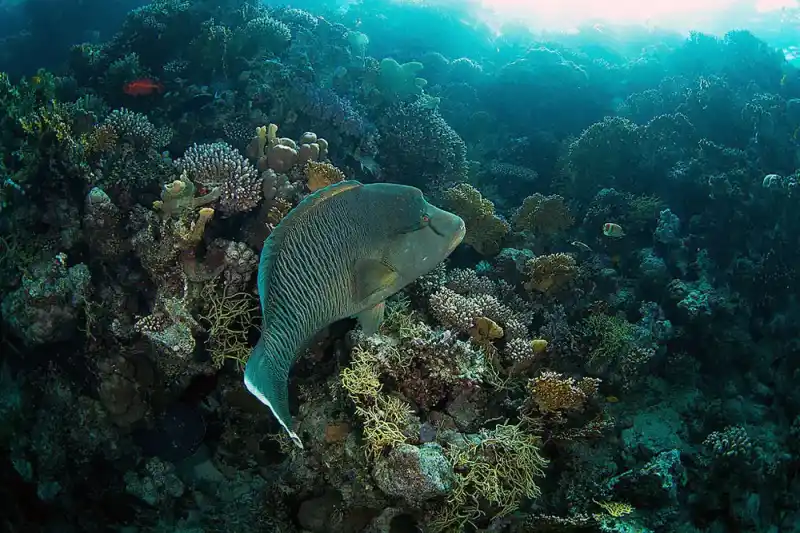
Outer reef slopes/platforms/lagoon reefs in the tropical Indo-Pacific region, 3–60 m water depth.
Appearance
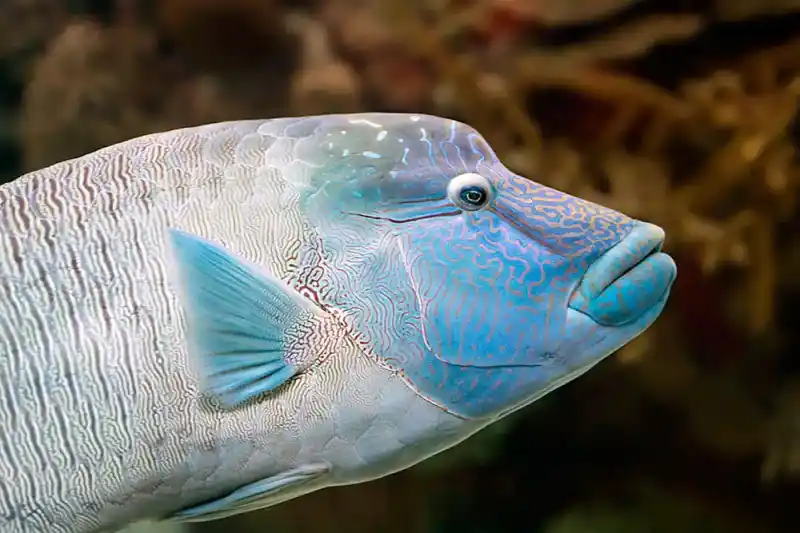
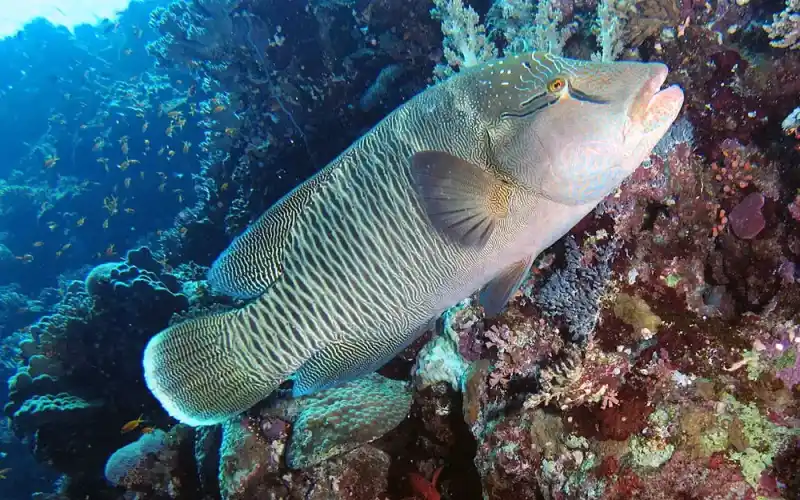
The forehead is prominently raised (more so in males); the lips are thick; the body is blue-green with wavy lines; there is an arc-shaped black stripe behind the eye; juveniles are dark with white spots.
Detailed introduction
The Napoleon wrasse ( Cheilinus undulatus ), commonly known as the Napoleon wrasse or wrasse , is a large reef-dwelling fish belonging to the wrasse family. It is a flagship species and important predator in coral reef ecosystems, particularly known for its diet of starfish, sea urchins, mollusks , and crown-of-thorns starfish . IUCN Global Assessment: Endangered (EN) ; CITES Appendix II (international trade is strictly regulated).
Ecology and Behavior
Typical reef-dwelling species on the outer reef slope , active during the day and resting in reef crevices at night. They are hermaphroditic (protogynous), transitioning from female to male with age and size. They mature late, have a long lifespan (decades), and are extremely sensitive to overfishing and the live fish trade .
Morphology and Recognition
Large and robust body with a prominent forehead (more pronounced in adult males); thick lips; body color ranging from blue-green to turquoise with irregular wavy lines ; often with an arc-shaped black stripe behind the eye; large scales; dark sides with white spots/stripes on juveniles; large pectoral fins and often blue edges on the dorsal/anal fins in adults.
Body size and lifespan
Body length: Commonly 60–120 cm, with a maximum of about 180–200 cm.
Weight: Commonly 10–30 kg, large individuals can reach 150–180 kg.
Lifespan: Approximately 30 years or more (may vary by region).
Distribution and Habitat
Widespread tropical waters in the Indo-Pacific: from the Red Sea and East Africa to the central and western Pacific (including the South China Sea, Coral Sea, Micronesia, etc.), mainly consisting of outer reef slopes, reef edges, and lagoon reefs , with water depths mostly between 3 and 60 meters.
Threats and Protection
Overfishing and the live fish trade (especially targeting large males and adults).
Cyanide fishing and blast fishing cause direct deaths and damage to coral reefs.
Habitat degradation (whitening, pollution, coastal development).
Recommendations: Body length/fishing season/quota and protected area network, ban on destructive fishing methods, regulation of live fish trade, community co-management and ecotourism as a livelihood alternative.
Frequently Asked Questions
Q1: How to distinguish Napoleon wrasse from regular wrasse? The main characteristics are a high, prominent forehead, a blue-green body color with wavy lines, and a significantly larger body size.
Q2: Why is it sensitive to overfishing? Late maturity, long lifespan, and female-to-male transformation lead to larger individuals (mostly males) being prioritized for fishing, affecting reproduction.
Q3: Does it eat coral? It mainly preys on echinoderms and hard-shelled invertebrates, and also gnaws on attached organisms; controlling crown-of-thorns starfish helps maintain coral reef health.
Q4: How to protect them? Establish protected areas and fishing bans, enforce minimum fish length limits, regulate the trade in live fish and trace their origin, and eliminate cyanide and explosive fishing.


