Basic Information
Scientific classification
- Chinese name: Chestnut-bellied Hummingbird
- Scientific name: Amazilia castaneiventris, Chestnut-bellied Hummingbird
- Classification: Climbing birds
- Family and genus: Apodiformes, Hummingbird family, American hummingbird
Vital signs data
- Body length: No verification information available.
- Weight: No verification information available.
- Lifespan: No verification data available.
Significant features
Distribution and Habitat
Distributed from southern Canada and Alaska to Tierra del Fuego, including the West Indies
Appearance
Details are unknown.
Detailed introduction
The Chestnut-bellied Hummingbird, scientifically known as Amazilia castaneiventris, has unknown habits.
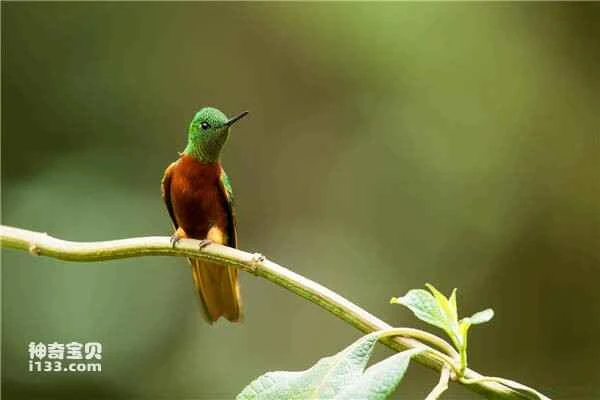
The Chestnut-bellied Hummingbird was too small for its skeleton to be easily preserved as a fossil, and its evolutionary history remains a mystery. Most hummingbirds live in Central and South America, where fossils of hummingbirds dating back a million years have been found, leading scientists to believe that hummingbirds originated in the Pleistocene epoch. However, scientists in southern Germany discovered the world's oldest hummingbird fossil, dating back over 30 million years, indicating that the ancestors of hummingbirds appeared as early as the Oligocene epoch.
It is listed in the "List of Terrestrial Wild Animals of Beneficial or Important Economic and Scientific Research Value under State Protection" issued by the State Forestry Administration of China on August 1, 2000.
It is listed as one of the world's endangered species.
It is one of the species listed in the United Nations' List of Endangered Wild Animals.
Protect wild animals and ban the consumption of wild game.
Maintaining ecological balance is everyone's responsibility!