Basic Information
Scientific classification
- Chinese name: Mouse spider
- Scientific name: Missulena (typical species include Missulena bradleyi, etc.)
- Classification: Arthropoda
- Genus and family: Missulena (mouse spider)
Vital signs data
- Body length: The body length is mostly about 10–35 mm, and the female spider is usually more robust.
- Weight: Weight varies from species to individual, ranging from several hundred milligrams to several grams.
- Lifespan: Female spiders can live for several years, with some individuals living for 8–10 years or more.
Significant features
Large venomous spiders belonging to the order Araneae; they burrow and ambush prey; some species have venom similar to that of funnel-shaped spiders; there is a clear difference between males and females.
Distribution and Habitat
They are mainly distributed in the Australian mainland and burrow in various soil environments, including grasslands, scrublands, farmlands and yard edges.
Appearance
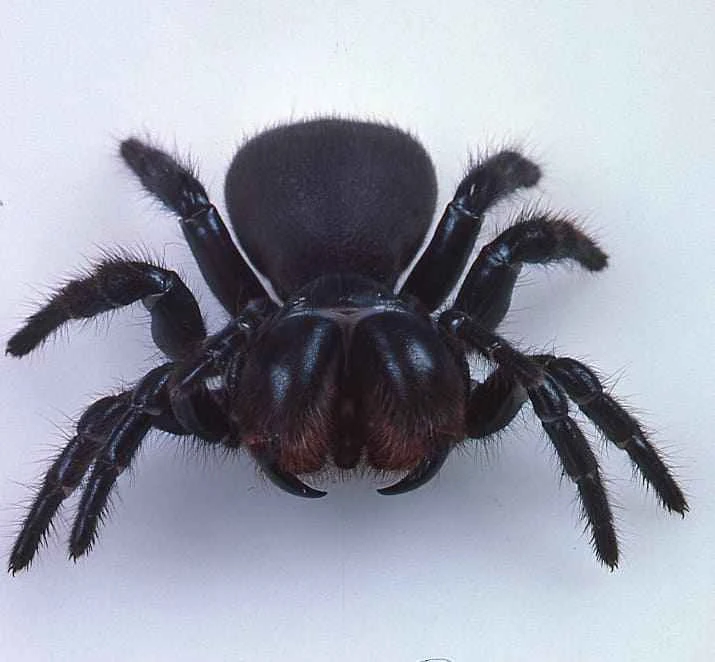
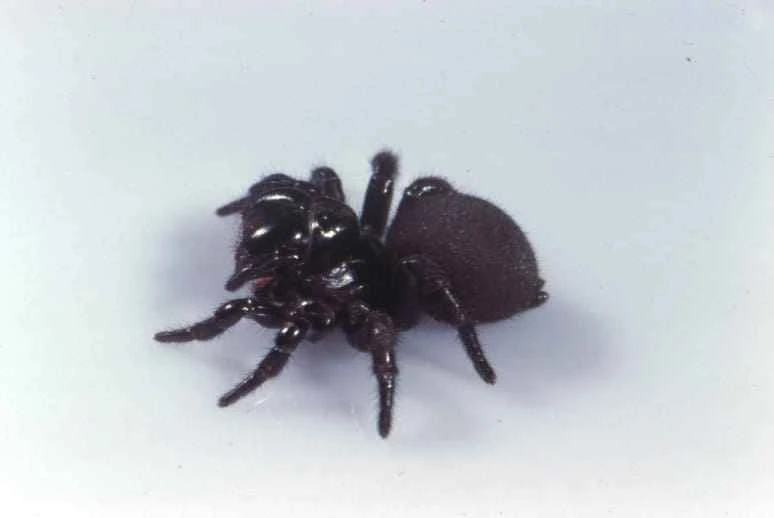
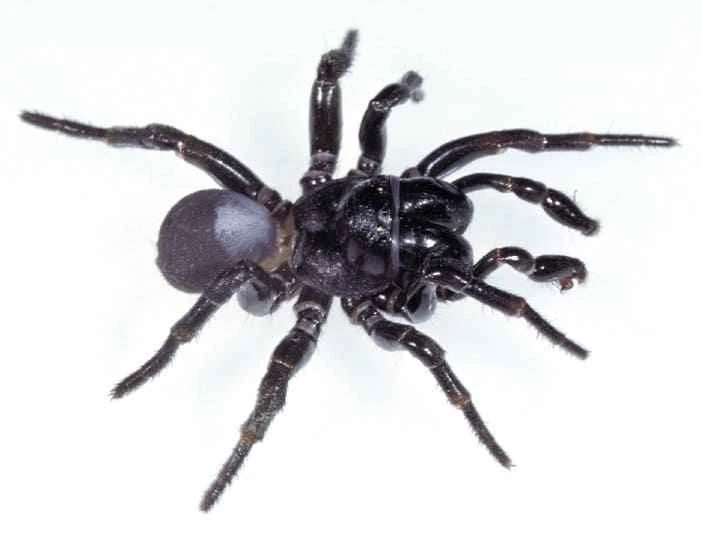
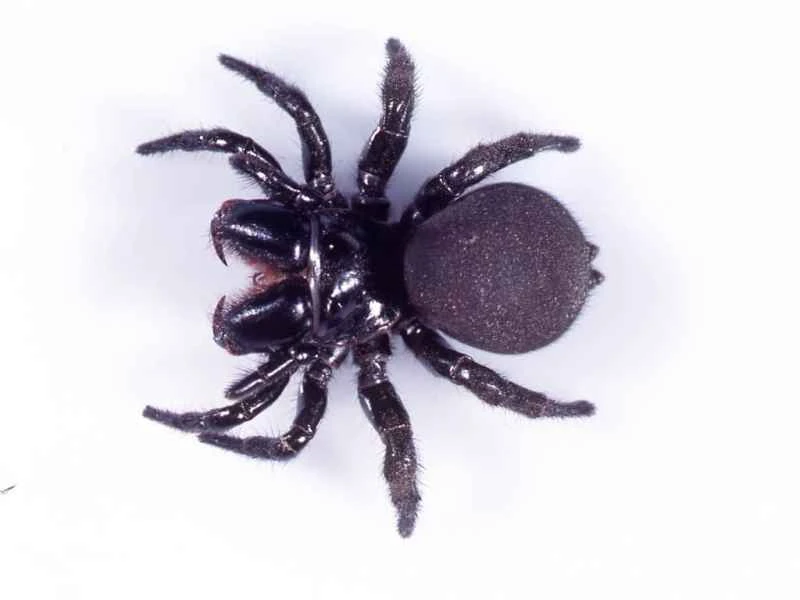
They have a short, stout body with a high-arched forequarters and strong chelicerae; their body color is mostly dark brown or black, while male spiders often have blue or red bright spots.
Detailed introduction
Mouse spiders generally refer to a group of spiders belonging to the genus *Missulena* , primarily distributed in Australia and surrounding areas. They are robust in shape with a high-arched forequarters, somewhat resembling small tarantulas. Some species also possess potent neurotoxins similar to funnel-web spiders , and in Australia, they are classified as a group of venomous spiders that require serious attention.
Basic Information
Scientific name (general term): Genus Missulena – genus of mouse spiders (typical species include the eastern mouse spider Missulena bradleyi, etc.)
Size: The body length is usually about 10–35 mm, and the female spider is usually more robust than the male spider.
Lifespan: Female spiders can live for several years, with some reports suggesting they can live for 8–10 years or more; male spiders generally have shorter lifespans.
Appearance and Identification Features
Mouse spiders are generally short and stout with a high-arched forequarters , strong chelicerae, and relatively thick legs. Body color varies by species: some females are dark brown or blackish-brown overall, while males may have striking blue or red patches. For example, the forequarters and base of the chelicerae of male Eastern mouse spiders are often bright blue, and some species have red patches on the forequarters or abdomen.
Their eye arrangement differs from that of ordinary spiders; they belong to the order Mygalomorphae. Their fangs open and close vertically from top to bottom, similar to close relatives such as tarantulas and funnel-web spiders.
Distribution and Habitat
Mouse spiders are mainly distributed in native Australia , including the east, south, west, and parts of the interior, with a few species also found in nearby areas such as New Guinea. They typically dig silk-lined mud burrows in the ground and ambush near the entrance. The burrows are often reinforced with silk and soil, and sometimes they are disguised as small, inconspicuous holes.
Lifestyle and Diet
Mouse spiders are mostly nocturnal ambush predators . They hide in their burrows during the day and wait at night for passing insects, other arthropods, and even small vertebrates at or near the burrow entrance. When prey passes by the burrow entrance, they suddenly emerge, bite with their powerful chelicerae, and inject venom.
Toxicity and Effects on Humans
The venom of some mouse spiders is similar in composition to that of the Australian funnel-web spider, and is considered to pose a potentially high medical and biological risk . Bites from certain species are known to cause significant neurotoxic symptoms, such as sweating, muscle spasms, and nausea. However, in most reported cases, mouse spider bites do not lead to severe poisoning as frequently as funnel-web spider bites, and antivenom developed for funnel-web spiders is commonly used in modern Australian medical systems.
In general, mouse spiders should be considered venomous spiders requiring caution : If you suspect a mouse spider bite in Australia, seek medical attention as soon as possible so that a professional can assess your symptoms and determine if antivenom is necessary. Children, the elderly, and those with underlying medical conditions should be especially vigilant.
Contact with humans and protection
Mouse spider burrows are often located in yards, lawn edges, dirt roadsides, or under bushes. They may be inadvertently disturbed when people turn over stones, dig soil, or move wood. In areas where mouse spiders are known to be distributed, it is recommended that:
Wear thick gloves when gardening or moving stones or wood;
Avoid walking barefoot near fallen leaves or piles of stones;
If you find a suspected rat spider, do not try to catch it with your bare hands. Contact your local pest/wildlife management department instead.
Frequently Asked Questions
Q1: How potent is the venom of the mouse spider?
Some species have toxicity similar to that of funnel-web spiders, which could theoretically cause severe neurotoxic symptoms.
However, severe cases are relatively rare, and in Australia, funnel-web spider antivenom is usually available for treatment.
Q2: How to distinguish between a mouse spider and a regular large spider?
The mouse spider has a short, stout body with a high-arched forequarters and vertically opening fangs. Males sometimes have bright blue or red patches.
Common house spiders and garden spiders have flatter bodies and longer legs.
Q3: What should I do if I am suspected of being bitten by a rat spider?
Seek medical attention as soon as possible and try to remember or photograph the spider's features. Do not attempt to treat the severe wound yourself.
Local doctors will determine whether antitoxin serum is needed based on the symptoms.
Q4: Will mouse spiders enter houses on their own?
During the breeding season, male spiders may leave their burrows and wander off, sometimes entering garages, near steps, or even indoors.
Avoid hitting or stepping on it with your bare hands; it is best to remove it with tools or have a professional handle it.


