Basic Information
Scientific classification
- Chinese name: Web-casting spider
- Scientific name: Deinopidae (typical genera include Deinopis and Menneus)
- Classification: Arthropoda
- Family: Deinopis
Vital signs data
- Body length: Mostly 10–25 mm, with a foot span reaching several centimeters.
- Weight: Relatively light, mostly in the tens to hundreds of milligrams range, depending on the species and individual.
- Lifespan: Usually about 1–2 years
Significant features
It uses a small hand net to "throw" insects in the air; it is nocturnal; and its fore and middle eyes are well-developed, allowing it to adapt to low-light environments.
Distribution and Habitat
It is distributed in forests, shrublands, forest edges and gardens in tropical, subtropical and some temperate regions.
Appearance
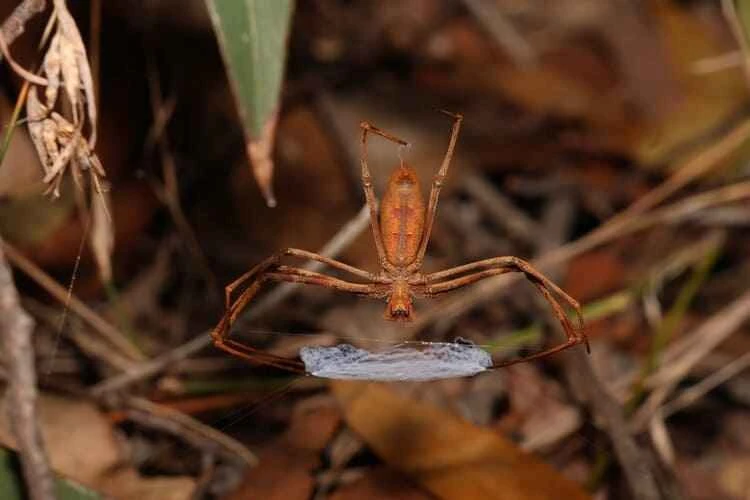
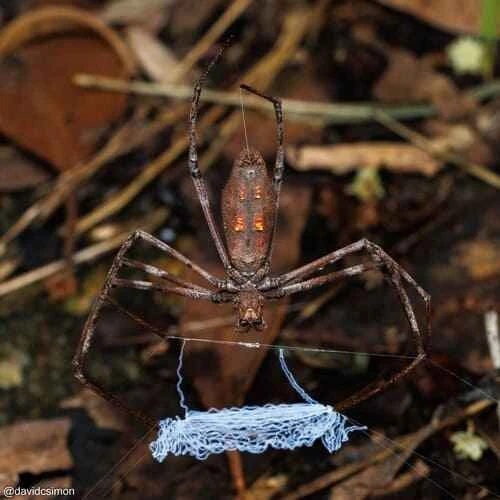
The body and feet are slender, and the abdomen is long and thin; the body color is mostly grayish-brown or brownish-gray with irregular markings, which are used to disguise the body as dead branches or bark protrusions.
Detailed introduction
Net-casting spiders are a group of spiders known for their web-casting hunting method, mainly belonging to the family Deinopidae , which includes genera such as Deinopis and Menneus . Instead of weaving traditional large orb webs, they carry a small web and "cast" it to their prey at night, hence the names "net-casting spiders" or "ninja spiders."
Basic Information
Scientific name (general term): Deinopidae – family Deinopidae (typical genera such as Deinopis , Menneus , etc.)
Size: Most are about 10–25 mm in length, with slender legs and a foot span of several centimeters.
Lifespan: Usually about 1–2 years, an individual can span one to two breeding seasons.
Unique net-casting method of hunting
The web-throwing spider's hunting behavior is quite unique. At night, it weaves a small rectangular web and uses its forelegs and middle legs to spread it into a square or rectangle. It then hangs upside down on a horizontal silk line, its body in a "U" shape, ready to ambush its prey.
When prey (such as small flying or crawling insects) passes below, the spider quickly leaps downwards, ensnaring its prey with its small web, then rapidly wraps itself around the prey with more silk, bites it, and eats it. Some species can also throw their webs towards walls or tree trunks to capture insects clinging to the surface.
Vision and Perception
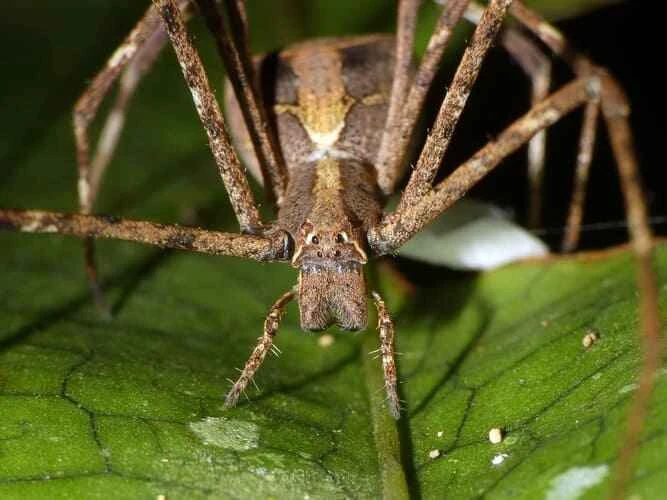
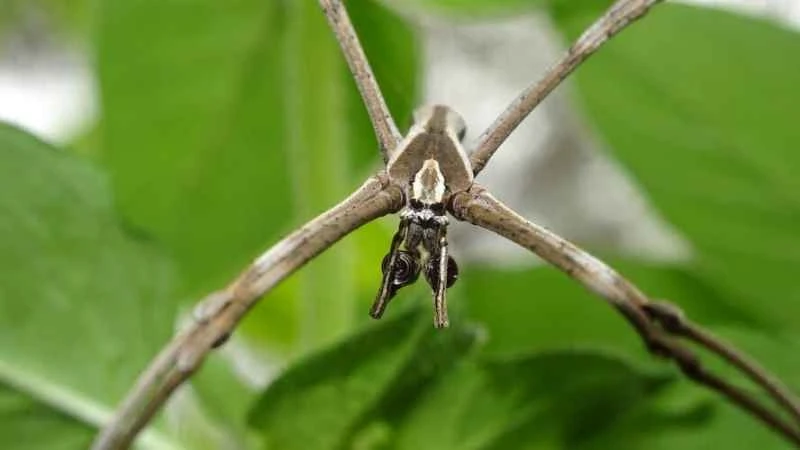
Many web-casting spiders have exceptionally large anterior median eyes , especially those in the genus *Deinopis* . These eyes greatly enhance their light-gathering ability at night, earning them the nickname "web-based night vision goggles." In low-light conditions, they can accurately determine the location and direction of their prey, coordinating this with their web-casting actions to capture prey.
Appearance features
Web-throwing spiders typically have slender bodies, relatively small cephalothorax, and long, thin or slightly club-shaped abdomens; their legs are long and thin, facilitating hanging in space and sudden bursts of strength. Their body color is mostly grayish-brown, brownish-red, or bark-colored, with irregular patterns that help them camouflage themselves as dead branches or protrusions on bark during the day.
Distribution and Habitat
Spiders of the family Trappidae are distributed in tropical, subtropical, and some temperate regions , and are commonly found in forests, thickets, forest edges, gardens, and roadside greenbelts. During the day, they mostly remain still, camouflaging themselves against branches or leaves, and only set up their webs at night to ambush prey.
Toxicity and Effects on Humans
Web-throwing spiders possess small venom glands used to paralyze insects, but due to their small size, bites to healthy humans are extremely rare and generally cause only mild, localized discomfort . They are timid and prefer to avoid rather than attack humans, therefore they are not considered a significant threat to humans.
References
Framenau, VW, BC Baehr and P. Zborowski. 2014. *The Australian Spider Guide*. New Holland Press.
York Main, B. 1976. *The Spider*. William Collins Publishers, Sydney, New South Wales.
Frequently Asked Questions
Q1: Are web-spreading spiders dangerous to humans?
Generally not. They mainly prey on small insects, have very little contact with humans, and bites are extremely rare and mostly minor.
Q2: What does the web of a web-spreading spider look like?
It is a small rectangular web woven from sticky silk, not a large web fixed in the air, but rather pulled by the spider with its forelegs and middle legs, ready to be thrown out at any time.
Q3: Why is it so difficult to spot web-laying spiders during the day?
During the day, they retract their webs and remain motionless against branches, leaves, or walls, their color and shape resembling a small, withered twig, providing excellent camouflage.
Q4: Is a web-spreading spider a good or bad thing in the garden?
They prey on a variety of small, nocturnal flying insects and are generally harmless to humans, and can usually be considered beneficial insect controllers.