Basic Information
Scientific classification
- Chinese name: Spanish dancer sea slug
- Scientific name: Hexabranchus sanguineus
- Classification: Molluscs
- Family: Hexabranchidae Hexabranchus
Vital signs data
- Body length: Commonly 20–30 cm; can reach ~40–60 cm
- Weight: No standardized data available (for large sea slugs)
- Lifespan: Several months to about 1 year (depending on environment)
Significant features
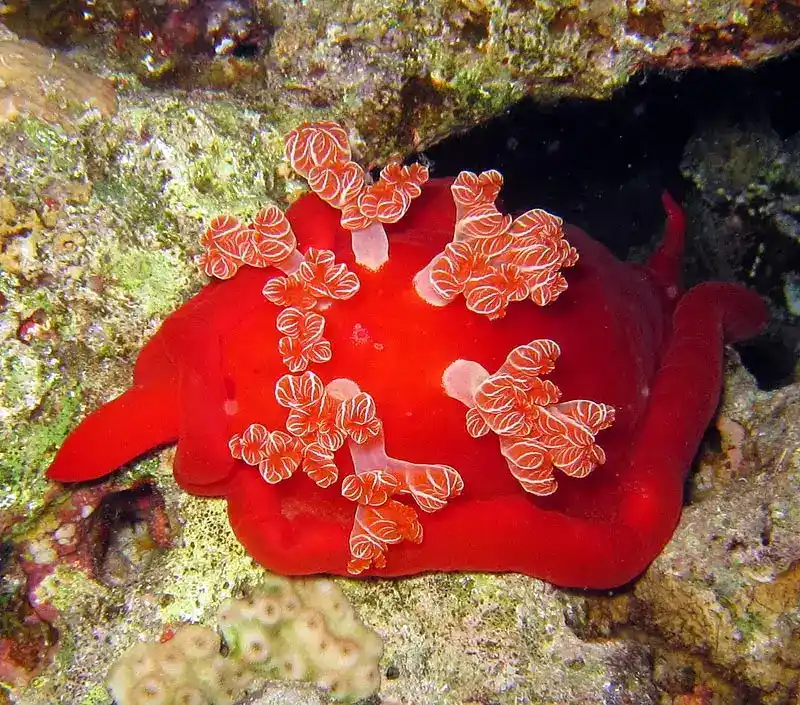
It is bright red in warning coloration; it feeds on sponges; when disturbed, it can spread out its shawl to swim; it is hermaphroditic and produces "rose egg belts".
Distribution and Habitat
Tropical Indo-Pacific coral reefs, reef slopes and lagoons, 1–30+ m.
Appearance
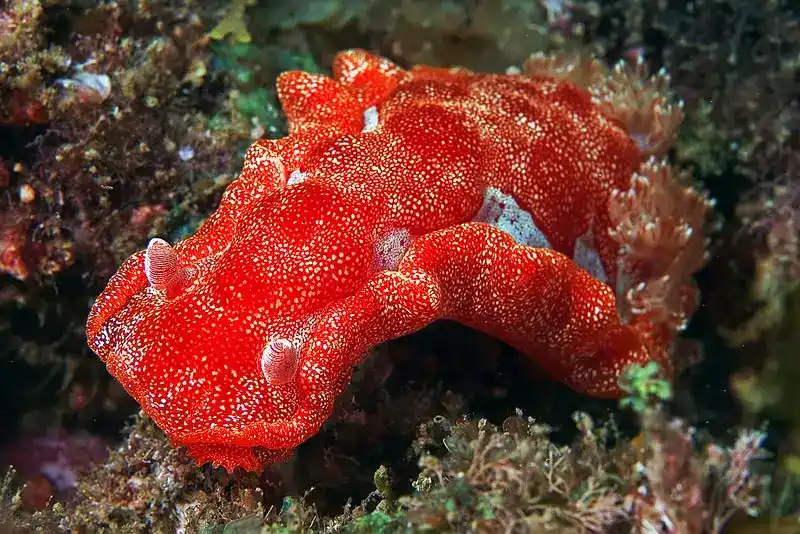
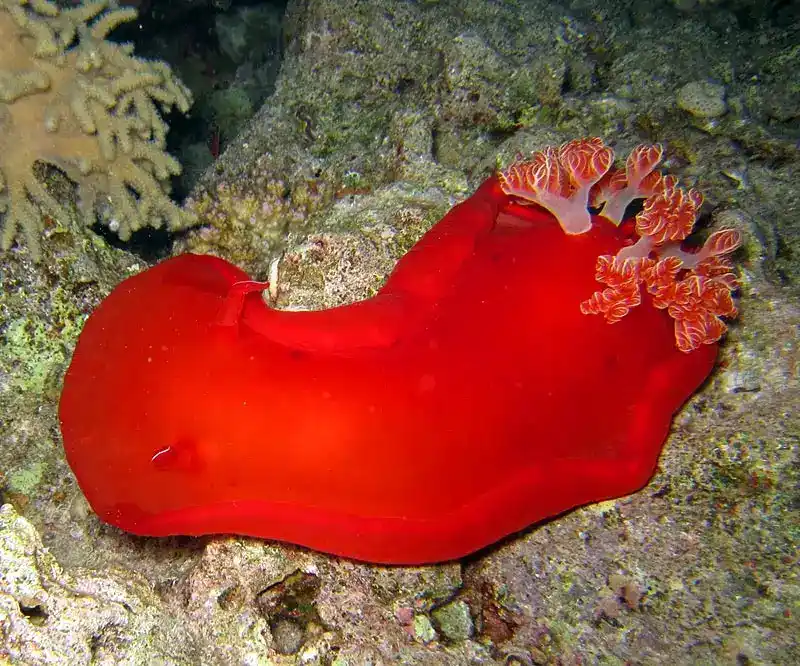
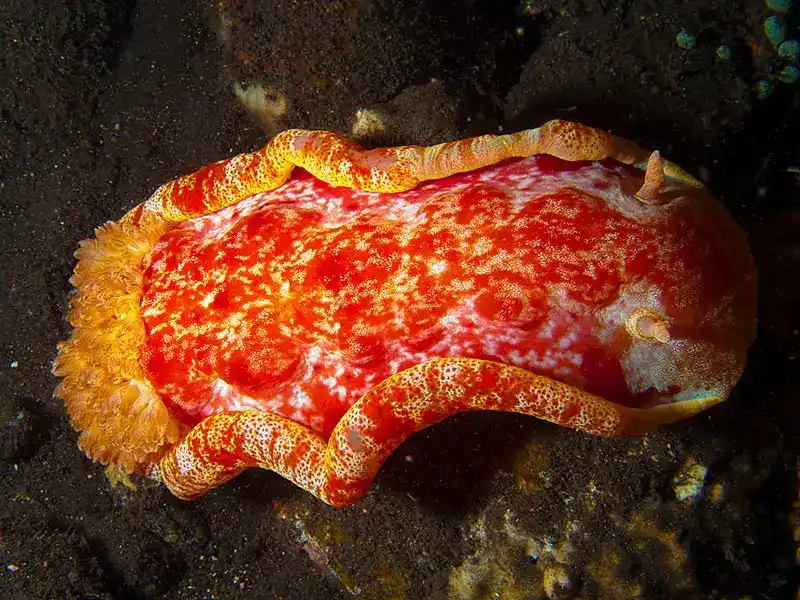
The body is red to orange-red with spots; the edges are undulating; the feathery gills and antennae on the back are obvious.
Detailed introduction
The Spanish dancer sea slug ( Hexabranchus sanguineus ) is one of the most famous nudibranchy mollusks in the Indo-Pacific region, named for its ability to spread its folds and sway like a dancing skirt when startled. Belonging to the order Nudibranchia and family Hexabranchidae , it feeds on sponges and has a bright red to orange-red body color, exhibiting strong warning coloration .
Ecology and Behavior
Diet: Feeds on various sponges; some individuals integrate the chemical defense substances of sponges into their own tissues to increase their susceptibility to predation .
Activity rhythm: Mostly nocturnal , hiding in crevices or under coral reefs during the day and venturing out to feed at night.
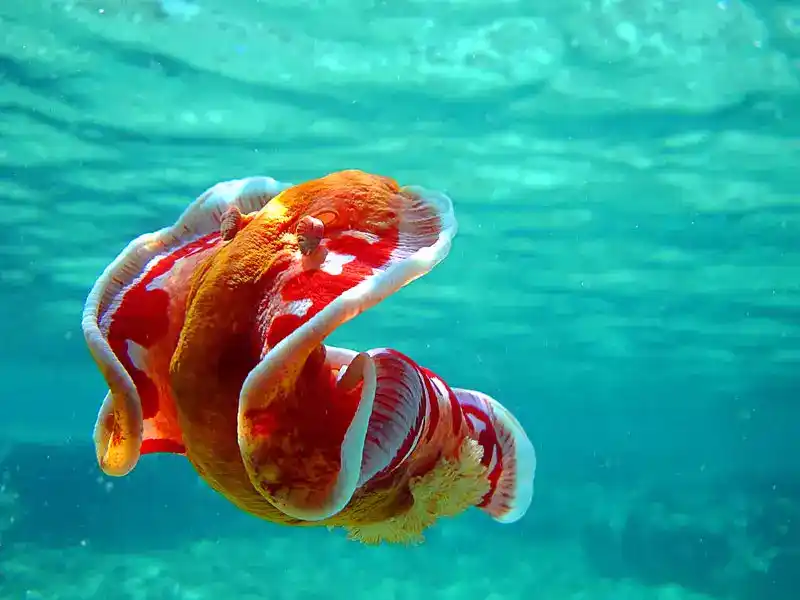
Swimming behavior: When disturbed, it quickly swims away by spreading out its mantle and undulating from side to side , a posture that resembles that of a dancer.
Reproduction and egg-bearing: Hermaphroditic ; often produces the famous red "rose-shaped" egg-bearing bands , which spiral and adhere to the base.
Morphology and Recognition
The body color is mainly bright red, orange-red, and wine-red , often with irregular spots or dotted patterns; the edges of the flanks are distinctly undulating. A cluster of feathery gills and antennae (horn-like sensory organs) are visible on the back. Juveniles and some regional individuals are more orange or have white spots.
Body size and lifespan
Body length: Commonly 20–30 cm, with records of large individuals reaching approximately 40–60 cm.
Lifespan: Mostly several months to about one year , depending on temperature and food.
Distribution and Habitat
Widely distributed in the tropical Indo-Pacific (Red Sea, Indian Ocean to western Pacific Ocean, including Southeast Asia, northern Australia, Micronesia, Hawaii, etc.), it is often found in environments such as coral reefs, reef slopes, and lagoons , generally at depths of 1–30+ m.
Ecological significance and threats
Ecological role: Regulates sponge communities and increases the ornamental value of reef areas as a highly conspicuous indicator species.
Potential threats: habitat degradation, abnormal sea surface temperatures, and diving disturbances (chasing and touching).
IUCN: Not typically included in global rating assessments; this site treats it as Not Evaluated (NE) .
Frequently Asked Questions
Q1: Is it poisonous? This species does not attack unprovoked, but may accumulate unpleasant/irritating chemicals through food sources; please do not touch or disturb it.
Q2: Why is it called "Spanish Dancer"? When startled, it spreads out its shawl and sways while swimming , its posture resembling a whirling dance skirt.
Q3: What is the red "rose"? It is an egg band , which is usually red and curly, and is fixed to the rock or base.
Q4: Can't see them during the day? They mostly hide during the day and go out to forage at night. They are more likely to be encountered when they dive at night.