Basic Information
Scientific classification
- Chinese name: Semenales
- Scientific name: Actiniaria
- Classification: Echinoderms
- Family: Actiniaria Actiniidae
Vital signs data
- Body length: less than 1 cm to tentacles span 30–60 cm+ (varying greatly depending on the species)
- Weight: Not standardized (soft body, high water content)
- Lifespan: Mostly perennial, with regenerative capabilities
Significant features
Primarily solitary; tentacles equipped with nematocysts for ambush; mutually beneficial symbiosis with algae/clownfish, etc.; strong regeneration and asexual reproduction capabilities.
Distribution and Habitat
The global ocean, from the intertidal zone to the deep sea; its base includes rock surfaces, sand and mud, seagrass beds, and reef entrances.
Appearance
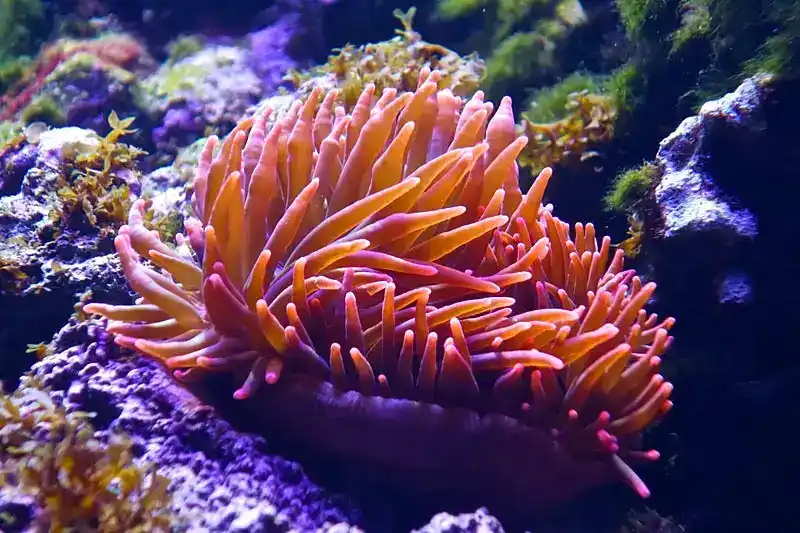
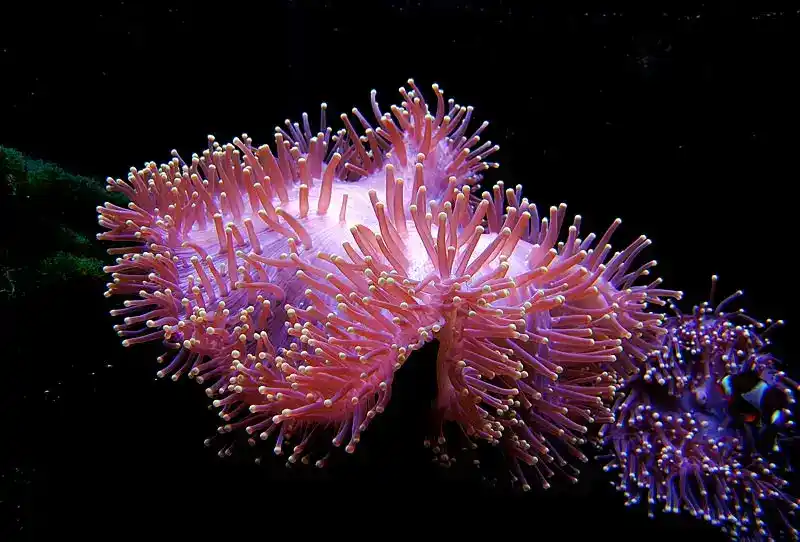
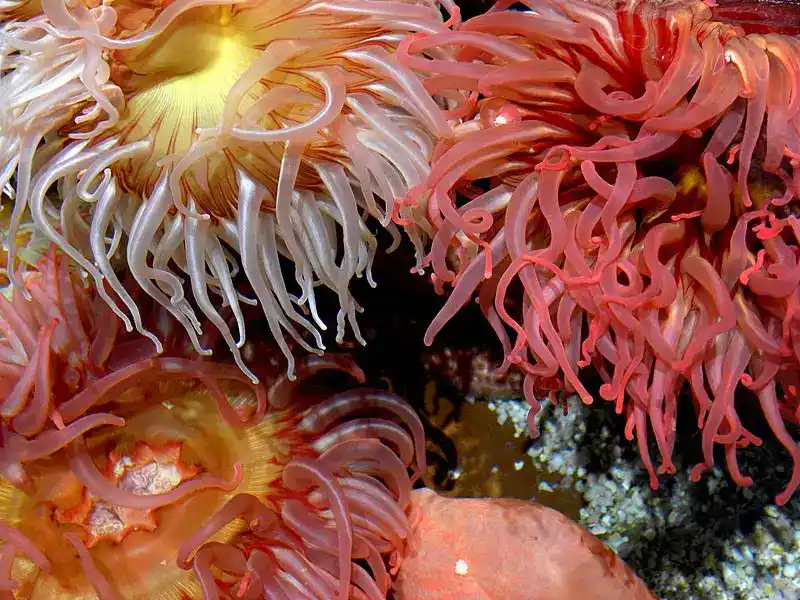
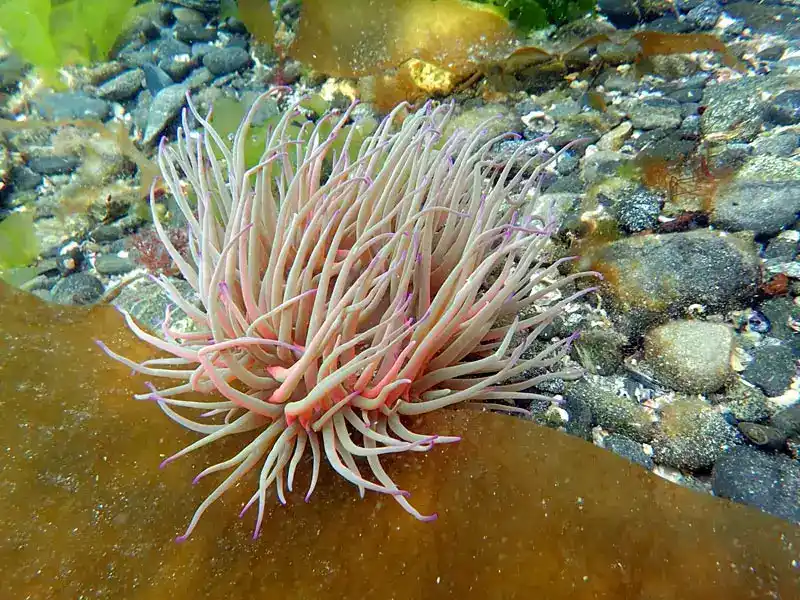
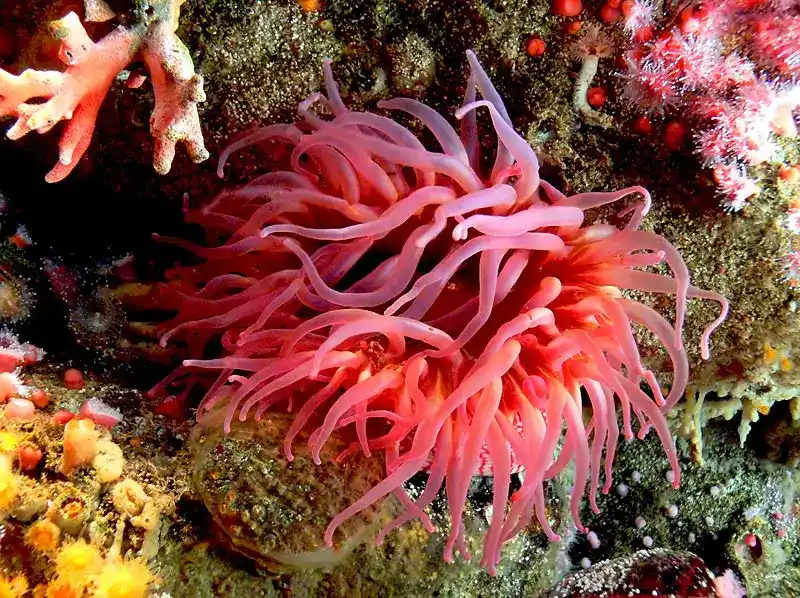
Foot disc—cylindrical body—oral disc and tentacle crown; diverse colors, commonly with parapodia/camouflage attachments.
Detailed introduction
Actiniaria is a large group within the phylum Cnidaria and class Anthozoa, commonly known as sea anemones . They typically live solitary lives (unlike stony corals which form aggregate skeletons). Their bodies consist of a foot disc, column, oral disc, and tentacle crown . They prey on small crustaceans, fish larvae, and plankton using nematocysts , and can also form complex ecological relationships with symbiotic algae or organisms (such as clownfish, hermit crabs, and shrimp).
Ecology and Biology
Feeding: The tentacles are covered with thorn sacs, which have an adhesive/paralyzing effect; they are mostly used to ambush predators , but can also ingest organic detritus.
Symbiosis: Some genera and species live in symbiosis with zooxanthellae to enhance their energy acquisition; they also often establish mutually beneficial relationships with fish, shrimp, and crabs (such as the clownfish-anemone system).
Reproduction: It can be sexual (spermatogenic eggs/larvae) or asexual (fission, transverse fission, basal plate budding, etc.); it has strong dispersal and regeneration capabilities.
Morphology and Recognition
Sea anemones lack calcified skeletons and have soft body walls; their tentacles are arranged radially symmetrically around the oral disc, and sometimes they have a distinct pharyngeal groove and internal septum. They come in a variety of colors, from translucent to brightly colored; some species have parapodia/warts on their body surface to help attach debris for camouflage.
Body size and lifespan
Body length/tentacle span: from micro-species less than 1 cm to large species with a tentacle span of 30–60 cm or more (such as giant sea anemones).
Lifespan: Mostly perennial , they can survive for many years or even longer in stable environments; they have significant regenerative capabilities.
Distribution and Habitat
Widely distributed in oceans worldwide , from the intertidal zone to the deep sea; commonly found on various substrates such as reef surfaces, sandy bottoms, seagrass beds, cave entrances, and wharf pile foundations, they attach through foot plates , and a few types are partially buried in sand or mud or can temporarily move freely.
Ecological significance and threats
Ecological role: Small predator and sanctuary provider (the "home" for symbiotic fish and shrimp).
Threats include: coastal pollution, eutrophication, rising sediment load, bottom trawling and harvesting, and abnormal sea surface temperatures.
IUCN: Anemones is a higher-level entry, and its specific conservation status needs to be assessed at the species level ; this site's overview is treated as Unassessed (NE) .
Frequently Asked Questions
Q1: Do sea anemones sting? Their tentacles have nematocysts, which may cause stinging or allergic reactions; divers should not touch them with their bare hands.
Q2: What is the difference between sea anemones and stony corals? Sea anemones do not secrete calcified skeletons and are mostly solitary; stony corals form hard, aggregated skeletons.
Q3: Why don't clownfish get stung? The mucus on the clownfish's body surface reduces the triggering of nematocysts, and a symbiotic relationship has been formed through long-term domestication.
Q4: Can sea anemones move? Most can crawl slowly or change position by detaching and reattaching; a few can briefly detach.