Basic Information
Scientific classification
- Chinese name: Crinoids (Feathered Star/Crinoid - General Overview)
- Scientific name: Crinoidea (commonly known as crinoid)
- Classification: Echinoderms
- Family: Echinodermata Crinoidea
Vital signs data
- Body length: Arm span 10–30 cm (common); Star 50–70 cm+; Crinoid stalk 1–2 m+
- Weight: Varies greatly depending on body type and water content; there is currently no uniform data.
- Lifespan: Perennial; deep-sea species may live even longer.
Significant features
Suspended feeding; feathers and feeding grooves intercept food; nocturnal; strong regeneration of severed limbs.
Distribution and Habitat
Global oceans, from shallow reefs to deep sea; commonly found in cliffs/seamounts/seafan communities with stable currents.
Appearance
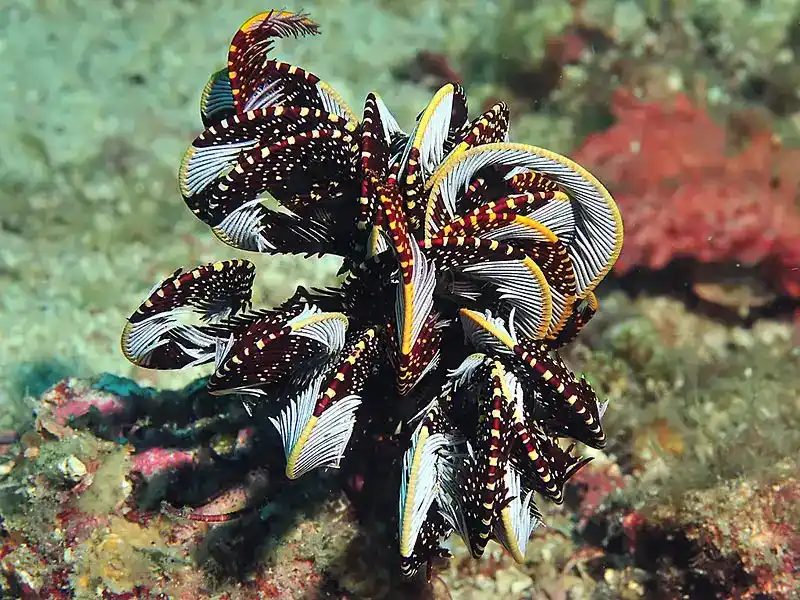
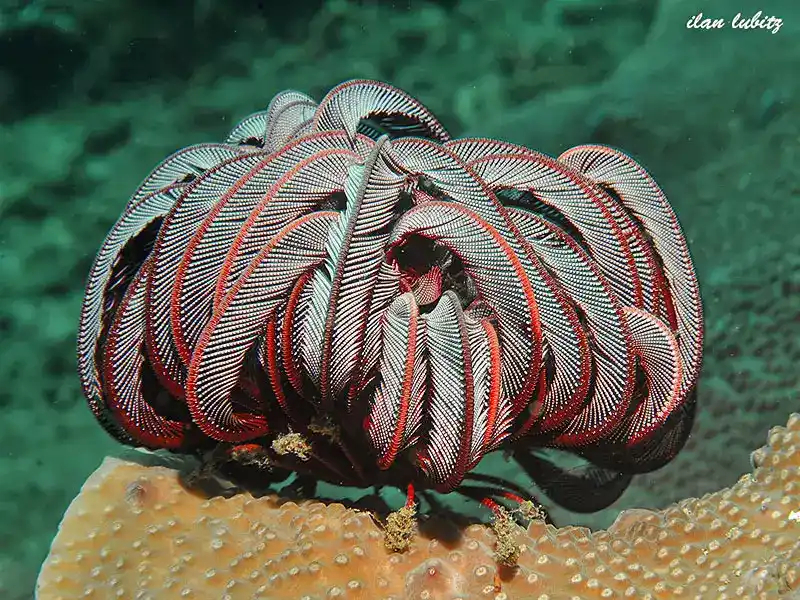
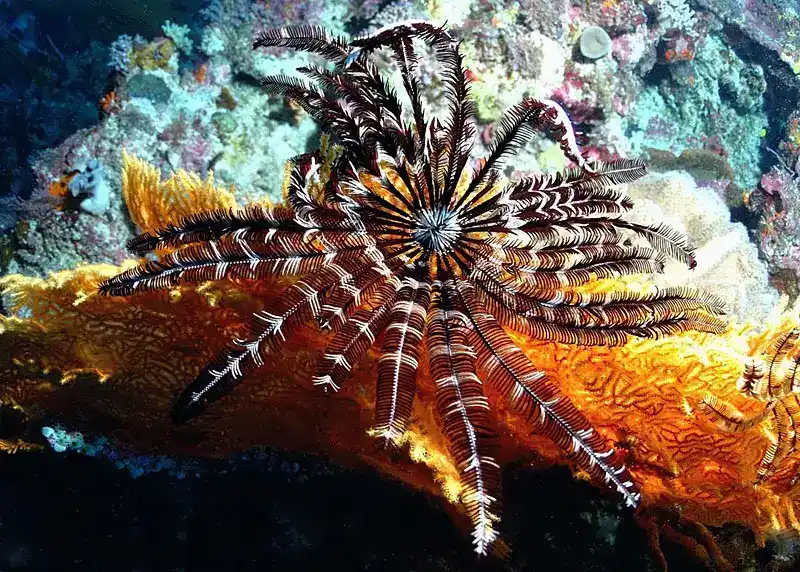
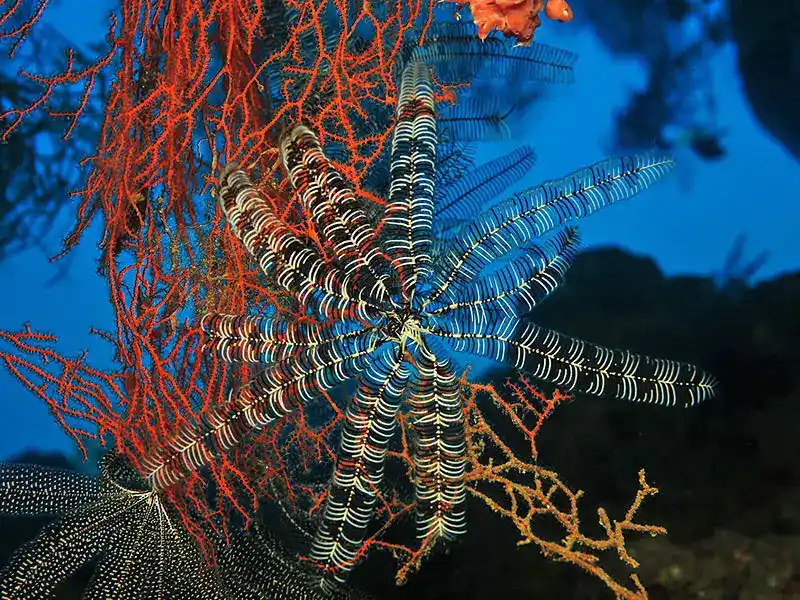
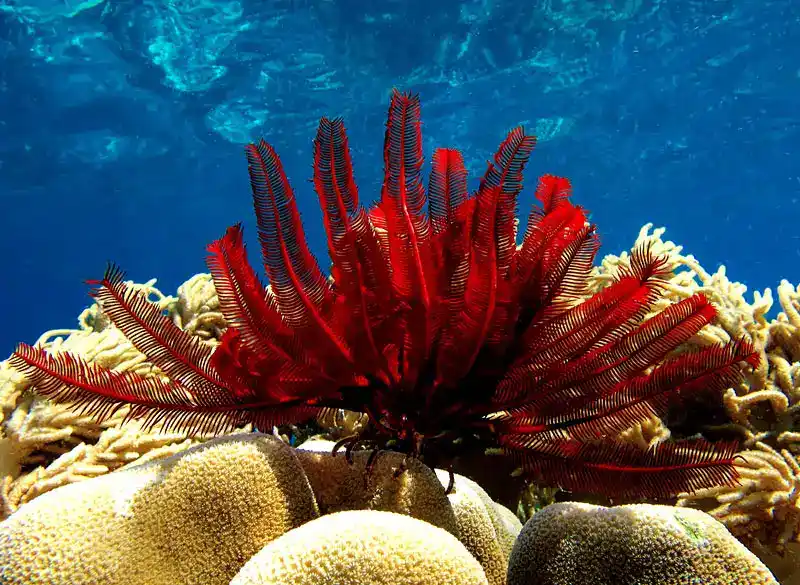
Central cup with many branched arms in a pinnate shape; sessile type with grasping foot; stalked type with segmented calcareous stalk.
Detailed introduction
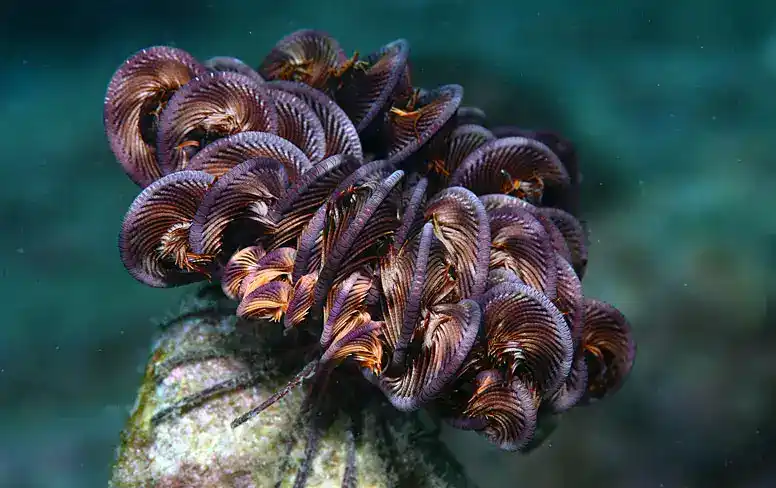
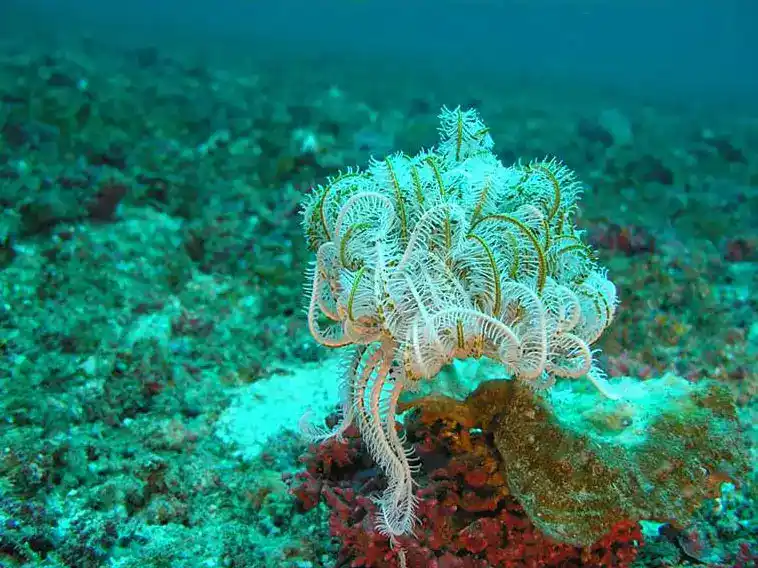
Crinoids belong to the class Crinoidea within the phylum Echinodermata. They include stalked sea lilies and sessile feather stars . They filter-feed plankton and organic particles through their pinnules and tube feet on their feeding grooves , making them important suspended feeders .
Ecology and Biology
Feeding: most efficient under moderate water flow; viscous tube feet intercept particles and transport them to the mouth.
Life-type: In the deep sea, stalked types are predominant; in shallow reef areas, sessile feathered stars are common, which use cirri to grip their base and can move.
Rhythm: Many feathered stars are nocturnal, spending the night with their feather-like arms outstretched to filter food.
Regeneration: Regeneration of severed arms is common, and some arm segments can be reattached.
Morphology and Recognition
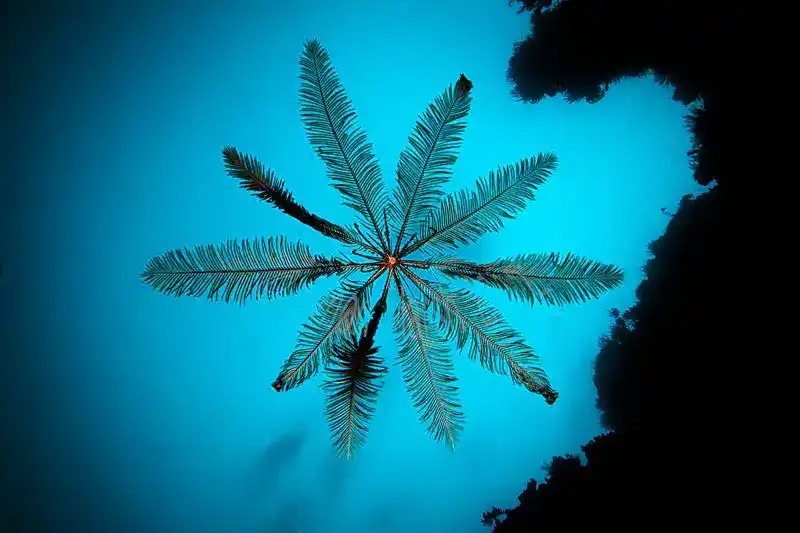
The typical structure consists of a central calyx and multiple branched arms (commonly 10, but more are possible) ; the stalked type has a calcareous stalk and a holding disc, while the sessile type has grasping feet . Both exhibit the five-spoked symmetry characteristic of echinoderms.
Body size and lifespan
Arm span: Commonly 10–30 cm; large feathered stars 50–70 cm+; deep-sea crinoids can have a pedicel length of 1–2 m+.
Lifespan: Usually perennial ; deep-sea species may live even longer.
Distribution and Habitat
Distributed in oceans worldwide , from shallow reefs to deep-sea plains and seamounts; Feathered Star is commonly found in cliff/sea fan communities with stable currents , while Stalked Crinoides is more common in cold-water deep-sea hard or soft sedimentary substrates.
Ecological significance and threats
Ecological role: Regulates particulate organic matter flux and provides micro habitat structure (for symbiotic crustaceans and small fish).
Threats: Bottom trawling and deep-sea mining, sediment rise, pollution, warming and acidification affect skeletal structure and feeding.
IUCN: Class-level overview; conservation status must be at the species level ; this site's overview is treated as unassessed (NE) .
Frequently Asked Questions
Q1: Can the feathered stars swim? Yes, they can swim/glide short distances by waving their arms to avoid enemies or change positions.
Q2: What is the relationship between crinoids and starfish/sea urchins? They belong to the same phylum Echinodermata. Crinoids are classified as a separate class, Crinoidea , characterized by their suspended feeding and feathery arms.
Q3: Can I hold it by hand? Not recommended. Feathered birds are fragile ; holding them by the hand can easily damage their legs and armlets, and it will also affect their filtering of food.
Q4: Why are they rarely seen during the day? Most of them are nocturnal ; during the day they hide to avoid enemies and accumulate.


