Basic Information
Scientific classification
- Chinese name: Southern Blue-ringed Octopus (highly venomous warning coloration)
- Scientific name: Hapalochlaena maculosa
- Classification: Molluscs
- Family: Octopodidae Hapalochlaena
Vital signs data
- Body length: mantle 3–6 cm; including wrist span 12–20 cm
- Weight: Often less than 100 g (individual differences)
- Lifespan: Approximately 1–2 years
Significant features
Small in size but highly toxic; TTX neurotoxin; distinctive camouflage and blue ring warning coloration; females reproduce only once.
Distribution and Habitat
There are hiding places along the southern coast of Australia, such as in the intertidal zone, shallow reefs, seagrass beds, and wharves.
Appearance
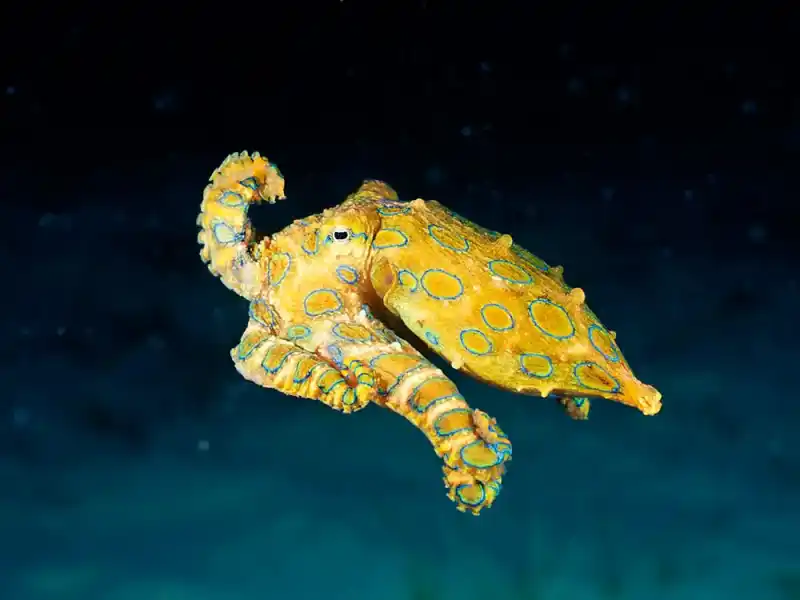
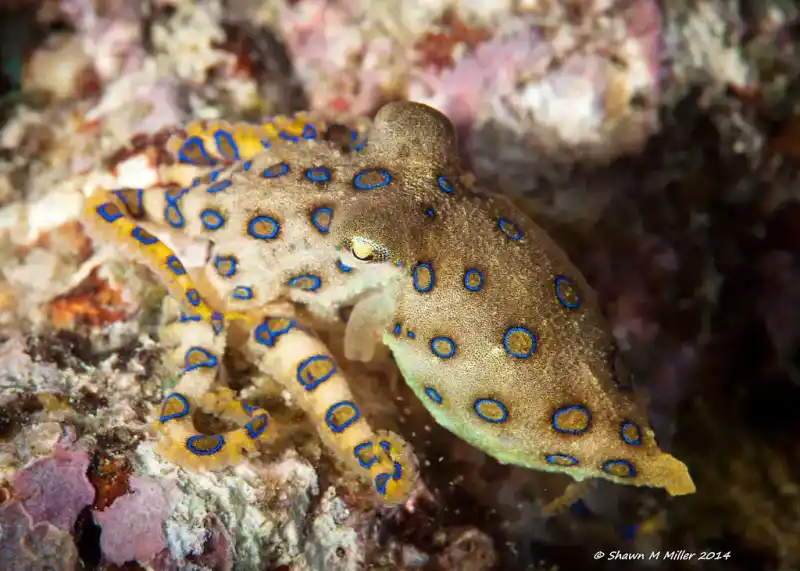
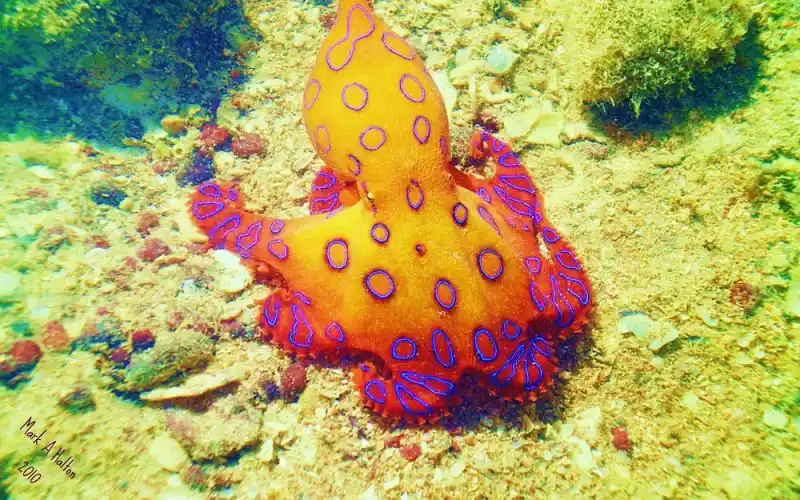
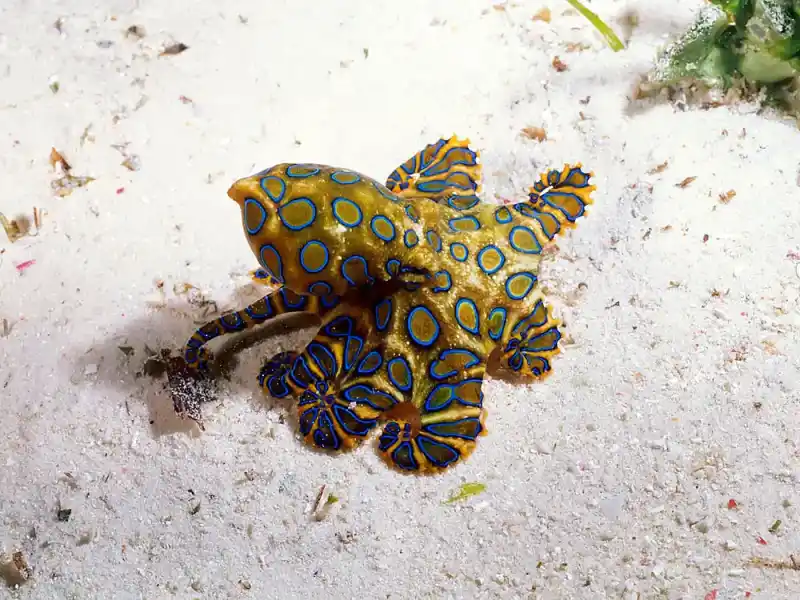
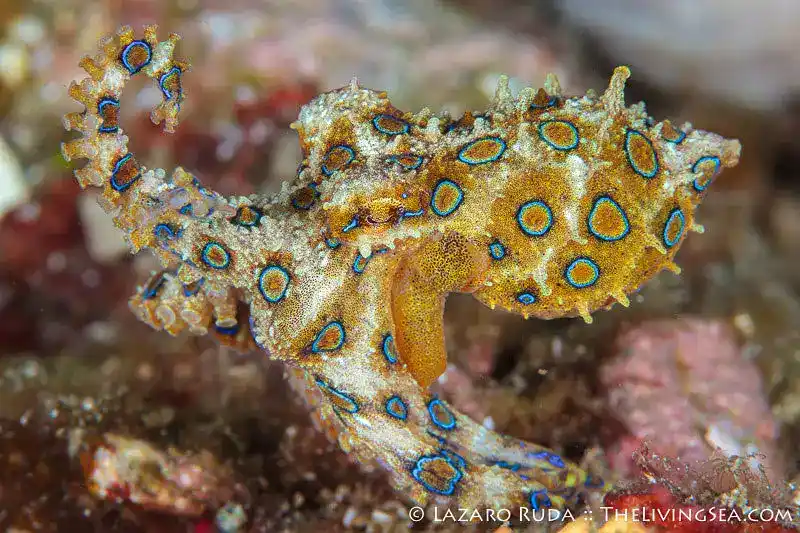
Yellowish-brown base color; prominent blue concentric rings when disturbed; large eyes, short wrists, and densely packed suction cups.
Detailed introduction
The southern blue-ringed octopus ( Hapalochlaena maculosa ) is a small but highly venomous octopus belonging to the family Octopodidae within the order Octopoda . When disturbed, concentric blue rings rapidly appear on its body surface, forming a strong warning coloration . Its salivary glands contain tetrodotoxin (TTX) and related neurotoxins, which can cause muscle weakness and respiratory depression.
Ecology and Biology
Diet: Primarily feeds on small crustaceans and small fish, using its beak and venom to subdue them.
Reproduction: The female carries the eggs in the crevices until they hatch, during which time she hardly feeds; she reproduces only once , and the female dies after hatching.
Behavior: Nocturnal, with strong camouflage abilities, able to quickly change color and skin texture.
Morphology and Recognition
It is small in size, with a mantle length of about 3–6 cm; when stimulated, a bright blue ring (yellowish-brown background) appears, which may be less noticeable when at rest. It has large eyes, relatively short eight arms, and densely packed suckers.
Body size and lifespan
Body length: mantle 3–6 cm; including wrist span approximately 12–20 cm.
Weight: Usually less than 100 g (varies by individual and region).
Lifespan: Approximately 1–2 years.
Distribution and Habitat
They are mainly found in the intertidal zone to shallow waters (0–20+ m) along the southern coast of Australia , and prefer to hide in reefs, seagrass beds, shell mounds and wharf foundations.
Toxicity and Risk
Toxin: TTX blocks sodium ion channels.
Danger to humans: potentially fatal ; numbness, slurred speech, and difficulty breathing can occur rapidly after being bitten.
Treatment recommendations (科普, not medical advice): Immediately call for emergency medical assistance; use a pressure bandage (PIB) ; provide artificial/assisted ventilation if necessary.
IUCN: The database contains inconsistent information; this site treats it as unevaluated (NE) .
Frequently Asked Questions
Q1: What should I do if I encounter a blue-ringed octopus? Keep your distance, do not touch or provoke it; please use zoom when taking photos.
Q2: Will it attack proactively? Usually not; it bites defensively when grabbed or threatened.
Q3: Does a bite always hurt? It may not be obvious, but the venom can take effect quickly; any suspected bite should be treated immediately.
Q4: Why does the blue ring "brighten"? Pigment cells and iris cells work together to make the blue ring shine as a warning.