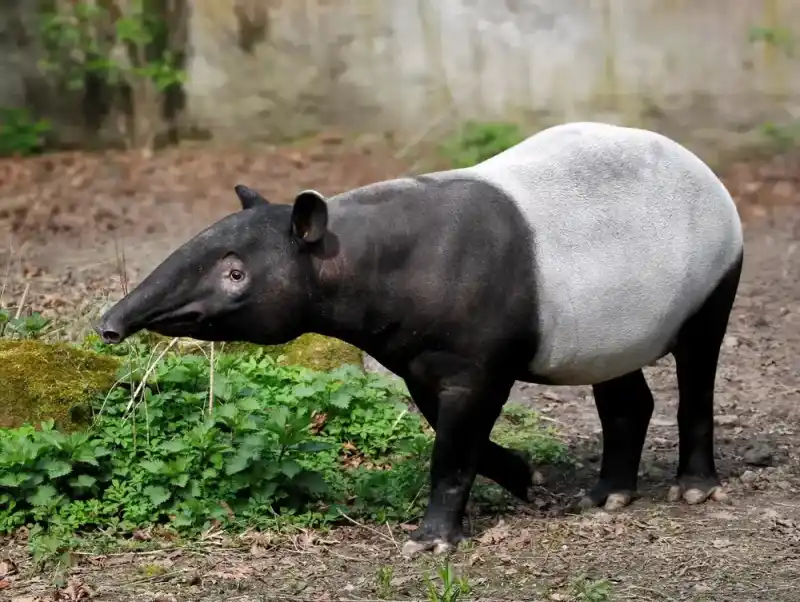
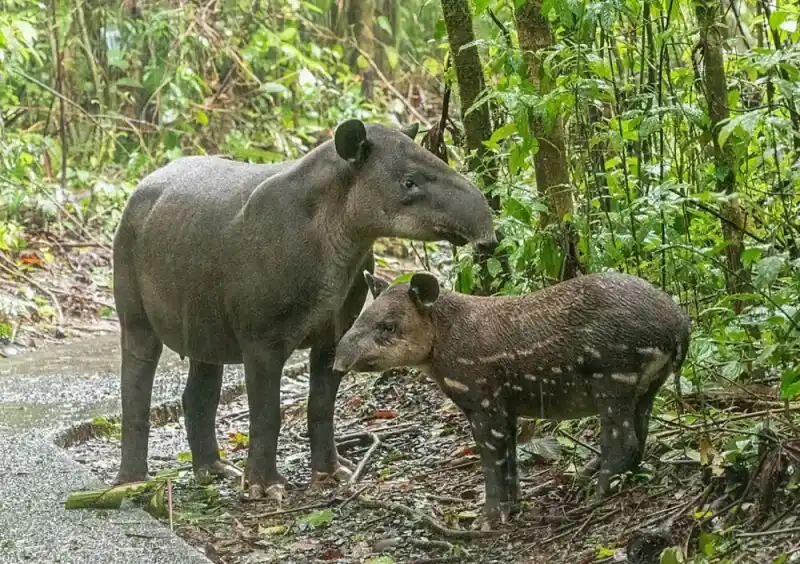
Basic Information
Scientific classification
- Chinese name: Tapir
- Scientific name: Tapir, Tapirs, Tapiridae, Acrocodia
- Classification: Hoof Order
- Family: Perissodactyla Tapiridae
Vital signs data
- Body length: 1.8-2.5 meters
- Weight: 110-400kg
- life:
Significant features
It has a donkey-like body shape, a short tail, a mane all over its body, small eyes, oval ears, four toes on its front feet, and three toes on its hind feet.
Distribution and Habitat
Tapirs primarily inhabit tropical rainforests, preferring areas with permanent water sources and abundant trees and vegetation. They can also adapt to dry, deciduous mountain forest environments. The Malayan tapir's habitat ranges from sea level to 2000 meters in tropical rainforests, low-mountain forests, and regenerated and secondary forests. The South American tapir mainly inhabits tropical lowland rainforests and wetlands from sea level to 4500 meters in altitude, but can also be found in seasonally arid regions such as Bolivia and Paraguay. The Central American tapir lives in tropical rainforests, low-mountain forests, deciduous forests, and flooded grasslands and swamps from sea level to 3600 meters. Mountain tapirs primarily inhabit mountain forests between 2000 and 4000 meters in altitude and cloud forests that are frequently shrouded in mist. The Kapomani tapir mainly lives in areas where forests and grasslands intersect.
Appearance
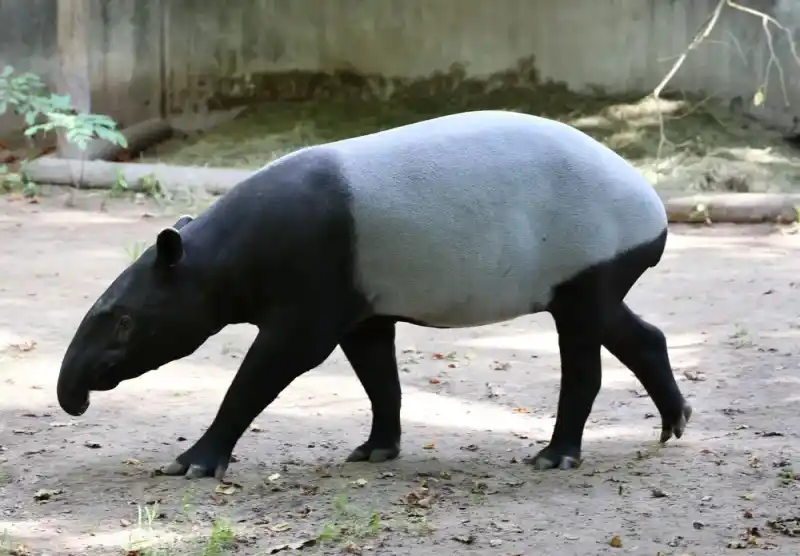
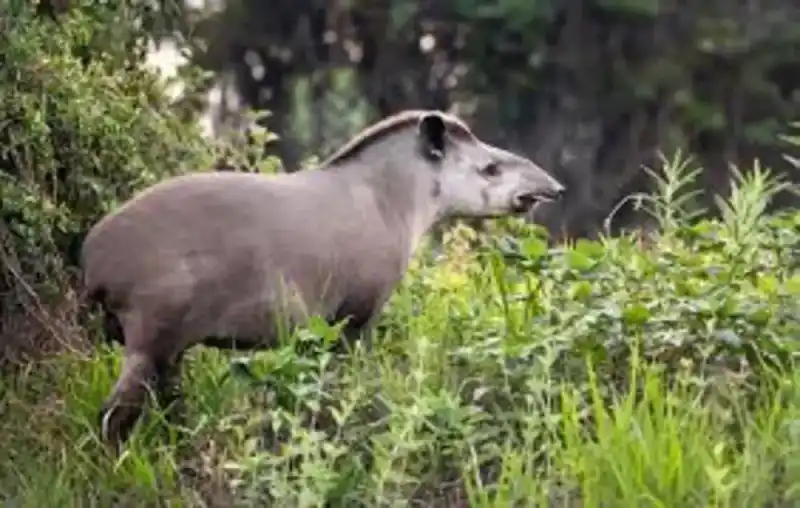
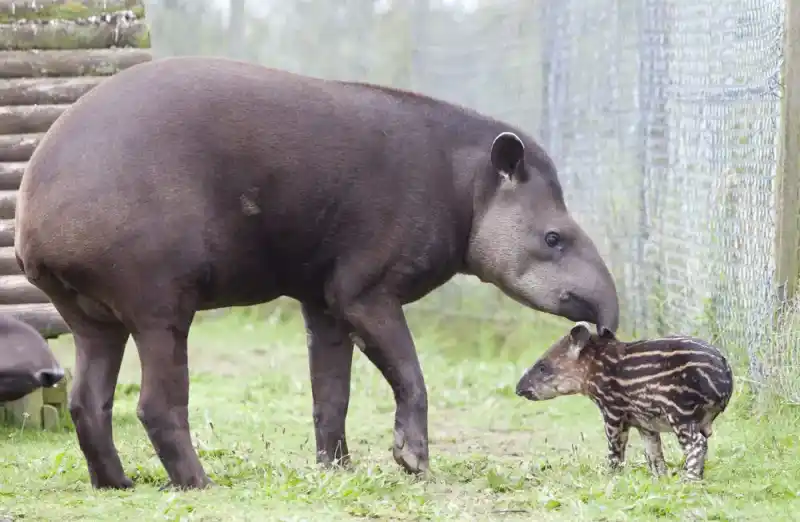
Tapirs are donkey-like animals with a short tail. Their bodies are rounded at the back and tapering at the front, covered in a mane that allows them to move quickly through dense undergrowth. They have small, red eyes located on the sides of their heads, and oval, erect, and somewhat inflexible ears. Tapirs have four toes on their forefeet and three on their hind feet. One of the most distinctive features of tapirs is their upper lip and nose, which extend into a short, forward-protruding torso. Additionally, the nasal bone at the front of the tapir's skull is short and protrudes forward. Tapirs have a dental structure similar to equines, with the dental formula I3/3, C1/1, P4/4, M3/3, totaling 42 to 44 teeth, of which the incisors are chisel-shaped and the canines are conical.
Detailed introduction
Tapir is the name for the genus *Tapirus*, a genus of large, forest-dwelling, herbivorous mammals belonging to the family Tapiridae in the order Perissodactyla. There are four extant species: the mountain tapir, the South American tapir, the Central American tapir, and the Malayan tapir. The first three are native to the Americas, while only the Malayan tapir is found in Southeast Asia. Additionally, there is the Kapomani tapir, named in 2013, which is distributed in South America and was once considered the fifth extant tapir species. However, its status as a separate species has been widely debated. Later genetic studies have shown that the Kapomani tapir is actually a part of the South American tapir and not a valid species. Traditionally, extant tapirs are all classified under the genus *Tapirus*, but some scholars place the Malayan tapir in a separate genus (*Acrocodia*).
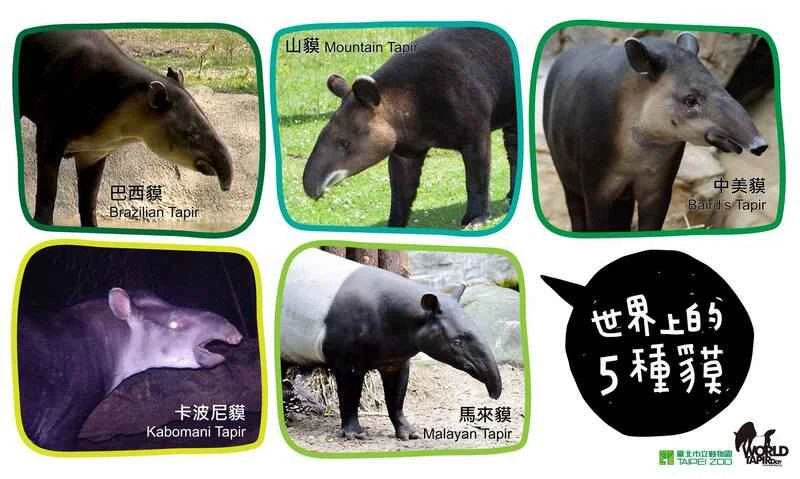
Tapirs are mainly distributed in the Americas and Southeast Asia, primarily inhabiting tropical rainforests where they prefer areas with permanent water sources and abundant trees and vegetation. They can also adapt to dry, deciduous forest environments. Tapirs are primarily nocturnal, resting during the day and foraging at night. They communicate through their noses, expressing emotions or searching for mates. Tapirs are usually solitary, but appear in pairs during the mating season; they are herbivores, feeding on both terrestrial and aquatic plants. Malayan tapirs consume 4%–5% of their body weight daily and crave salt.
As of 2024, according to the IUCN Red List of Threatened Species, four species of this family were listed, three of which were classified as Endangered (EN) and one as Vulnerable (VU). Tapirs play a vital role in ecosystems: promoting biodiversity through seed dispersal; the Central American tapir is an important indicator species of tropical rainforest ecology; tapirs break branches and knock down tree trunks, thus providing more food for smaller herbivores. Culturally, the Tang Dynasty poet Bai Juyi praised tapirs in his poem "Ode to the Tapir Screen," and ancient artifacts such as the "Tanuki Zun" also depict the image of the tapir. In Japanese culture, the tapir is considered a "dream-eating beast," capable of devouring nightmares.
Tapirs live in lowland to mountain forests near water sources. They are solitary and have no fixed territory, and are adept at swimming and diving. They have stout bodies, relatively short limbs, and very short tails. Their body shape is similar to a pig but slightly larger, and they are the largest living native mammals in South America. They retain the primitive characteristics of odd-toed ungulates, with four toes on their forelimbs and three toes on their hind limbs, and their toes are covered with hooves. Their most distinctive feature is a prominent nose, which they use to grasp leaves to aid in feeding and also serves as a breathing tube when swimming.
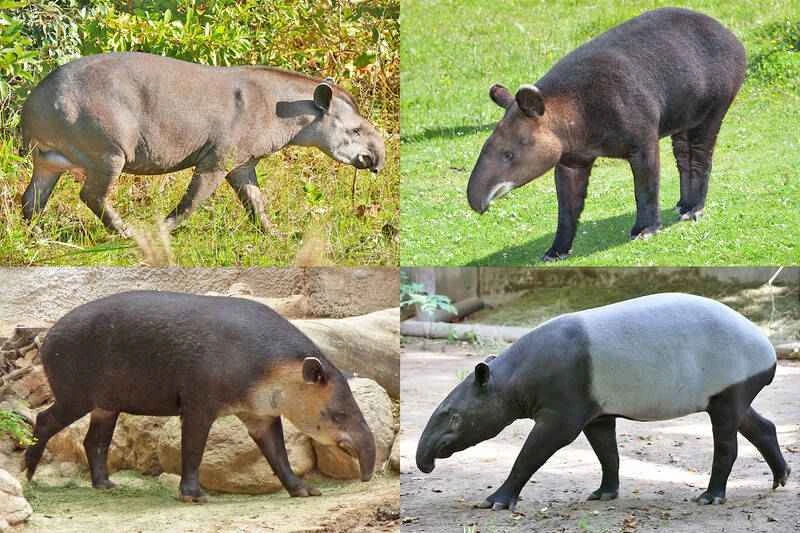
Tapirs originated in North America during the Oligocene. Their closest living relatives are rhinoceroses and horses, with a particular affinity for rhinoceroses. Together with rhinoceroses and their prehistoric relatives, they form the suborder Arctodontia within the order Perissodactyla.
In a 2013 paper describing the Kapomani tapir, researchers analyzed the mitochondrial cytochrome b gene sequences of extant tapirs and pointed out that among the three modern South American tapirs—the South American tapir, the mountain tapir, and the Kapomani tapir—the Kapomani tapir was the first to diverge, while the mountain tapir was nested within the South American tapir. If the mountain tapir were removed as a separate species from the South American tapir, the South American tapir would become a paraphyletic group. Simultaneously, molecular dating determined that the Kapomani tapir diverged from the clade formed by the South American tapir and the mountain tapir between 652,000 and 288,000 years ago; the Central American tapir diverged from the three South American tapirs between 7,550,000 and 3,160,000 years ago; and the Malayan tapir diverged from all other extant tapirs between 12,700,000 and 5,600,000 years ago.
Frequently Asked Questions
1. What kind of animal is a tapir?
Answer : Tapirs are large mammals, resembling a combination of a pig and an elephant, with a long, flexible snout. They primarily inhabit the tropical rainforests of Central and South America and Southeast Asia, and are herbivores, feeding mainly on leaves, fruits, and twigs. There are four main extant species of tapirs: the Malayan tapir, the American tapir, the mountain tapir, and the Brazilian tapir.
2. What is the purpose of the tapir's long nose?
Answer : The tapir's long nose is an important tool, highly flexible. Tapirs can use their noses to grab food such as leaves and fruit, as well as to sniff out their surroundings, locate water sources, and detect potential threats.
3. Are tapirs docile?
Answer : Yes, tapirs are generally docile and timid, and will choose to run away rather than attack when faced with danger in the wild. However, if threatened or provoked, especially when protecting their young, tapirs will also use their powerful jaws and sharp teeth to defend themselves.
4. Is the tapir endangered?
Answer : Yes, all tapir species are currently listed as endangered or vulnerable . Tapir populations are declining due to habitat destruction, deforestation, and illegal hunting. The survival of the Malayan tapir and the American tapir is particularly worrying, requiring global conservation efforts to save this species.
5. What are the symbolic meanings and cultural significance of the tapir?
Answer : In East Asian cultures, the tapir is often considered a mythical beast that can "eat nightmares," known as the "dream-eating beast," symbolizing peace and tranquility. In Latin America, however, the tapir is considered a "guardian" of the forest because it plays an important role in the forest ecosystem, helping to disperse plant seeds and maintain the ecological balance of the forest.