Basic Information
Scientific classification
- Chinese name: Clownfish subfamily
- Scientific name: Amphiprioninae (genus: Amphiprion; some systems include Premnas in Amphiprion)
- Classification: Small fish
- Family and genus: Pomacentridae Amphiprioninae
Vital signs data
- Body length: Commonly 6–17 cm; Maximum ~18+ cm (depending on species)
- Weight: Small reef fish; individual differences vary with body length.
- Lifespan: 6–10 years in the wild; longer in captivity.
Significant features
Mutualistic coexistence with sea anemones; male-to-female transition; hierarchical society; eggs adhere to the substrate and are guarded by the male; omnivorous.
Distribution and Habitat
Shallow reefs, lagoons and outer reef slopes in the Indo-West Pacific; 1–30 m; Atlantic Ocean absent.
Appearance
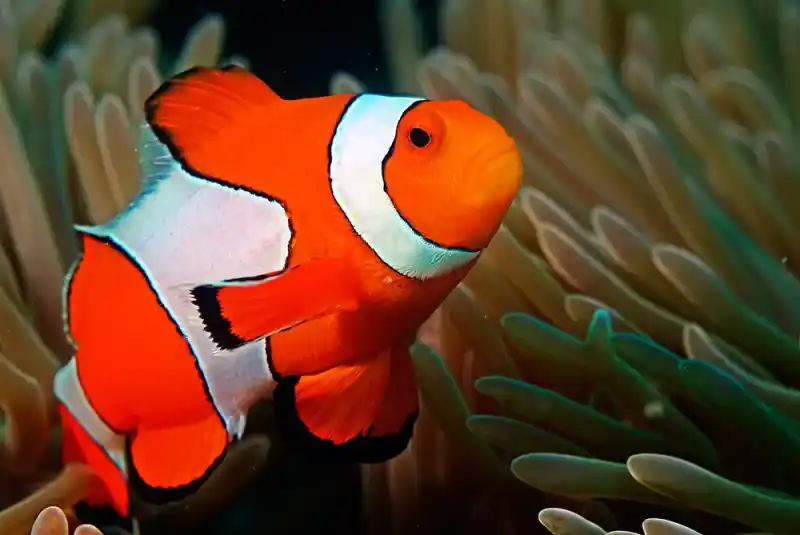
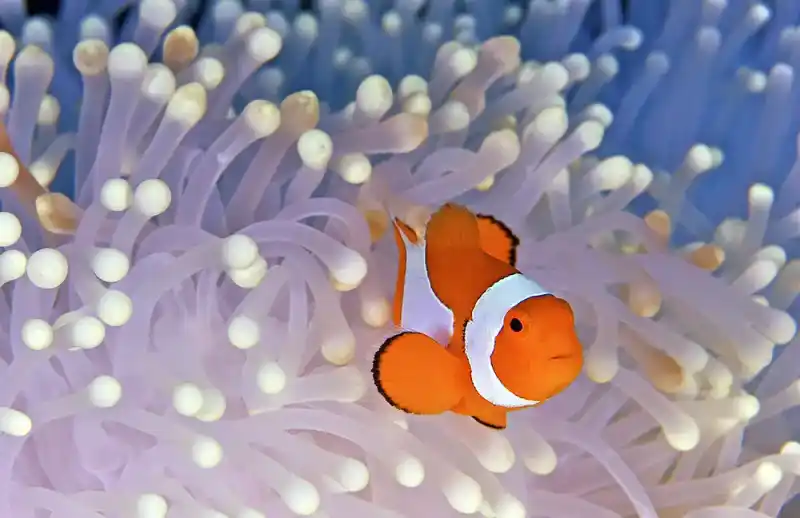
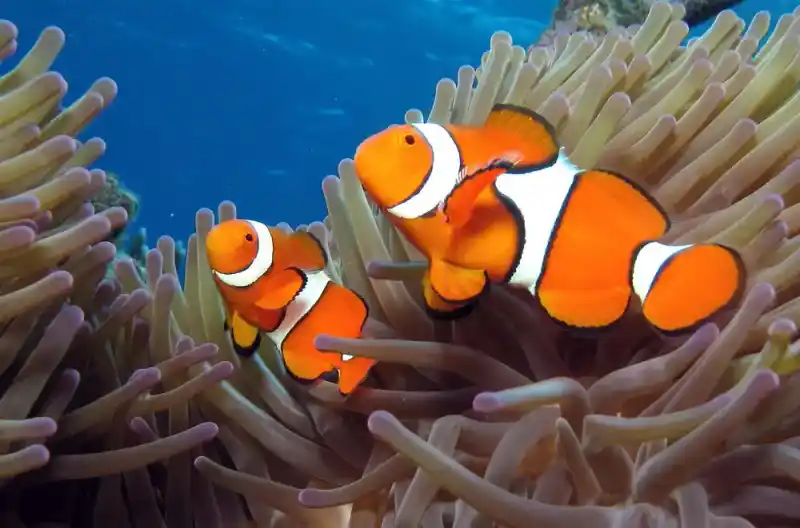
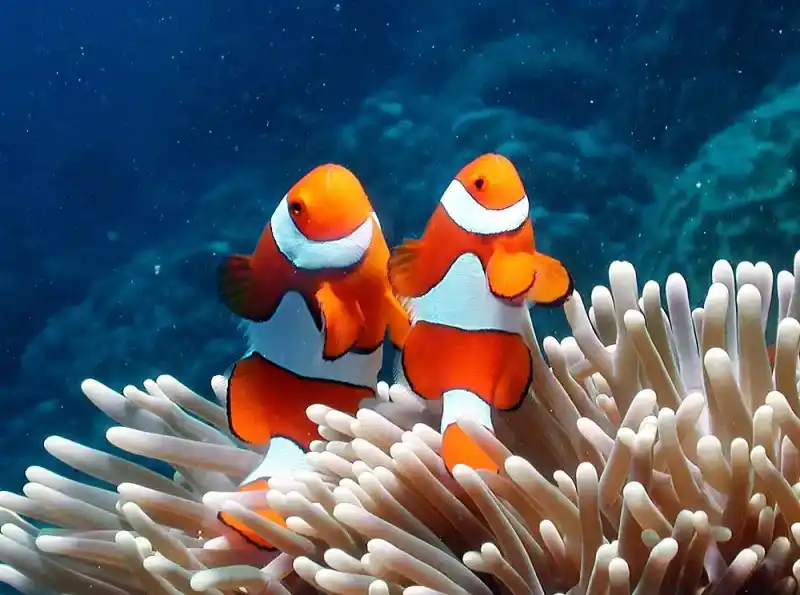
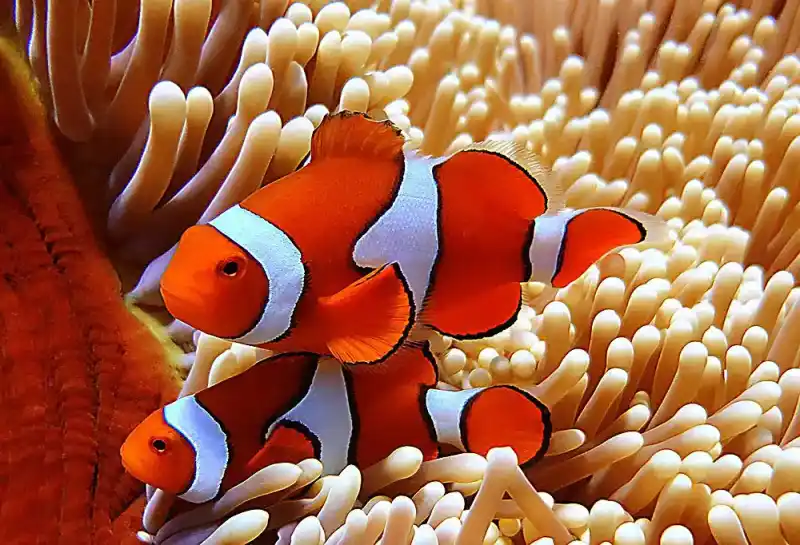
Orange/yellow/black base with white stripes or white spots; laterally compressed body, high back; caudal fin rounded to truncate.
Detailed introduction
The subfamily Amphiprioninae belongs to the family Pomacentridae and includes species such as clownfish and anemonefish , mostly distributed in coral reefs of the Indo-West Pacific . They form a classic mutualistic symbiosis with anemones : clownfish gain shelter and leftover food, while anemones benefit from the fish's fanning of water, excretion of nutrients, and deterring of predators.
Ecology and Biology
Symbiotic adaptations: A special mucus layer on the body surface can reduce the radiation of sea anemone stinging cells; different species have different selectivity for host sea anemones .
Social structure: Typical dominant hierarchical group (one female and multiple males); exhibiting protandry ( male-to-female transition ). The highest-ranking individual in the group is the female, followed by the breeding male, and the others are immature males.
Reproduction: The male fish lays attached eggs at the base of the sea anemone or on the reef surface, guarding the nest/fanning to provide oxygen ; after hatching, the fry enter a planktonic period and then return to the reef to settle.
Diet: Omnivorous, feeding on small planktonic crustaceans, zooplankton , algae, and detritus.
Morphology and Recognition
Body shape: laterally compressed, high back; dorsal fin integrated; caudal fin rounded to truncate.
Body color: Commonly orange/yellow/reddish-brown/black with white markings or white patches . The amount and morphology of white markings vary significantly among different species.
Body length: Commonly 6–17 cm , larger species can reach over 18 cm .
Distribution and Habitat
Widely distributed in the Indian Ocean and western Pacific Ocean (including the Red Sea, East Africa to Micronesia and the Great Barrier Reef of Australia), it is often found in shallow reefs, lagoons and outer reef slopes , and is usually active at 1–30 m . It is closely related to its host sea anemone; it is absent in the Atlantic Ocean (including the Caribbean) under natural conditions.
Conservation and Human Interaction
Threats: Coral/anemone habitat degradation, abnormal sea temperatures, ornamental fish collection and pollution.
Management and sustainability: Encourage artificially bred individuals for ornamental trade; avoid collecting rare wild species.
IUCN: This entry is a general overview of taxa , and assessments vary across different species (most are classified as LC, but there are also NT/VU cases); this site's general overview entry is marked as unassessed (NE) .
Frequently Asked Questions
Q1: Do clownfish electrocute people? No. They adapt to the stinging cells of anemones using a mucus layer ; they are harmless to humans, but please do not touch the anemones or the fish.
Q2: Can they be bred artificially? Yes. Many species have well-established artificial breeding systems ; the "artificial breeding" label should be selected first.
Q3: Why are female fish always larger? Due to their social and energy allocation strategy of males preceding females , female fish are often the largest individuals in a group.
Q4: Which movie character corresponds to? The most common is the Percula/ocellaris composite group (Prince Clown/Silk Clown), but their appearance and regional forms differ greatly.