Basic Information
Scientific classification
- Chinese name: Red Lionfish
- Scientific name: Pterois volitans
- Classification: Small fish
- Family: Scorpaenidae Pterois
Vital signs data
- Body length: Commonly 20–35 cm; Maximum ~45 cm+
- Weight: As the body length increases, adult fish can reach several hundred grams to 1 kg.
- Lifespan: Approximately 5–10 years (estimated)
Significant features
Poisonous spines on the dorsal, ventral, and anal fins; pectoral fins radiating like a fan; encircling and instantly sucking in prey; invading the western Atlantic and Caribbean.
Distribution and Habitat
Native: Indo-Western Pacific; Invaded: Western Atlantic-Caribbean-Gulf of Mexico; Reefs, artificial structures, shipwrecks, etc., 1–100+ m.
Appearance
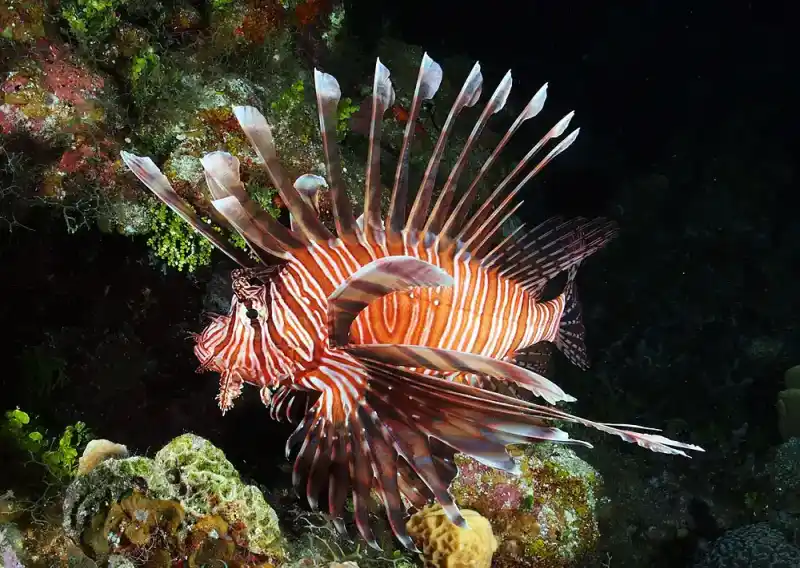
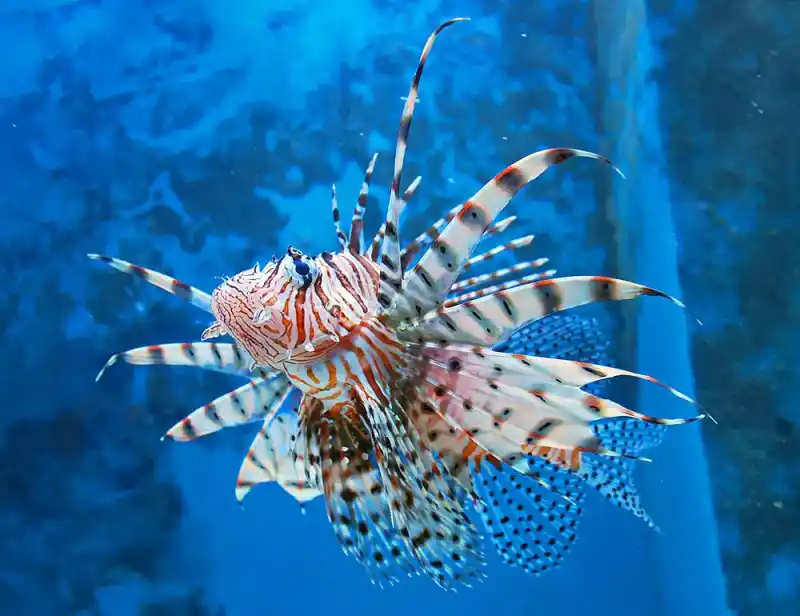
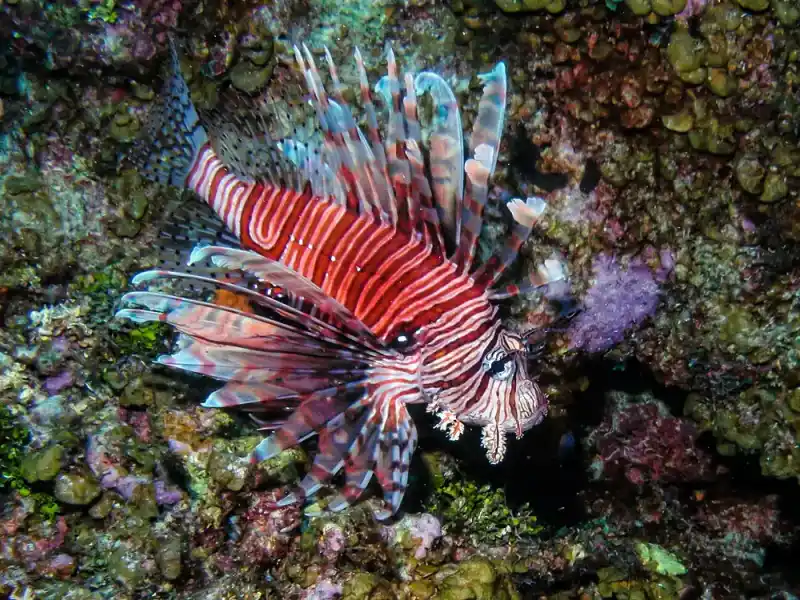
Reddish-brown to orange-brown with narrow white bands; dorsal fin with 13 spines; juvenile pectoral fins are longer and more filamentous.
Detailed introduction
The red lionfish ( Pterois volitans , also known as the red turkey fish ) belongs to the family Scorpaenidae and the genus Pterois . Native to the Indo-western Pacific , it is known for its magnificent radiating pectoral fins and venomous spines on its dorsal, anal, and pelvic fins . In the western Atlantic and Caribbean , it is an invasive species , posing significant predation pressure on native small reef fish and crustaceans.
Ecology and Biology
Diet: It mainly feeds on small fish and crustaceans , and often ambushes prey at dusk/night; it can surround its prey with its pectoral fins and swallow it instantly .
Reproduction: Males and females release gel-like egg masses in the water column, which are then spread by ocean currents; the high reproduction frequency and short generation time facilitate dispersal.
Toxicity: The dorsal, ventral, and anal fins have hollow venomous spines that can inject toxins for defense when they pierce the skin.
Morphology and Recognition
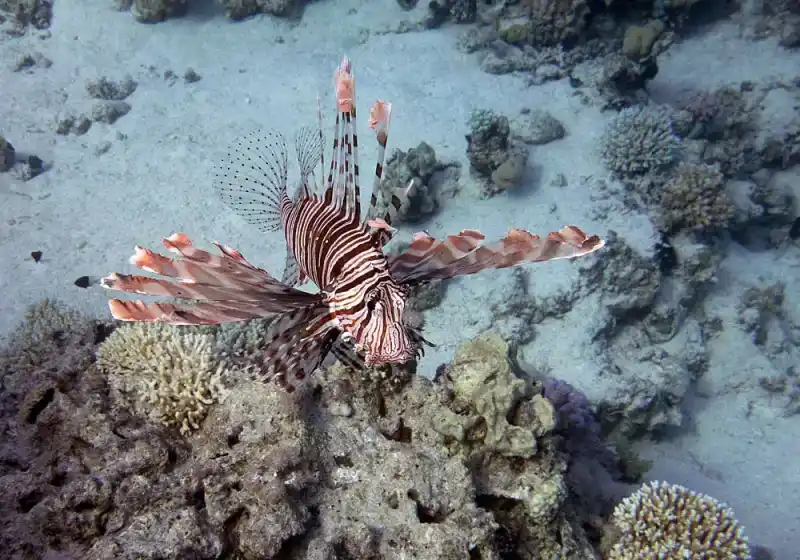
Body color/pattern: reddish-brown to orange-brown with narrow white bands ; pectoral fins are extremely long and radiate in a fan shape .
Spiked fins: The dorsal fin usually has 13 spines ; the pelvic/anal fins also have spines, so caution is advised.
Juvenile characteristics: The pectoral fin rays are thinner and longer, and the fish floats near the reef slope and artificial structures.
Body size and lifespan
Body length: Commonly 20–35 cm , with a maximum of ~45 cm or more.
Lifespan: Approximately 5–10 years in the wild (depending on the region).
Distribution and Habitat
Native habitat : Indian Ocean–western Pacific (Indonesia, Philippines, Papua New Guinea, northern Australia, etc.). Invaded habitat : Western Atlantic, Caribbean Sea and Gulf Coast and offshore platforms. Commonly found on reef slopes, artificial reefs, seagrass bed edges and docks/shipwrecks , in water depths of 1–100+ m .
Conservation and Human Interaction
IUCN: Least Concern (LC) (widely native).
Ecological impact (invaded areas): Reduced abundance and replenishment of local small reef fish; targeted removal and edible development are encouraged in various regions to control the population.
Safety tips: Avoid contact with bare hands; in case of a puncture wound, it is generally recommended to apply local warmth/soak in warm water under professional guidance to relieve pain, and seek medical attention as soon as possible .
Frequently Asked Questions
Q1: How to distinguish it from Pterois miles ? Pterois miles has coarser and simpler markings on its pectoral fins and sides, and is usually found in the Indian Ocean; the two are often collectively referred to as the "lionfish complex" when they invade the Atlantic Ocean.
Q2: Will it attack people unprovoked? No, most stab wounds are caused by accidental contact or improper handling during fishing .
Q3: Why are they thriving in the Caribbean? Few natural predators, high reproductive rate, omnivorous diet, and ability to survive in deep/poor environments have led to rapid population expansion.
Q4: Is it edible? Yes, it is edible and has good meat quality, but you must avoid the poisonous thorns when handling it and follow local fishing and food safety regulations.


