Basic Information
Scientific classification
- Chinese name: sardine
- Scientific name: Clupeidae (representative genera: Sardina, Sardinops, Sardinella, etc.)
- Classification: Small fish
- Family: Clupeidae Sardina Sardinops Sardinella
Vital signs data
- Body length: Commonly 12–25 cm; maximum ~30 cm (depending on species/ocean region)
- Weight: Small migratory fish, with significant individual variation.
- Lifespan: Approximately 3–7 years (depending on species/ocean region)
Significant features
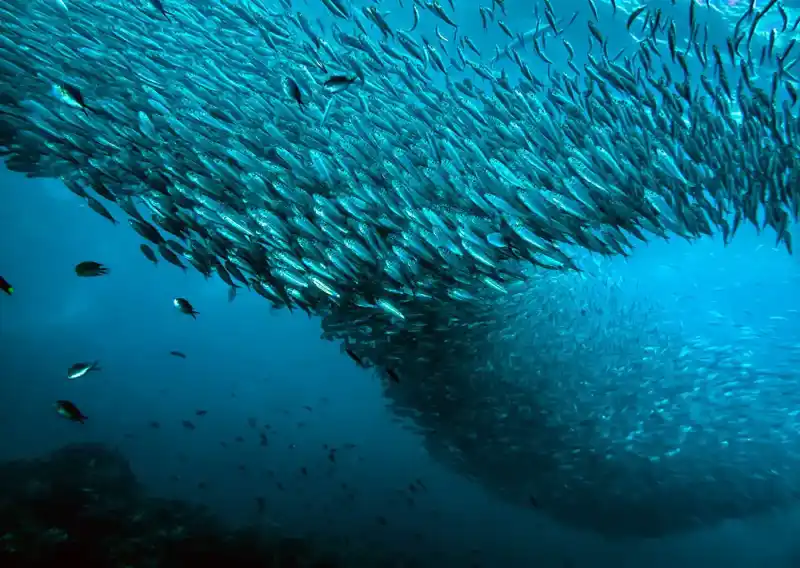
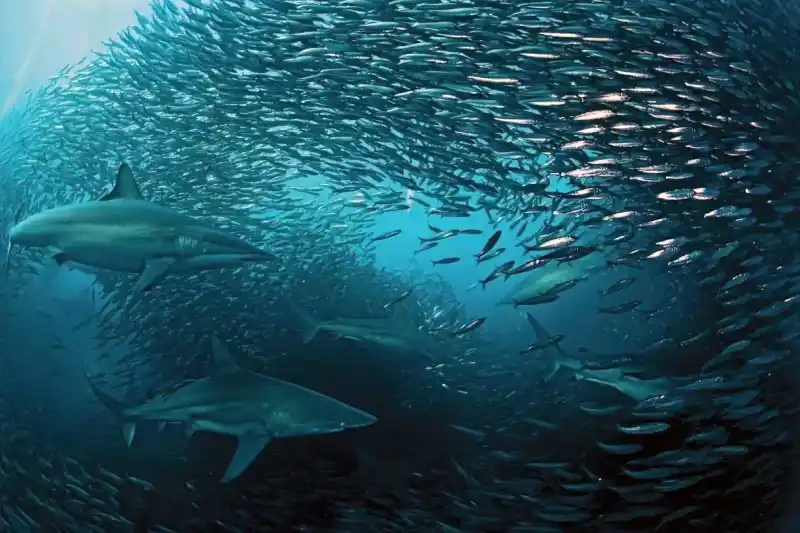
Giant swarms; filter feed on plankton with raker gills; diurnal vertical migration; spawning in the open ocean; significant interannual variation.
Distribution and Habitat
Global temperate to subtropical shelf waters; associated with high-productivity water masses such as upwellings/fronts.
Appearance
Back bluish-green to gray, belly silvery-white; laterally compressed; ventral margin ridged with scales; some have lateral stripes.
Detailed introduction
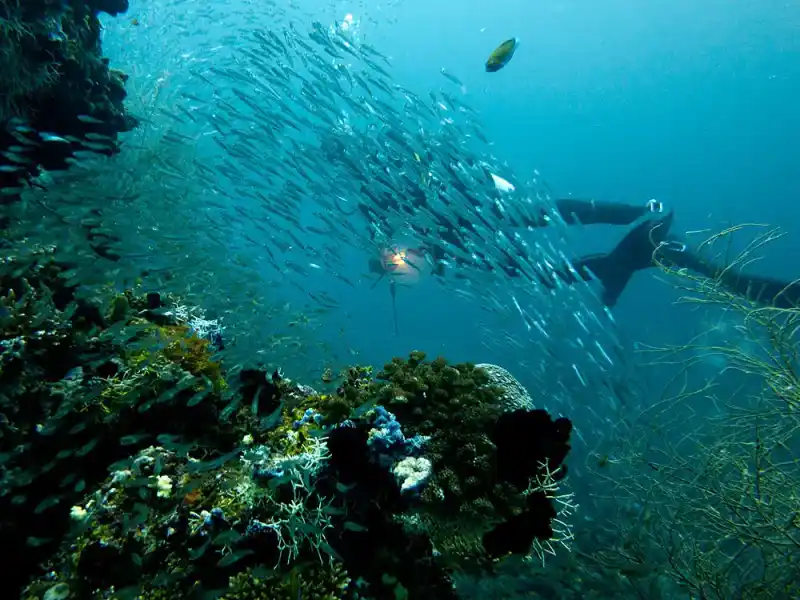
Sardines are a common name for a group of small, migratory, oily fish , mainly belonging to the order Clupeiformes and family Clupeiidae . Common examples include the European sardine (Sardina pilchardus ), the Pacific sardine (Sardinops) , and the tropical sardine (Sardinella ). They are known for their large schools , filter-feeding on plankton , and high nutritional value (rich in Omega-3 fatty acids) , and are an important global fishery resource.
Ecology and Biology
Diet: Mainly copepods, cladocerans and phytoplankton , relying on gill rakers for filtration .
Behavior: They are highly gregarious and exhibit diurnal vertical migration (surfacing to feed at night and diving during the day).
Reproduction: Eggs and sperm are released in the open ocean ; the eggs and fry are buoyant and drift with the ocean currents to the shore to grow.
Morphology and Recognition
Body shape: laterally compressed and streamlined; no lateral line or very weak lateral line; ventral margin often has ridged scales .
Body color: blue-green to gray on the back, silvery-white on the sides/belly; some species have dark stripes on the sides.
Mouthparts: Small mouth with fine teeth or no teeth; dense raker gill stripes , which facilitates filter feeding.
Body size and lifespan
Body length: Commonly 12–25 cm (depending on species/sea area), large individuals can reach ~30 cm .
Lifespan: Mostly 3–7 years , but individuals in certain sea areas may live longer.
Distribution and Habitat
Widely distributed in temperate to subtropical seas worldwide , including the eastern Atlantic to Mediterranean, North Pacific, and Indian Oceans; they often migrate in groups in shelf waters and are frequently associated with high-productivity water masses such as upwelling currents/fronts .
Conservation and Human Interaction
Fisheries status: A globally important economic fish, used for fresh consumption, canned goods, and fishmeal/fish oil; significant interannual variation (affected by environmental and resource fluctuations).
Threats and Management: Overfishing and environmental change can lead to population collapse ; allowable catches, closed fishing seasons/mesh sizes , and habitat protection need to be set based on scientific assessments .
IUCN: This entry is a general overview of taxa , and the status varies among different species (LC/NT/VU, etc.); the general overview entry on this site is marked as unevaluated (NE) .
Frequently Asked Questions
Q1: Are sardines and anchovies/herrings the same thing? They both belong to the order Clupeiformes and are closely related. Sardines often refer to Sardinia, Sardinops, Sardinella, etc., anchovies often refer to Engraulis , and herrings often refer to Clupea . They differ in classification and appearance.
Q2: Why does the population fluctuate so much? Its resources are highly sensitive to sea temperature, upwelling intensity and food availability , and the population exhibits interdecadal fluctuations .
Q3: What is the nutritional value? It is rich in EPA/DHA and high-quality protein; however, those who consume canned food with high salt content should pay attention to their intake.
Q4: Sustainable consumption recommendations? Prioritize products with sustainable certifications and good regional scientific quota management .


