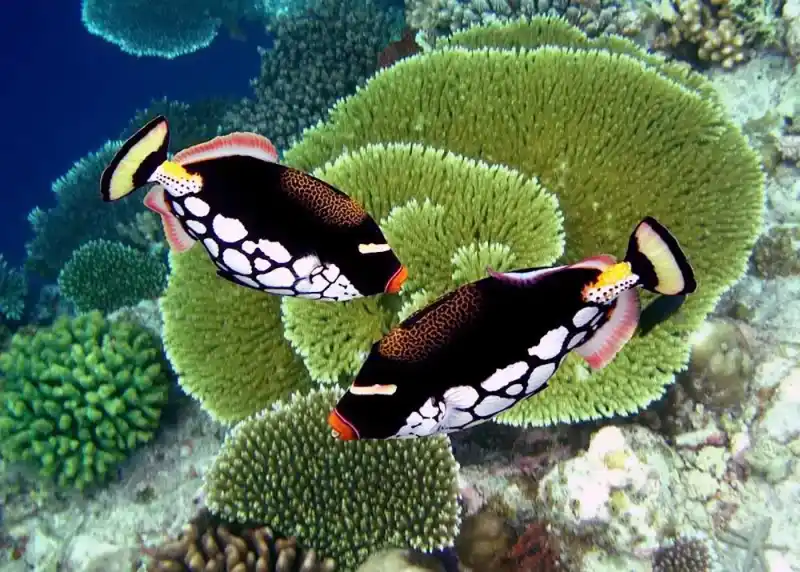
Basic Information
Scientific classification
- Chinese name: Clown Pufferfish
- Scientific name: Balistoides conspicillum
- Classification: Small fish
- Family: Balistidae Balistoides
Vital signs data
- Body length: Commonly 35–45 cm; Maximum ~50 cm
- Weight: Increases with body length, but can reach several kilograms.
- Lifespan: Approximately 10–15 years or more (estimated)
Significant features
It has a three-spined "trigger" structure on its back; strong territoriality; it can crush hard-shelled prey; and it patrols diurnalally on the outer reef slope.
Distribution and Habitat
The outer slope/platform/crown of the Indo-Pacific reef and the outer edge of the lagoon are typically 5–40 m (up to ~75 m).
Appearance
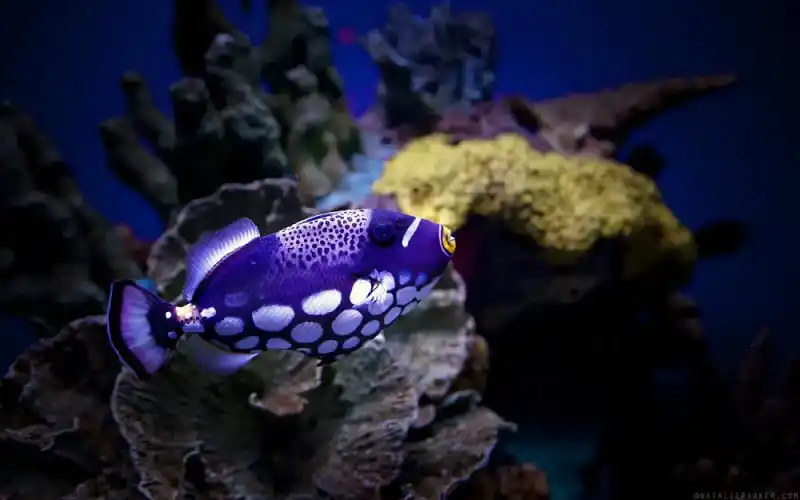
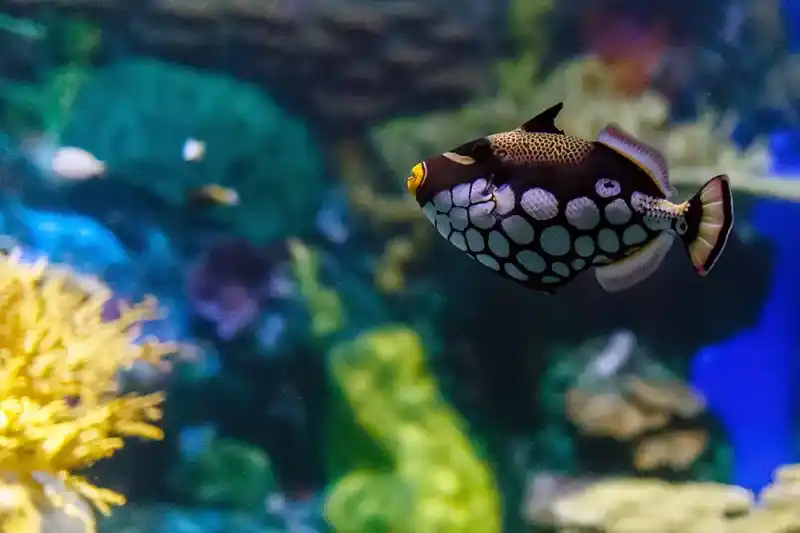
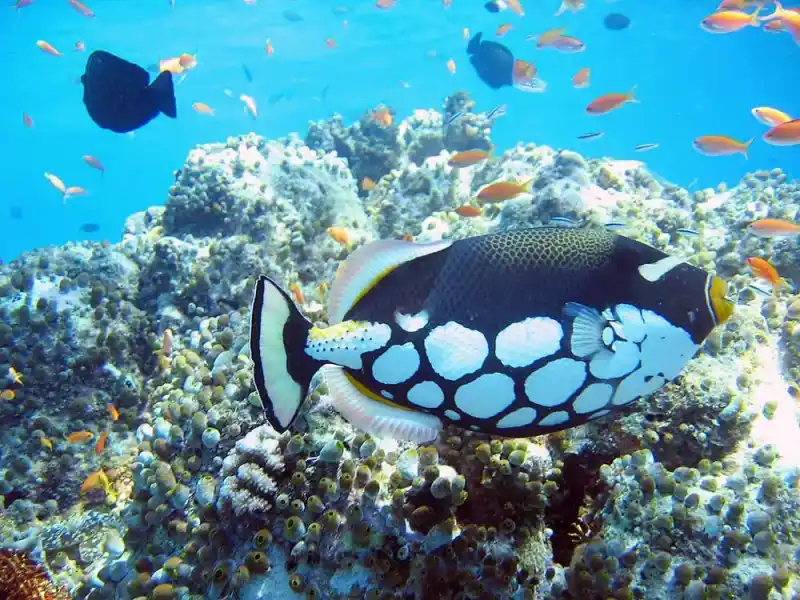
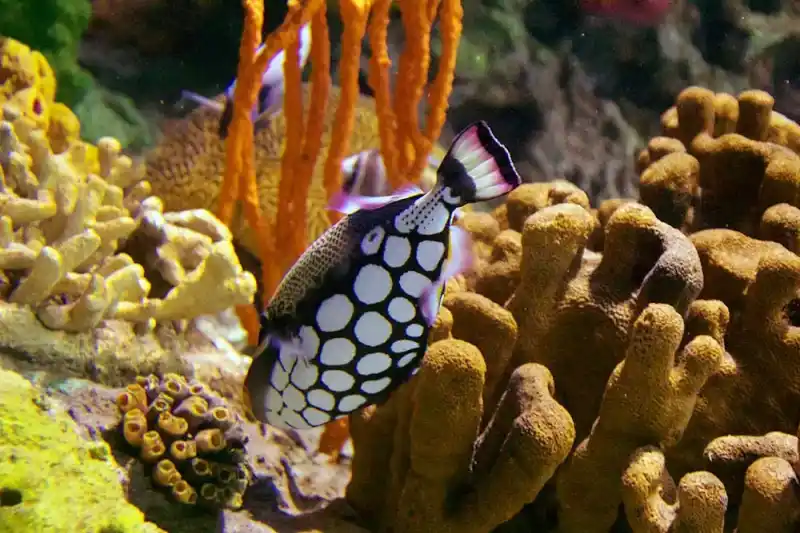
Black background with large white round spots, prominent on the lower body; yellowish-brown honeycomb pattern on the back; bright yellow mouth.
Detailed introduction
The clown triggerfish ( Balistoides conspicillum ) belongs to the Balistidae family . It is known for its striking black body with large white spots and a yellowish-brown leopard-like back , and is a typical diurnal, benthic predator in the tropical Indo-Pacific coral reefs. Its "trigger" dorsal spines can lock itself upright and wed into rock crevices; its strong front teeth can crush hard-shelled prey.
Ecology and Biology
Diet: Primarily feeds on sea urchins, mollusks (shells/snails), crustaceans , and polychaetes, and also feeds on small invertebrates on the porous surface of corals.
Behavior: Highly territorial ; patrols and forages on reef slopes/platforms during the day and rests in caves at night.
Reproduction: They lay eggs that adhere to the substrate. The female fish guards the nest and is aggressive towards intruders.
Morphology and Recognition
Body color: The lower body is black with large white round spots ; the back is yellowish-brown with honeycomb/leopard-like patterns; the mouth is often bright yellow .
Dorsal spines: It has three dorsal frontal spines (the first dorsal spine is lockable, and the second spine is a "trigger" for release).
Mouthparts: Well-developed incisors, suitable for biting hard shells/coral substrates .
Body size and lifespan
Body length: Commonly 35–45 cm , with a maximum of ~50 cm .
Lifespan: Estimated to be 10–15 years or more in the wild (affected by environment and fishing pressure).
Distribution and Habitat
Widely distributed in the tropical Indo-Pacific : from East Africa and the Maldives to Indonesia, the Philippines and Micronesia, east to Samoa and Fiji, north to the Ryukyu Islands and south to the Great Barrier Reef; commonly found on outer reef slopes, reef platforms, reef crowns and the outer edge of lagoons, with common water depths of 5–40 m (recorded up to ~75 m).
Conservation and Human Interaction
IUCN: Least Concern (LC) ; Regionally affected by coral degradation and ornamental fish fishing.
Safety tips: Individuals may actively charge or bite during nest defense or when provoked; keep your distance when diving to avoid disturbing the nesting area.
Frequently Asked Questions
Q1: Why is it called the "trigger fish"? Because its first dorsal spine can be locked upright , and its second dorsal spine acts as a "trigger" to release, making it easy to get stuck in rock crevices for self-protection.
Q2: Will it attack people? It usually avoids people, but it may charge or bite people during nest protection or when provoked, so be careful to avoid it.
Q3: How to distinguish it from Balistoides viridescens (giant triggerfish)? Clownfish has a black base with large white spots and a yellowish-brown leopard-like back, and is smaller in size; Giant triggerfish has a uniform greenish-brown body color and no large white spots.
Q4: Can it be kept in captivity? Large, territorial species are not suitable for small tanks; and may bite corals and invertebrates.


