Basic Information
Scientific classification
- Chinese name: Reef fish / Stonefish
- Scientific name: Synanceia verrucosa
- Classification: Small fish
- Family and genus: Synanceiidae Synanceia
Vital signs data
- Body length: Commonly 25–40 cm; Maximum ~50 cm
- Weight: Large individuals can weigh several kilograms or less.
- Lifespan: Approximately 5–10+ years (estimated)
Significant features
Extremely good at mimicking; 13 venomous spines on the dorsal fin; instantaneous inhalation for prey; rests on the bottom; slightly increased activity at night.
Distribution and Habitat
Indo-Pacific coral reef zone; shallow reef gravel/broken coral bottom and rock crevices, 0–30 m.
Appearance
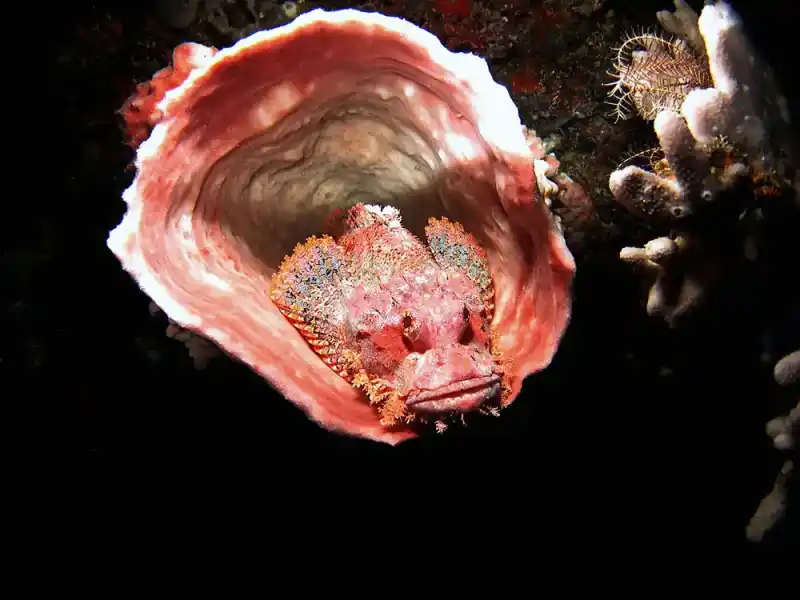
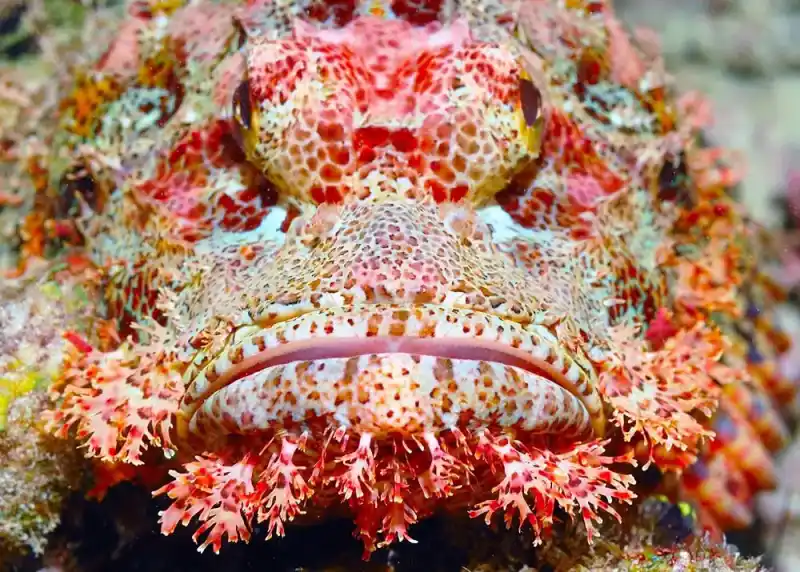
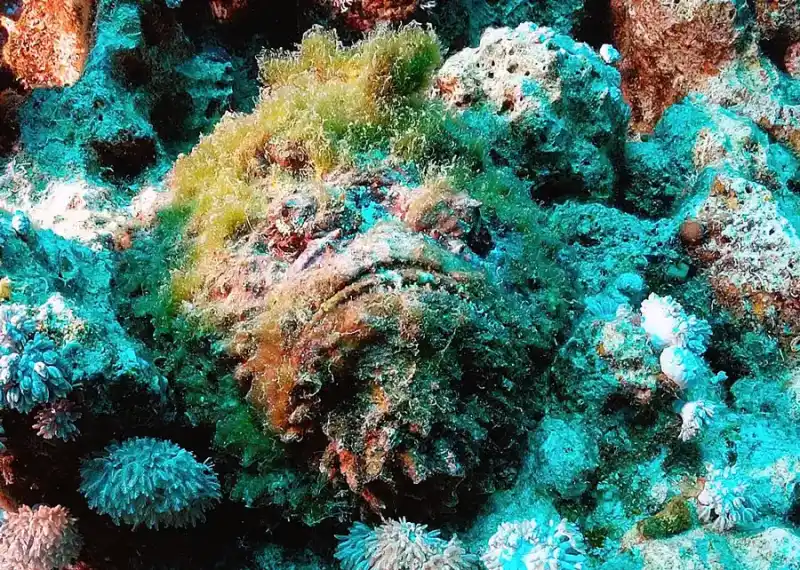
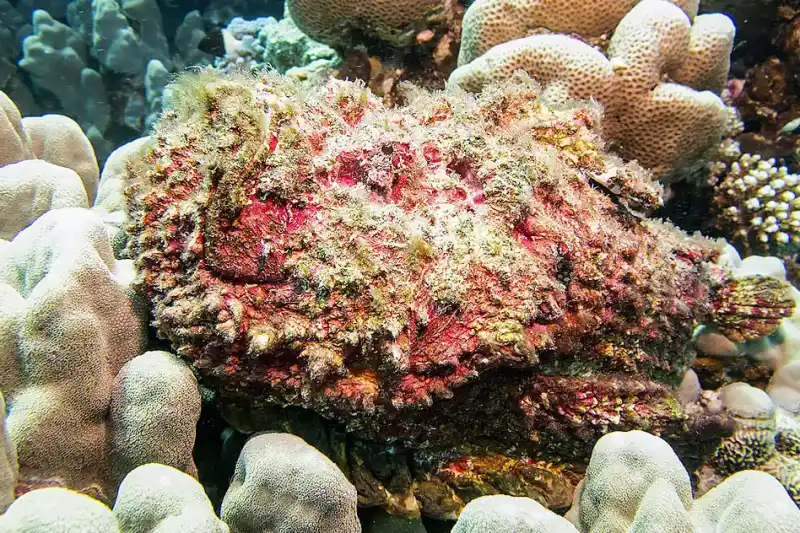
Rough, warty protuberances with algae-like attachments; gray/red/yellowish-brown discoloration; large head and wide mouth; small, high-set eyes.
Detailed introduction
The rockfish ( Synanceia verrucosa , also known as the stonefish or dark-striped stonefish ) belongs to the family Synanceiidae and is one of the most venomous marine bony fish known. It uses its amazing mimicry to ambush prey among sand and broken coral, defending itself with 13 venomous spines on its dorsal fin; when prey approaches, it swallows it whole with a sudden suction .
Ecology and Biology
Diet: Small to medium-sized reef fish, shrimp and small crabs, etc., benthic crustaceans, which rely on negative pressure to instantly suck up their prey.
Behavior: Typical ambush predator ; usually lies dormant and camouflaged during the day, with slightly increased activity at dusk and night.
Defense: The dorsal fin has 13 hollow venomous spines connected to venom glands , which inject venom when pressure is applied.
Morphology and Recognition
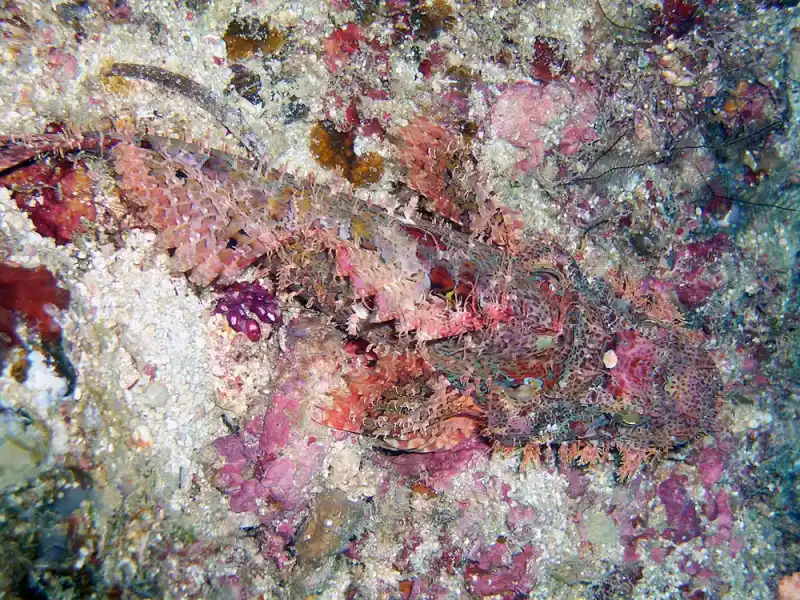
The body surface is rough with warts and algae-like attachments, and its color varies from grayish-brown, reddish-brown, to yellowish-brown depending on the environment.
Large head and wide mouth , with the upper jaw possibly everted; small eyes and high-set.
The dorsal fin has XIII rays and short soft rays ; the pectoral fins are broad and easy to support on the bottom.
Body size and lifespan
Body length: Commonly 25–40 cm , with a maximum of nearly 50 cm .
Lifespan: Estimated at 5–10 years or more (regional variations).
Distribution and Habitat
Distributed in the Indo-Pacific coral reef region (Red Sea, East Africa to tropical islands in the Pacific), it usually inhabits the gravel/broken coral bottom of shallow reef platforms, lagoons and reef edges , and is also found in rocky reef crevices, at a water depth of 0–30 m .
Conservation and Human Interaction
Threats: Habitat degradation, coastal pollution, and limited by-fishing; overall population is relatively widespread.
Safety tips: Wear thick-soled shoes and be careful when stepping in water or diving; if you suspect a stab wound, seek medical attention immediately . Common on-site treatments include immersion in warm water under professional guidance to relieve pain and assess whether antivenom is needed (guidelines vary by region).
IUCN: Least Concern (LC) (subject to the latest authoritative assessment).
Frequently Asked Questions
Q1: How to distinguish it from Synanceia horrida ? S. verrucosa has denser tubercles on its body surface and a more "bulb-like" outline, and is commonly found at the front edge of coral reefs; S. horrida has more developed head spines, and the morphological differences need to be considered in conjunction with the regional identification key.
Q2: Why can't we see it? Its color and texture closely mimic broken coral and algae on rock surfaces, and it is often half-buried in sand.
Q3: Will you attack proactively? No. Stabbings are mostly caused by accidentally stepping on or touching rocks; maintaining distance and not turning over rocks with bare hands can significantly reduce the risk.
Q4: Is a stab wound always fatal? The severity of the injury varies depending on the number of stabs, the depth, the location, and the individual's condition ; seek immediate medical attention and follow local medical advice.