Basic Information
Scientific classification
- Chinese name: Brown kangaroo weasel
- Scientific name: Antechinus stuartii
- Classification: Rodentia
- Family and genus: Familia: *Callicarpa*
Vital signs data
- Body length: Adults typically have a head and body length of about 9–16 cm and a tail length of about 8–12 cm. They are small and agile.
- Weight: The weight is mostly between 20 and 60 grams, with males usually being heavier, and they will gain weight significantly before the breeding season.
- Lifespan: Most individuals in the wild live for about 1–2 years, with females sometimes living up to 2–3 years; males usually die after their first breeding season.
Significant features
Small, insectivorous marsupials in the woodlands of eastern Australia exhibit a highly concentrated breeding season, with males often exhibiting a "single reproduction" phenomenon where they die off en masse after mating. This species is of great importance for studying behavioral ecology and physiological costs.
Distribution and Habitat
It is mainly distributed in the coastal and near-coastal forests of eastern Australia, commonly found in moist or semi-moist eucalyptus forests, rainforest edges and shrublands. It prefers habitats with rich understory vegetation, thick leaf litter, fallen logs and bark crevices for nesting, hiding and foraging.
Appearance
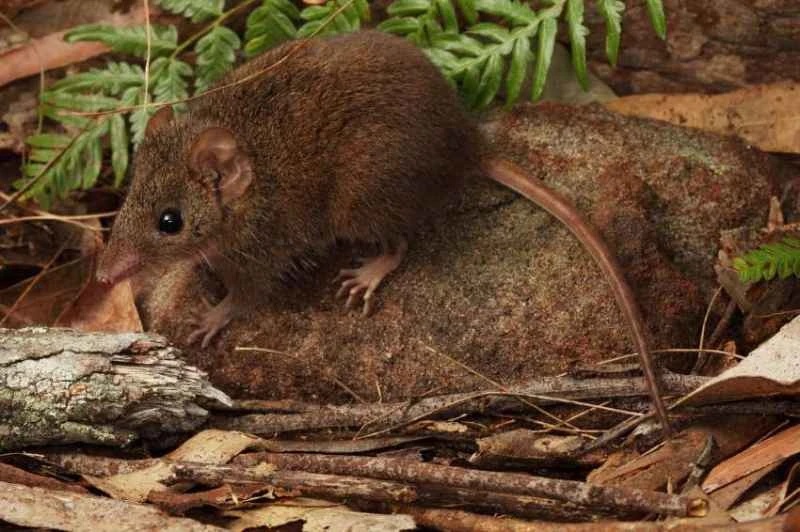
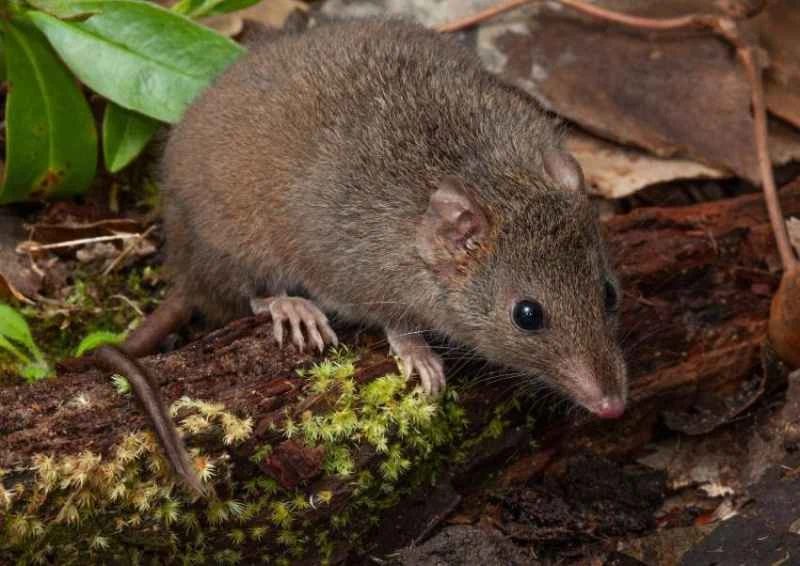
Small in size, with a pointed snout and large ears, the back is brownish-grayish-brown and the belly is light-colored; the limbs are slender but have strong gripping power and sharp claws, making them adept at climbing and searching for prey in the leaf litter; the tail is relatively long for balance, and females have a less prominent pouch.
Detailed introduction
The brown quokka (Antechinus stuartii ) is a small, carnivorous marsupial commonly found in the forests and scrublands of eastern Australia, belonging to the genus Antechinus in the family Antechinidae. Despite its small size, it is a high-energy-consuming "miniature predator," primarily feeding on invertebrates such as insects and spiders, but also preying on small vertebrates such as lizard larvae. One of the most well-known biological phenomena of the brown quokka is its "semelparity" strategy, where males die off in large numbers after a short but concentrated breeding season: males invest a great deal during mating, followed by mass mortality due to hormonal and immune system collapse.
Classification and nomenclature
The brown quokka belongs to the class Mammalia, superorder Marsupia, order Dasyuromorphia, family Dasyuridae, and genus Antechinus . The genus Antechinus contains several small marsupials of similar size and appearance; in the wild, differentiation often requires a combination of coat coloration, distribution, skull and dental features, and genetic information. The English name for the brown quokka is Brown Antechinus, often translated into Chinese as "褐袋鼬" (hè dài yòu), emphasizing its brownish-brown back fur.
Appearance features
The brown quokka is small and agile, with a pointed snout, large, thin ears, and bright eyes. Its overall appearance resembles a "pointed-snouted mouse," but it belongs to the marsupial family rather than the rodent family. Adults typically have a head-body length of about 9–16 cm and a tail length of about 8–12 cm; their weight is mostly between 20–60 grams, with males usually heavier, and they gain significant weight before the breeding season. The fur on their backs is mostly brownish-grayish-brown, while the belly is lighter, appearing creamy white or light gray. The dense fur is well-suited to their habitat in cool, damp woodlands.
Its limbs are slender but possess strong gripping power, and its toes have sharp claws, making it adept at climbing, leaping, and searching for prey on tree trunks, vines, and fallen logs. Its relatively long tail serves both balancing and supporting functions, helping it move quickly among branches. Females have a pouch, but the opening is not as prominent as that of larger kangaroos, often requiring close observation to spot.
Distribution range and habitat
The brown quokka is mainly distributed along the eastern and near-coastal coasts of Australia, commonly found in various forest habitats in southeastern New South Wales and Queensland. It prefers environments with abundant undergrowth and fallen logs and leaf litter, such as moist or semi-moist eucalyptus forests, rainforest edges, scrublands, and montane woodlands. The ample leaf litter, bark crevices, and decaying wood provide it with prey, concealed passageways, and nesting material.
Within the same woodland, brown quokkas utilize tree cavities, fallen log crevices, rock crevices, or spaces under thick layers of leaves as resting and nursery sites during the day. The more complex the habitat structure and the richer the invertebrate resources, the higher the density of brown quokkas is typically.
Lifestyle Habits and Behaviors
Brown quolls are mostly nocturnal animals, becoming active after dusk. They use their keen sense of smell and hearing to search for prey in leaf litter, under bark, and in bushes. Their range is usually small, but they travel along familiar routes and communicate with each other using scent marking. During the day, they rest in their nests, which are typically made of dry grass, leaves, and fibrous materials.
Species of the genus *Cosmodon* are known for their "explosive breeding." The breeding season of the brown quokka often concentrates within a short window of the year, during which females simultaneously enter estrus, and males, in order to compete for mating opportunities, will remain active for extended periods, reduce their food intake, and mate continuously. After the breeding season ends, many males die from immunosuppression, infection, and organ failure caused by chronically high cortisol levels, resulting in the following year's population consisting almost entirely of females and the juveniles from that year.
feeding habits
Brown quolls are opportunistic predators that primarily feed on animal matter, mainly invertebrates such as insects, beetle larvae, spiders, centipedes, and scorpions. They will also prey on small lizards, frog larvae, bird eggs, or young birds (when the opportunity arises). They have a high metabolic rate and need to forage frequently to maintain their body temperature and the energy required for activity.
During seasons when food is plentiful, brown quokkas prioritize high-protein, high-fat insects and larvae; when invertebrate populations decline, they also rely more on diverse prey sources, demonstrating strong ecological adaptability.
Reproduction and life cycle
Females typically give birth to 6–10 young per litter (the exact number varies depending on the individual and available resources). The young are extremely tiny at birth and immediately crawl into the pouch to attach to the nipples and begin developing. After several weeks, the young gradually grow fur and begin briefly leaving the pouch, moving about in the nest or on the mother's back, before entering the learning-out-of-the-nest phase. The female usually cares for the young in the nest and returns to nurse them after foraging for food at night.
Brown quokkas have relatively short lifespans, with most individuals in the wild living for about 1–2 years; females can sometimes live up to 2–3 years and experience multiple breeding seasons, while males usually die after their first breeding season. This "one-time male reproduction" strategy results in rapid population turnover, but also makes them highly sensitive to habitat stability and food resources.
Relationship with humans
Brown quolls are generally harmless to humans and actually play a role in controlling woodland insect populations. They may occasionally enter residential gardens or sheds near woodlands, but usually do not pose a long-term pest problem. Due to their small size and nocturnal nature, many people do not easily spot them even in their distribution areas.
However, brown quokkas may face predation by domestic cats and dogs, or habitat fragmentation due to roads and human infrastructure. Forest clearing, frequent wildfires, and understory reduction can decrease their hiding places and prey resources, thus impacting local populations.
Protecting the status quo and threats
In the IUCN Red List, the brown quokka is generally assessed as Least Concern (LC), indicating its wide overall distribution and lack of signs of rapid global decline. However, in localized areas, habitat loss and fragmentation, changes in fire frequency and intensity, invasive predators (especially wildcats and foxes), and the impacts of climate change on invertebrate communities can all lead to population declines.
Effective strategies for protecting brown quokkas include: preserving fallen trees and leaf litter in woodlands, maintaining a diverse understory vegetation structure, reducing clearing and excessively frequent burning in key habitats, controlling the range of domestic and feral cats, and understanding the breeding season and population fluctuation patterns in different regions through long-term monitoring.
Frequently Asked Questions
Q1: Is the brown quokka a rat?
No. The brown quokka belongs to the marsupials (family Mustelidae), the same genus as kangaroos; it resembles a small mouse with a pointed snout mainly in size and lifestyle, but it is classified differently from rodents ("rat").
Q2: Why is it said that male brown quokkas die after mating?
The brown quokka's breeding season is very concentrated, with males engaging in prolonged activity and mating within a short period of time. This is accompanied by high cortisol levels and immunosuppression, often leading to infections and organ failure after the breeding season. As a result, a large number of males die after their first breeding season, a strategy known as the "single breeding" strategy.
Q3: What do brown quokkas eat?
They primarily prey on invertebrates such as insects and spiders, but will also hunt small lizards, frog larvae, or bird eggs when the opportunity arises. They have a high metabolic rate and require frequent foraging.
Q4: How can we make it easier to spot brown quokkas in the wild?
They are nocturnal and secretive, and are usually more active after dusk. When observing them, use a red flashlight or participate in a nighttime ecological survey in areas with thick leaf litter and many fallen trees; keeping quiet and avoiding direct sunlight will help you briefly see them moving on the ground or tree trunks.