Basic Information
Scientific classification
- Chinese name: Wide-toothed rat
- Scientific name: Mastacomys fuscus
- Classification: Rodentia
- Family and genus: Muridae, Genus: Rattus spp.
Vital signs data
- Body length: Adults typically have a head and body length of about 14–18 cm and a tail length of about 10–14 cm. They are sturdy but not adept at climbing.
- Weight: Weight is mostly between 90 and 170 grams, and varies with seasonal food conditions and altitude.
- Lifespan: In the wild, lifespan is usually around 1–3 years, and may be longer when conditions are stable and predator pressure is low.
Significant features
These are rodents endemic to the cool, wet habitats of the Australian highlands and subalpine regions. They have thick teeth adapted for gnawing on tough herbs and sedges, rely on thick grass layers and moist microenvironments, and are susceptible to fire, drought and climate change.
Distribution and Habitat
It is mainly distributed in the high-altitude and cool, damp mountainous areas of southeastern Australia (the Alps and parts of the Tasmanian highlands), preferring subalpine meadows, heather thickets, sedge swamps, moist eucalyptus forest understory and peatlands, and relying on the hidden passages and moist microenvironments formed by thick grass, moss and fallen logs.
Appearance
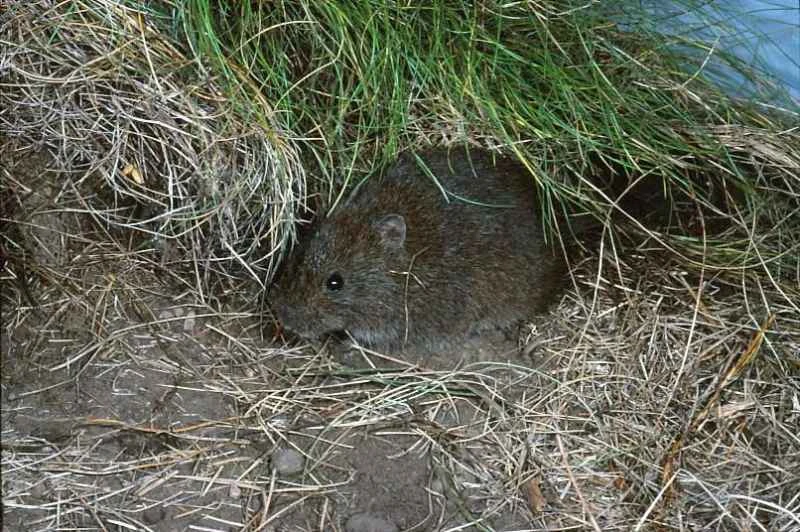
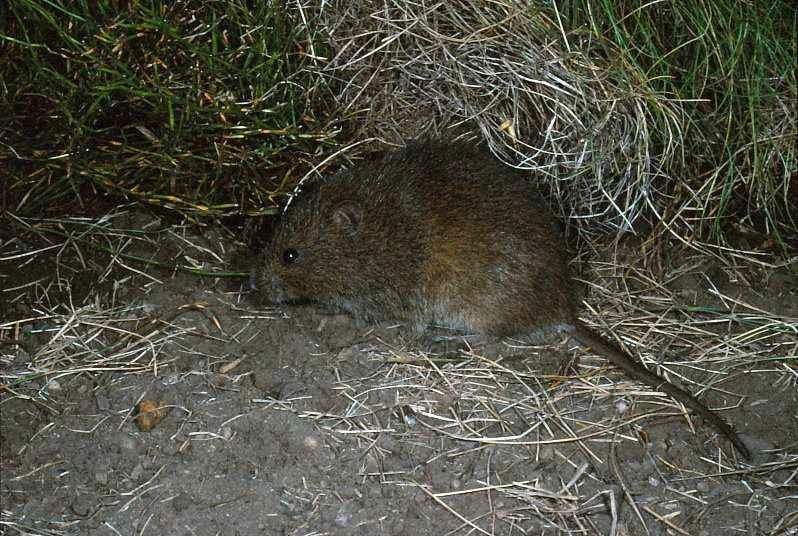
It has a stocky build, a slightly broad head, a short snout and small ears, a dark brown to grayish-brown back and a lighter belly; thick and dense fur to adapt to cold and damp environments, and a relatively short tail; strong incisors and wide molars, which are good for grinding grass and sedge with high fiber content.
Detailed introduction
The broad-toothed rat ( Mastacomys fuscus ) is a small rodent belonging to the family Muridae, found in the cool, damp high-altitude regions of southeastern Australia. Its incisors and molars are relatively wide and thick, adapted for gnawing on tough herbs and sedges, hence its name "broad-toothed." In the alpine and subalpine ecosystems of Australia, the broad-toothed rat is often considered an important small herbivorous mammal, significant for plant community regeneration and predator food webs.
Classification and nomenclature
Broad-toothed rats belong to the class Mammalia, order Rodentia, family Muridae, and genus Mastacomys . This genus is generally considered a monotypic genus in modern classification, with the broad-toothed rat being its main representative. The English name "Broad-toothed Rat" directly describes its characteristic of "wide-toothed teeth"; it is often translated into Chinese as "宽齿鼠" (kuān chǐ shǔ).
Appearance features
The broad-toothed rat is sturdy, with a slightly broad head, a short snout, and medium to small ears, giving it a more robust appearance than common urban house mice. Adults typically have a head-to-body length of 14–18 cm and a tail length of 10–14 cm; their weight ranges from 90–170 grams, varying with season and food availability. Their fur is generally dark brown to grayish-brown, with a slightly lighter grayish-white or light brown belly. The thick fur provides insulation in the cold, damp environments of high mountains.
Its most notable anatomical features are its teeth: strong incisors and relatively wider molars with chewing surfaces better suited for grinding fibrous plants. Its limbs are short and powerful, with claws adapted for foraging for food and nesting material in grass, peat, or under fallen logs. Its tail is relatively short with sparse fur, used more for balance than climbing.
Distribution range and habitat
The broad-toothed rat is mainly distributed in the cool, damp mountainous and highland areas of southeastern Australia, including the Australian Alps (such as the highlands of Victoria and New South Wales) and parts of the highlands and cool, damp areas of Tasmania. It prefers habitats with lower temperatures, dense vegetation, and moist ground, and is commonly found in subalpine meadows, heather thickets, sedge swamps, the understory of moist eucalyptus forests, mountain peatlands, and the edges of valleys.
These habitats often feature thick layers of dry grass, moss, or fallen logs, providing the broad-toothed rat with concealed passageways, nesting materials, and cover from predators. Because of its strong dependence on "cool and damp + shelter," the population is easily fragmented and declines once its habitat is cleared, dried out, or frequently burned.
Lifestyle Habits and Behaviors
Wide-toothed rats are mostly nocturnal or twilight-active animals, typically hiding during the day in grass, under fallen trees, in rock crevices, or in shallow underground burrows. They utilize thick layers of grass to create "surface tunnels," allowing them to traverse, forage, and return to their nests without being exposed in open areas. Individual activity ranges are usually small, but they repeatedly use fixed paths and foraging spots.
They primarily feed on plant matter and often require prolonged foraging and ruminant chewing to process the high-fiber herbs. During the breeding season, interactions between males and females increase; in resource-rich locations, multiple individuals may be found in adjacent micro-habitats, but overall they remain largely concealed and dispersed.
feeding habits
Wide-toothed rats primarily feed on grasses, sedges, rushes, shoots, and leaves. They also consume some seeds, roots, fungi, or insects to supplement their protein intake. They are particularly adept at utilizing tough, high-fiber plant materials; their broad molars effectively grind grass leaves and sedges to help them obtain energy.
During winter or when food is scarce in high-altitude environments, they may rely more on underground rhizomes, withered grass, and the tender shoots of cold-resistant plants; if covered by snow, they often move around in the space under the snow or in the layer of withered grass to reduce energy consumption and avoid predators.
Reproduction and life cycle
Wide-toothed rats typically breed during seasons with milder climates and abundant food. Females usually give birth to 2–5 pups per litter. The pups are nursed by their mother in the nest after birth, gradually leaving the nest to become active and learn to forage after several weeks. They typically reach sexual maturity within a few months to a year after birth, depending on altitude, climate, and food availability.
In the wild, the lifespan of the broad-toothed rat is typically 1–3 years; under conditions of few predators and stable resources, a few individuals may live longer. Due to their short generational span and strong dependence on habitat, the population is often highly sensitive to fire frequency, drought, and habitat fragmentation.
Relationship with humans
Wide-toothed rats are not typical urban pests, spending the vast majority of their time in sparsely populated high-altitude and cool, damp woodlands. They play a role in maintaining the ecological processes of alpine meadows and wetlands: influencing the structure of surface vegetation through feeding and transporting plant material, and providing food sources for predators such as birds of prey, foxes, wildcats, and some snakes.
The impact of human activities on the broad-toothed rat is mainly reflected at the habitat level. Examples include changes in understory vegetation caused by the construction of roads and tourism facilities in high-altitude areas, forestry operations, grassland degradation due to grazing and trampling, and changes in the frequency of human- or climate-driven fires. For species like this that rely on thick grass and a moist microenvironment, recovery is often slow once the surface structure is damaged.
Protecting the status quo and threats
The broad-toothed rat is generally considered a small, endemic Australian mammal of conservation concern. In some assessment systems, it is considered close to threatened (e.g., Near Threatened NT) or listed as a threatened species in some areas. Its main risks stem from habitat loss and fragmentation, the disappearance of thick grasses due to frequent or high-intensity wildfires, the shrinkage of cool, wet alpine habitats due to climate change, and predation pressure from invasive predators such as feral cats and foxes.
Effective conservation often relies on maintaining and restoring the integrity of cool, wet grasslands and wetlands/peatlands: limiting habitat clearing and overgrazing in key distribution areas, optimizing fire management to avoid frequent fires, controlling invasive predators, and understanding population trends at different altitudes and in different regions through long-term monitoring, thereby developing more precise conservation strategies.
Frequently Asked Questions
Q1: Why is the wide-toothed rat called "wide-toothed"?
Its molars are relatively wider and thicker, and the chewing surface is more suitable for grinding grass leaves and sedges with high fiber content and tough texture. This tooth structure is closely related to its herbivorous diet and alpine meadow environment.
Q2: Where in Australia do the broad-toothed rats mainly live?
It is mainly found in the cool, wet mountainous and high-altitude areas of southeastern Australia, including the Australian Alps (the highlands of Victoria and New South Wales) and parts of the highlands and cool, wet regions of Tasmania, usually far from typical urban environments.
Q3: What environmental changes are the wide-toothed rats most afraid of?
It is highly dependent on thick grass and a moist microenvironment. Frequent wildfires can burn the topsoil and provide cover from fallen trees, while drought and climate warming may lead to habitat drying and shrinkage to higher altitudes, making the population more prone to fragmentation and decline.
Q4: What can be done to protect the broad-toothed rat?
Key measures include protecting and restoring the integrity of alpine/subalpine meadows, wetlands and peatlands, avoiding overgrazing and habitat clearing, optimizing fire management to reduce the risk of high-frequency fires, controlling invasive predators (wildcats, foxes), and strengthening long-term monitoring to understand population trends in different areas.