Basic Information
Scientific classification
- Chinese name: Fletcher's frog
- Scientific name: Lechriodus fletcheri
- Order: Anura
- Family: Lechriodus fletcheri Fletcher frog
Vital signs data
- Body length: Adults typically measure about 4–6 cm in length, with females being slightly larger. Overall, they tend to be more robust.
- Weight: Individual weight is usually within tens of grams, and varies with sex, body condition and region.
- Lifespan: It is estimated that it can survive for several years in the wild, and participate in reproduction repeatedly during multiple rainy seasons.
Significant features
A burrowing frog found in the forests and scrublands of eastern Australia, with a grayish-brown back and slightly rough, sandpaper-like skin, it is adept at digging burrows in the soil and fallen leaves to hide, and builds foam nests in shallow water when breeding.
Distribution and Habitat
Native to the high-rainfall areas of eastern Australia, it is mainly distributed in the humid forests, scrublands and valley wetlands of New South Wales and southeastern Queensland, and is most commonly found around temporary waterholes and shallow pools.
Appearance
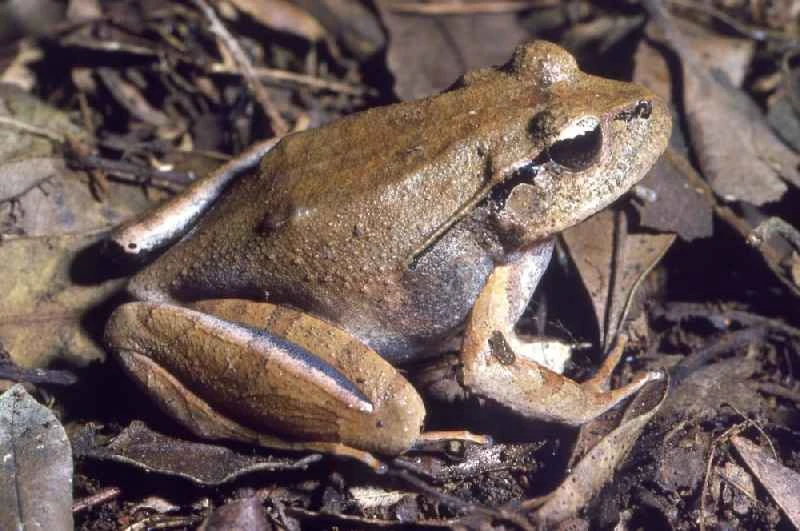
Medium-sized and robust, with a grayish-brown or brown back with dark cloud-like markings and slightly rough skin; dark "mask"-like stripes behind the eyes; robust hind limbs with horny ridges on the hind feet for digging; and a light-colored abdomen.
Detailed introduction
The Fletcher Frog ( Lechriodus fletcheri ) is a medium-sized, digging native Australian frog, also known as the Sandpaper Frog . It belongs to the Australian terrestrial frog family and is adept at burrowing in mud and leaf litter, typically found in the damp forests and scrublands of eastern Australia.
Classification and nomenclature
Commonly used Chinese name: Fletcher Frog (often transliterated from the person's name Fletcher), also known as Sandpaper Frog (a direct translation of Sandpaper Frog).
English name: Fletcher Frog, Sandpaper Frog
Scientific name: Lechriodus fletcheri
Family and genus: Australian terrestrial frogs → genus Lechriodus
Appearance and Identification Features
The Fletcher frog has a plain appearance but unique details, and is a typical "burrowing frog":
Size: Adults are usually about 4–6 cm long, with females being slightly larger than males, and their overall body shape is rather robust;
Back color: mostly grayish-brown, brown or olive brown, with dark cloud-like patterns or patches, similar to the color of damp soil and fallen leaves;
Skin texture: The skin on the back is slightly rough and feels like "sandpaper," which is where the name Sandpaper Frog comes from.
Head markings: There are often dark "masks" or stripes behind the eyes, extending from behind the eyes to the tympanic membrane and sides of the body;
Abdomen: The abdomen is mostly light gray or yellowish-white, and may have small spots;
Limbs: The hind limbs are robust, with some webbing between the toes, and there are often obvious horny bumps ("digging bumps") on the inner side of the hind feet, which help to dig holes backward.
Medium size, grayish-brown camouflage, rough skin, and a "mask"-like head are important clues for identifying Fletcher's frogs in the wild.
Distribution range and habitat
The Fletcher frog is a native species of eastern Australia .
They are mainly distributed in high-rainfall areas such as New South Wales and southeastern Queensland;
It can be found in humid forests and forest edges from coastal hills to inland low mountains.
It prefers environments with water bodies, moist ground, and easy excavation:
Natural habitats include streamsides, swamps, rainforests, and around seasonal waterholes in humid eucalyptus forests;
They are often found near forest paths, drainage ditches, low-lying areas in the forest, and temporary water accumulation points;
As long as there is shallow water suitable for breeding and a thick layer of mud or fallen leaves, it can become its habitat.
Habits: Digging and Hiding
Fletcher's frog is a typical burrowing, terrestrial frog .
During the day, they mostly hide in self-dug burrows, under fallen logs, or in thick layers of fallen leaves and moss to maintain humidity and avoid predators.
Caves are usually located in mud or sandy loam near water bodies, and when in danger, they will quickly push off the ground and burrow into the soil.
They venture out to hunt and forage at dusk and night, and are particularly active on rainy days.
This lifestyle of "digging holes, lying in wait, and venturing out on rainy nights" is a common ecological characteristic of many Australian ground frogs.
Cry
Male Fletcher frogs emit a deep, slightly rhythmic call during the breeding season:
Its calls are often heard on rainy nights near puddles, streams, or swamps;
The sound is usually described as a short, deep "crawk" or "growk" sound with a certain rhythm;
When multiple male frogs call at the same time, they create a unique, deep "frog chorus".
feeding habits
Like most terrestrial frogs, the Fletcher frog primarily feeds on small invertebrates:
Surface insects such as beetles, crickets, cockroaches, and ants;
Spiders, slugs, and other small arthropods and mollusks;
They also occasionally prey on other small invertebrates that pass by.
They typically move slowly on the ground or lie in ambush, and once they spot their prey, they quickly extend their sticky tongues to catch it.
Reproduction and Development
Fletcher frogs' reproduction is heavily dependent on rainfall and temporary shallow water bodies :
The breeding season usually occurs in warm, rainy months, especially after heavy rains;
Male frogs gather in temporary water pits, forest puddles, and slow-moving areas of streams to croak.
When female frogs lay eggs, they form foam nests containing air bubbles, which float on the water surface or attach to the edge of shallow water.
Tadpoles develop in shallow water and must complete their metamorphosis before the puddle dries up.
After becoming tadpoles, they leave the water and adopt a terrestrial, burrowing lifestyle.
Protecting the status quo and threats
The Fletcher frog is currently assessed as Least Concern (LC) on the International Union for Conservation of Nature (IUCN) Red List, indicating that its overall distribution is relatively wide and its population is relatively stable.
Potential threats include:
Deforestation, road construction, and urban sprawl have led to habitat fragmentation.
The removal of wetland drainage and temporary water pits reduces the amount of water suitable for breeding.
Pesticides and other pollutants enter the water, affecting eggs and tadpoles.
The key to protecting the Fletcher frog is to preserve the natural shallow pools, valley wetlands, and surrounding thick layers of soil and leaf litter in forests and scrublands.
Frequently Asked Questions
Q1: Why is the Fletcher Frog also called the "Sandpaper Frog"?
The name comes from the slightly rough texture of its back skin, which feels somewhat like fine sandpaper, hence the descriptive name Sandpaper Frog in English.
Q2: Are Fletcher's frogs poisonous? Can I handle them with my hands?
Unlike the sugarcane toad, it does not have well-developed venom glands and is generally not considered a frog that poses a significant danger to humans.
If a short observation period is required, gently lift the body with damp hands to avoid squeezing it, and wash your hands afterward.
Q3: Why is it so difficult to see Fletcher's Frog normally?
Because they spend most of their time hiding in underground caves, fallen trees, and leaf litter.
They only appear in large numbers on the ground and reproduce on rainy nights, especially after heavy rain.
Therefore, even in suitable habitats, they are often "audible but not visible".
Q4: What role does the Fletcher frog play in the ecosystem?
It feeds on a large number of surface invertebrates, which helps control the population of some insects and other small animals;
It also provides food for snakes, birds and small mammals, and is an important part of the food web in forest and wetland ecosystems.