Basic Information
Scientific classification
- Chinese name: Short-tailed Shepherd
- Scientific name: Short-tailed Shearwater (Puffinus tenuirostris)
- Classification: Waterfowl
- Family and genus: Herbiformes
Vital signs data
- Body length: 35-40 cm
- Weight: No verification information available.
- Lifespan: No verification data available.
Significant features
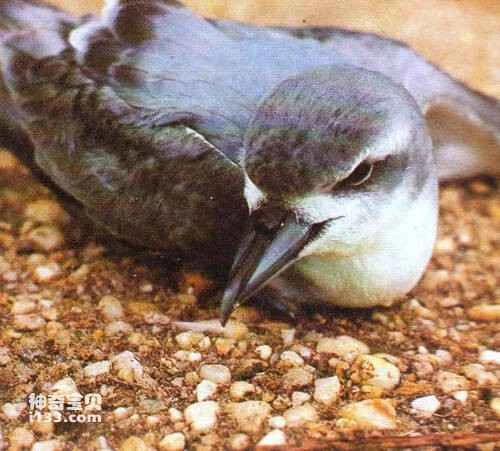
It is relatively small in size, with a short neck, a slender beak with a hooked tip, a short nasal tube located at the base of the beak, and long, narrow, sickle-shaped wings.
Distribution and Habitat
They breed in the South Pacific off the southeastern coast of Australia, the Bass Strait, and Tasmania. Outside of the breeding season, they typically migrate to the North Pacific to Japan, the Ogasawara Islands, California, the Bering Sea, Anadyr Bay, the Kamchatka Peninsula, Alaska, the coast of British Columbia, Canada, the Kermadec Islands, and the coast of Taiwan.
Appearance
The Shorttailed Shearling is a medium-sized seabird. It is relatively small, with a short neck, a slender bill with a hooked tip, and a short nasal tube located at the base of the bill. Its wings are long and narrow, sickle-shaped. The body is plump and spindle-shaped. It has 11 primary flight feathers and 10 secondary flight feathers, with the second primary flight feather being the same length as or slightly shorter than the first. The tail is rounded and relatively short. The tarsi are very laterally compressed, with distinct ridges along the front and rear edges, covered with reticulate scales. The first three toes are fully webbed but narrow, with a slight indentation between them. The hind toe is short and positioned higher than the other toes, not on the same horizontal plane. The plumage is thick, dense, and quite stiff, especially on the back. The upperparts are dark brown, while the underparts are paler, grayish-brown. The head and neck are almost black; the chin and throat are gray, the inner sides of the flight feathers are pale gray, and the underwing coverts are gray with pale gray tips.
The iris is brown. The mouth is dark brown, with black culms and nasal tubes, and dark brown tarsi.
Size measurements: Body length 350-400 mm, wing length 254-330 mm, bill length 30-35 mm, tail length 80-85 mm, tarsus length 49-52 mm.
Detailed introduction
The Short-tailed Shearwater (scientific name: Puffinus tenuirostris) has no subspecies.
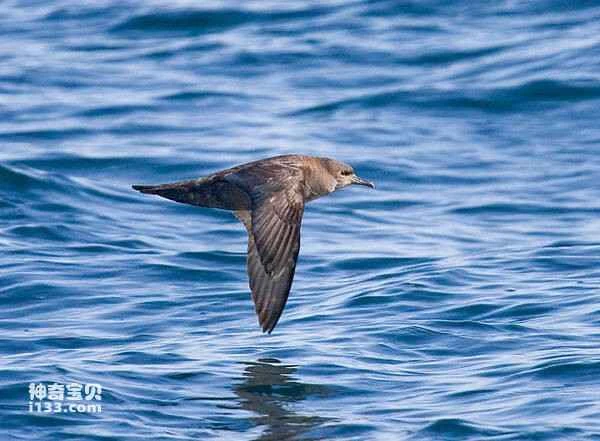
Short-tailed shelducks typically live in flocks over open ocean, spending all their time at sea except during the breeding season. They are active during the day, but sometimes also at night. They are excellent fliers, often flying tirelessly and day and night at low altitudes over the sea. Their flight is fast and agile, with their legs extended far beyond their tails. They usually fly by diving, gliding, and combining this with brief, rapid wingbeats. They are also good swimmers, but walking on land is difficult and clumsy; taking off from land is also challenging, usually requiring them to climb to a high place and then descend to take off, as they cannot take off from flat ground.
Short-tailed shelducks primarily feed on shrimp and small marine animals. Foraging mainly takes place at the surface, often swimming while feeding, and they also frequently follow whales and whaling vessels to peck at discarded food that may be usable. Meanwhile, when whales surface, they bring underwater animals to the surface, thus providing them with opportunities to forage.
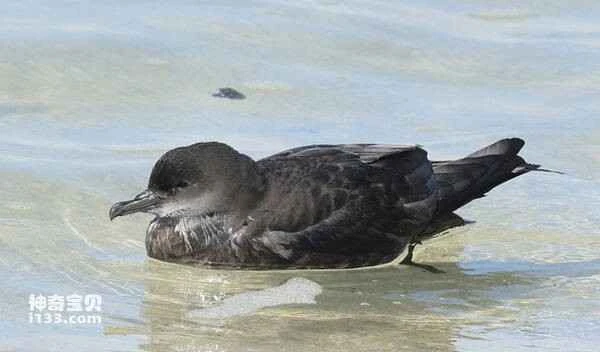
Starting in early May, short-tailed shelducks begin to migrate in small flocks towards the North Pacific Ocean, heading north past Japan, the Ogasawara Islands, California, the east coast of Canada, the Hawaiian Islands, Alaska, the Kamchatka Peninsula, Anadyr Bay, and the Bering Sea, and south to the coast of New Zealand's North Island and its neighboring islands such as the Kermadec Islands. Occasionally, they drift to Taiwan. One short-tailed shelduck was sighted in China in 1981 on Green Island off the coast of Taiwan, and another in April 1988 off the coast of Taitung; these are considered occasional vagrants.
The breeding season for the Short-tailed Shearling is from late September to early May of the following year. They nest in burrows on the coast or islands. They often nest and breed in large flocks, resulting in very dense nesting, averaging one nest per square meter. Adult birds typically return to their breeding grounds in September, usually returning to their original nesting sites and mating with their original mates. The parents dig the burrows themselves, usually at night, resting and foraging at sea during the day, although some may remain on the shore during the day. The digging process can take 10 to 40 days, so the burrows are usually completed by early October. After the burrows are finished, all birds return to sea, living there for about 20 days before returning to the burrows to lay their eggs. The egg-laying time is extremely stable, with little variation between different populations in different locations, typically around November 20th each year, with peak egg-laying occurring between November 2nd and 26th. This is quite consistent among the same populations at the same nesting site, with eggs being laid almost simultaneously. Each clutch contains one egg. The eggs are oval, white, smooth, and spotless, measuring 63.5-77.2 × 41-51.5 mm, with an average of 71 × 47 mm. After hatching, the male incubates the eggs for 12-14 days, then the female takes over; the male and female exchange eggs more than twice during the incubation period. The average incubation period is about 53 days, with some records of 55-56 days. For the first week after hatching, the parents only feed the chicks at night, gradually reducing their visits to the nest thereafter. The chicks grow rapidly, weighing only 15.1 grams at hatching and covered in thick, dense gray down. After about two months, they molt and grow feathers. At this time, the parents stop feeding them, forcing the chicks out of the nest through starvation. They then slowly make their way to the sea at night, around April or early May. Because the chicks emerge almost simultaneously, a considerable number gather at sea. After resting briefly near the nest, they disperse into small groups and gradually wander outwards from the nest area.
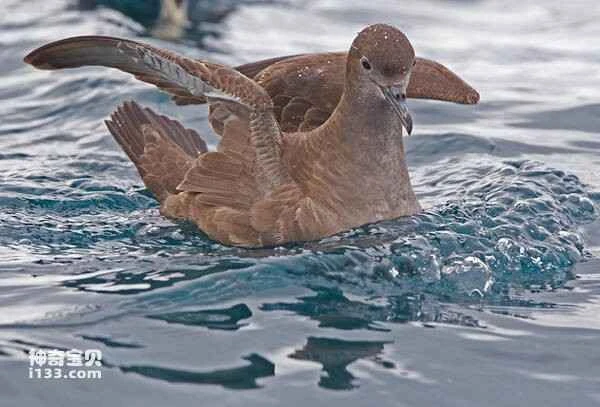
Every summer, millions of dark grey short-tailed shearlings arrive off the coast of California, their numbers resembling approaching dark clouds. Although the global population of short-tailed shearlings is as high as 20 million, making them one of the most numerous seabirds, their numbers are declining sharply in New Zealand and the eastern North Pacific. As a result, some scientists believe that the short-tailed shearling is about to be listed as an "endangered species."
It is listed in the "List of Terrestrial Wild Animals of Beneficial or Important Economic and Scientific Research Value under State Protection" issued by the State Forestry Administration of China on August 1, 2000.
Listed as Least Concern (LC) on the IUCN Red List of Threatened Species 2012 ver 3.1.
Protect wild animals and ban the consumption of wild game.
Maintaining ecological balance is everyone's responsibility!