
Basic Information
Scientific classification
- Chinese name: Corey Warbler
- Scientific name: Calonectris borealis, Cory's Shearwater
- Classification: Waterfowl
- Genus and family: Procellariiformes, Procellariiidae, Procellarii
Vital signs data
- Body length: 44-49 cm
- Weight: 544-738g
- Lifespan: No verification data available.
Significant features
The upper body is brownish-grey, with most feathers adorned with light brown, while the underside is white or slightly grey.
Distribution and Habitat
Resident birds: Algeria, Angola, Antigua and Barbuda, Argentina, Bahamas, Benin, Bermuda, Brazil, Cape Verde, Cameroon, Canada, Democratic Republic of Congo, Republic of Congo, Ivory Coast, Equatorial Guinea, France, French Guiana, Gabon, Gambia, Ghana, Gibraltar, Guinea, Guinea-Bissau, Liberia, Madagascar, Mauritania, Mexico, Morocco, Mozambique, Namibia, Nigeria, Portugal (Madeira, Azores), Portugal, Saint Helena, Ascension and Tristan da Cunha, Saint Pierre and Miquelon, São Tomé and Príncipe, Senegal, Sierra Leone, South Africa, Spain (Canary Islands), Togo, United States, Uruguay and Western Sahara.
Wandering (non-breeding grounds): Panama.
Wandering (seasonal uncertainty): Costa Rica.
Wandering: Guadeloupe, New Zealand, and Venezuela.
Uncertainties exist regarding the following countries and their origins: Barbados, Belgium, Cuba, Denmark, Dominica, Faroe Islands, Germany, Ireland, Martinique, Montserrat, Netherlands, Norway, Oman, Poland, Puerto Rico, Saint Kitts and Nevis, Saint Lucia, Saint Vincent and the Grenadines, Serbia, Suriname, Sweden, Switzerland, Trinidad and Tobago, and Turks and Caicos Islands.
Appearance
The Corey Warbler measures 44-49 cm in length, has a wingspan of 117-135 cm, and weighs 544-738 g. Adults have greyish-brown upperparts, including the crest, neck, nape, back, body feathers, and scapula, where the feather patterns become scaly, such as on the rump and upper tail coverts. A white crescent shape is formed by the last upper tail coverts. The upperwing is dark brown. The primary coverts and flight feathers are darker, while the third and lowest scapulae are darker, forming a blurred M or W shape in the upper part. The uppertail is mostly blackish-brown. On the white underparts, the underwing shows a black trailing edge, while some black spots and patches form a weaker leading edge in the scapular region. White extends to the underside of the outer primary color, and the species has dark triangular wingtips. On the greyish-brown head, the cheeks are brownish-grey, blending into the white chin and throat. The sides of the neck and breast are grey. The rest of the underparts are white, with washed-brown on the thighs.
The beak is olive-yellow, darker and more intense at the tip. The iris is dark brown. The legs and webbed feet are pale pink to greyish-pink, with the outer toes and some of the webbed feet being dark grey.
Males and females have similar plumage, and juvenile birds resemble adults.
Detailed introduction
The Cory's Shearwater (scientific name: Calonectris borealis) has no subspecies.
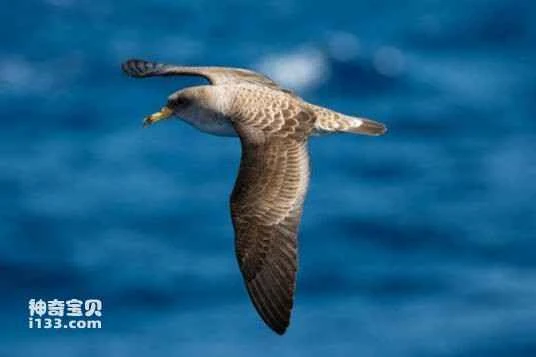
The Corrie Firefly exhibits a variety of habitats, including breeding grounds, frequent foraging migrations, rapid long-distance migrations, and small-scale movements within clearly defined wintering grounds. Breeding occurs in April on near-shore islands, with breeding pairs occupying cliffs, caves, and megalithic sites. Their diet consists primarily of squid, mainly caught at the surface. They are also frequently attracted by trawlers to feed on discarded fish entrails. This species breeds primarily in the Azores and Madeira (accounting for over 85% of the global population, plus the Belengas Islands outside mainland Portugal), and the Canary Islands of Portugal and Spain (accounting for approximately 15% of the global population). The vast majority of populations spend the non-breeding season in the Atlantic Ocean.
Listed as Least Concern (LC) in the IUCN Red List of Threatened Species 2018 ver3.1.
Protect wild animals and ban the consumption of wild game.
Maintaining ecological balance is everyone's responsibility!


