
Basic Information
Scientific classification
- Chinese name: Cape Verdean
- Scientific name: Calonectris edwardsii, Cape Verde Shearwater
- Classification: Waterfowl
- Genus and family: Procellariiformes, Procellariiidae, Procellarii
Vital signs data
- Body length: Approximately 45 cm
- Weight: Approximately 700g
- Lifespan: No verification data available.
Significant features
Its beak is thin and black, and its head and body are even blacker than those of the Corey Finch.
Distribution and Habitat
Breeding grounds: Cape Verde; Non-breeding grounds: Brazil and Uruguay; Resident birds: Mauritania, Morocco and Senegal; Wandering birds: Spain (Canary Islands) and the United States.
Appearance
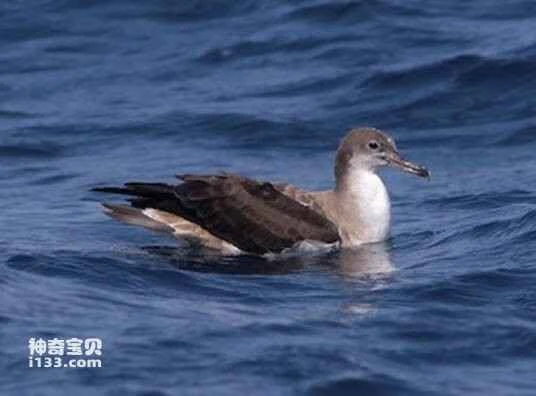
The Cape Verdean is about 45 cm long and weighs about 700 grams. This species has a slender, black beak, and its head and body are darker than those of the Corey's shrew. Its flight is more typically similar to that of the shearwater shearwater than that of the Corey's shrew, with a stiffer and faster wing-kick. Compared to the shrew, its overall appearance is that of a smaller, slimmer, and more angular seabird. The beak is grey with a dark tip, sometimes pale yellow or pink. Some individuals are distinctly yellow, but never as bright as the shrew. The legs are pink, like those of other shrews.
Detailed introduction
The Cape Verde Shearwater (scientific name: Calonectris edwardsii) has no subspecies.
Cape Verdean petrels arrive at their breeding grounds in late February and March, approximately three months after leaving their usual habitat. They nest in cavities in cliffs and nearshore rocks, as well as under large boulders. Their diet consists mainly of sardines and squid. During the breeding season, they are frequently seen around the Cape Verde Islands. After the nesting period, these birds disperse to the surrounding marine areas, often found in upwelling zones within Senegalese waters.
A full island survey during the 2015 breeding season showed 6,312 breeding pairs in Raso and 3,500 birds in Branco (Biosfera data is not publicly available). This equates to a total of approximately 24,000 birds.
Listed as Near Threatened (NT) in the IUCN Red List of Threatened Species 2018 ver3.1.
Protect wild animals and ban the consumption of wild game.
Maintaining ecological balance is everyone's responsibility!


