
Basic Information
Scientific classification
- Chinese name: Fierce Shepherd
- Scientific name: Calonectris diomedea, Scopoli's Shearwater
- Classification: Waterfowl
- Genus and family: Procellariiformes, Procellariiidae, Procellarii
Vital signs data
- Body length: 45-48 cm
- Weight: 700-800g
- Lifespan: 40-60 years
Significant features
It is the largest seabird in the Atlantic Ocean and the only species that can be observed flying high in the sky and soaring through the heat.
Distribution and Habitat
Resident birds: Albania, Algeria, Angola, Benin, Bosnia and Herzegovina, Cape Verde, Cameroon, Democratic Republic of Congo, Republic of Congo, Croatia, Cyprus, Ivory Coast, Egypt, Equatorial Guinea, France, Gabon, Gambia, Ghana, Gibraltar, Greece, Guinea, Guinea-Bissau, Israel, Italy, Lebanon, Liberia, Libya, Malta, Mauritania, Monaco, Morocco, Namibia, Nigeria, Palestine, Portugal, Saint Helena, Ascension and Tristan da Cunha, São Tomé and Príncipe, Senegal, Sierra Leone, Slovenia, South Africa, Spain (Canary Islands), Syria, Togo, Tunisia, Turkey and Western Sahara.
Wandering (non-breeding grounds): Oman. Wandering (migratory bird): Iran. Wandering: Austria, Bulgaria, Montenegro, and Serbia.
Existence and origin uncertain: Belgium, Czech Republic, Denmark, Faroe Islands, Germany, Ireland, Netherlands, Norway, Poland, Sweden, Switzerland and United Kingdom.
The raptor is a pelagic seabird, easily distinguishable by its frequent foraging migrations and surrounding breeding grounds, its rapid long-distance migrations, and its small-scale movements within clearly defined wintering grounds. Breeding begins on barren nearshore islands, with breeding pairs occupying cliffs, caves, and megalithic sites.
Appearance
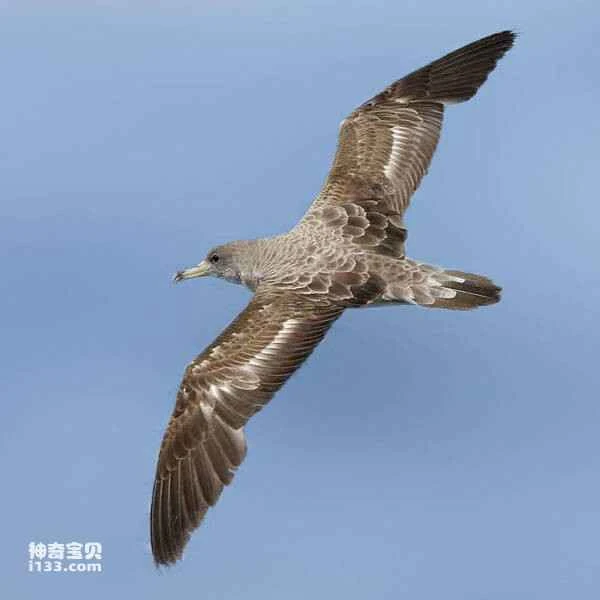
The Raptor is a large oceanic seabird. Sexes are similar in appearance, but males are on average slightly larger than females. It measures 45-48 cm in length, has a wingspan of 100-125 cm, and weighs 700-800 grams. The upperparts are brownish-grey, with most feathers adorned with light brown. The underside is white or slightly grey. The wings are dark brown with brown edges, most prominent on the trailing edge. The tail is dark brown, with white anterior tail coverts. The beak is large, strong, and hooked, pale yellow on the upper part with a black patch near the tip. The legs and feet are pale flesh-colored.
Detailed introduction
The Scopoli's Shearwater (scientific name: Calonectris diomedea) has no subspecies.
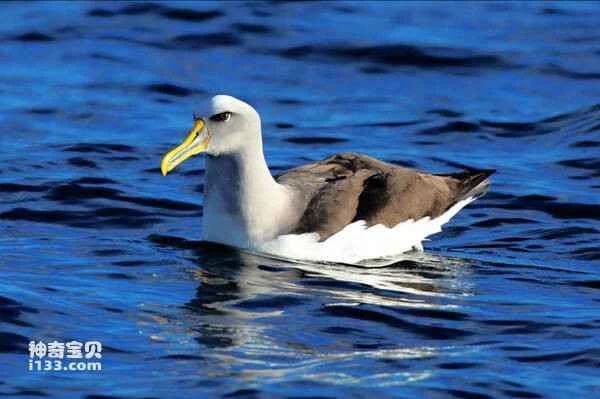
The Raptor is not only the largest seabird in the Atlantic, but also the only species observed to fly high and soar through warm currents. It is easily distinguished from other seabirds by its very distinctive flight pattern, which typically involves an arc between the wingtips, unlike other birds that fly with their wingtips aligned. Besides wing position, its flight profile is also characteristic, with long glides scraping over wave crests and wings always tilted and slightly backward. The rhythm is slow, and the wings are remarkably flexible. They usually fly against the wind, alternating between climbing a few meters above the waves and low-flying maneuvers. When resting, they form large herons (therafts), which are constantly moving, but the Raptors are dominant, their heads turned towards the windward side.
The raptor feeds on small fish and pelagic cephalopods, occasionally acting as a scavenger, consuming the remains of larger fish, whales, or other planktonic animals. In the sea, they are gregarious, forming large flocks known as rafts as they float in dense patches. They hunt in groups, capable of diving to depths of over 15 meters to find prey. Although the species is silent at sea, the breeding flocks become noisy at dusk, with adults emitting distinctive, piercing calls that differentiate them by sex.
Raptors typically remain in the high seas but breed ashore. They are monogamous, nesting in rough burrows dug on coastal cliffs and islets, placing a single white egg inside. Both parents feed the chicks, with the parents regurgitating a protein paste directly into the chick's beak. The chicks hatch in the fall and immediately leave the sea, where they remain for 7-10 years until they reach sexual maturity and return to their native nesting grounds.
In 2015, the latest assessment of the European population of the raptor was 30,500–48,100 pairs, equivalent to 61,000–96,000 mature individuals. The largest population on Zebra Island in Tunisia was estimated at 113,720–176,750 pairs (Defos du Rau et al., 2012). The global population was estimated at 142,478–222,886 pairs (Carboneras et al., 2013), which here is assumed to be equivalent to approximately 285,000–446,000 mature individuals.
Listed as Least Concern (LC) in the IUCN Red List of Threatened Species 2018 ver3.1.
Protect wild animals and ban the consumption of wild game.
Maintaining ecological balance is everyone's responsibility!


