
Basic Information
Scientific classification
- Chinese name: Masakado duck
- Scientific name: Madagascar Teal, Anas bernieri, Madagascar Teal
- Classification: Waterfowl
- Family: Anseriformes, Anatidae, Anatidae
Vital signs data
- Body length: 40-45 cm
- Weight: No verification information available.
- Lifespan: No verification data available.
Significant features
The entire body is brown with obvious black spots, especially on the sides and chest.
Distribution and Habitat
It is distributed in Madagascar and its surrounding islands in the Indian Ocean.
Their primary habitat is wetlands, varying with the seasons. During the dry season, they appear in mangroves and shallow waters along the edges of lakes and estuaries, mainly staying on river sandbars with little or no vegetation. During the rainy season, they prefer to be submerged in mangroves.
Appearance
The Madagascar duck is a relatively small duck, measuring 40-45 cm in length. Both males and females are entirely brown with prominent black spots, especially on the sides and chest. The ocellarius is black, the head is paler, gradually fading to grayish-white, and the cheeks are grayish-white. The tail feathers and uppertail coverts are black, as are the primary flight feathers, which stand out sharply against the orange-yellow background of the rest of the body. The secondary flight feathers are a metallic dark green with a distinct white speculum. The wing coverts are black, with white patches on the black wingtips.
Brown iris, pinkish-grey beak that curves slightly upwards. Pink feet.
Detailed introduction
Madagascar Teal (scientific name: Anas bernieri), also known as the Madagascar Teal, is a small water duck with no subspecies.
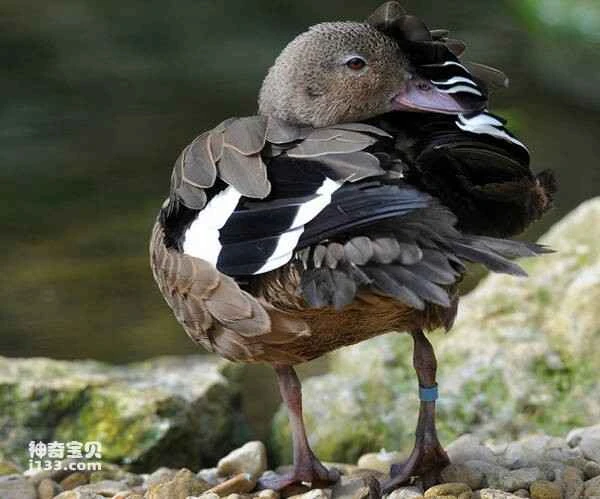
Madagascar ducks live in pairs during the breeding season and in family groups or small flocks outside the breeding season. They are fast fliers with rapid wingbeats. They are adept swimmers and divers, and also walk well. They can run nimbly on land. They are alert and constantly stretch their necks to look around. They are usually active in pairs or small groups, mostly at dawn and dusk. They also forage in shallow water near the water's edge and on the surface. Their diet consists mainly of invertebrates and plant roots, including aquatic plant leaves, buds, seeds, and seedlings, as well as insects, crustaceans, mollusks, shrimp, water frogs, earthworms, small frogs, and small fish. When wading, they use their beaks to sift through the water.
The breeding season for Madagascar ducks occurs during the rainy season, from December to March. A series of rituals precede mating, which takes place on the water. Before mating, the female duck stretches her neck forward, lowers her head to the ground, and makes a "ga-ga" sound, pacing back and forth around the male. The male duck then stretches his neck towards the female, takes her shoulder feathers, and mounts her back to mate. The ducks build their nests in tree cavities, especially in black mangrove forests. They are monogamous, have a strong sense of territory, and actively defend their nesting grounds, showing no mercy to intruders. Each nest contains approximately six eggs. Incubation is solely the responsibility of the female, while the male guards the nest, calling loudly to warn of danger. Sometimes, the male will even fly towards intruders and adopt an aggressive posture to intimidate them. When leaving the nest, the female covers the eggs with down feathers before venturing out to forage with the male. After foraging, the male bird accompanies the female back to the nest before leaving to roost nearby and keep watch. The incubation period is 27-30 days. The chicks are precocial; they are covered in downy feathers immediately after hatching and can swim and dive. After six weeks, the young birds leave the nest and begin to fly.
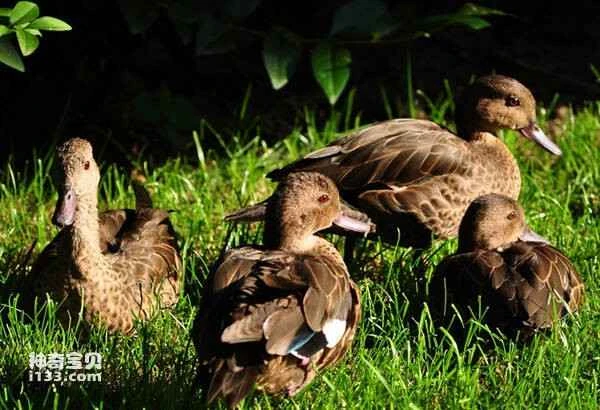
The Madagascar sandpiper faces severe threats to its survival throughout its distribution range, with widespread habitat loss causing significant disturbance to the species. Individual subpopulations are fragmented into isolated habitats, all of which have become uninhabitable. Population isolation limits its dispersal and may lead to a loss of genetic diversity. The main reasons for its endangerment are habitat loss, shallowing and pollution of water bodies, wetland reclamation for rice cultivation, mangrove use for logging or shrimp pond construction, and increased survival pressure from traditional hunting practices. During the spawning season, human hunting is a major threat, as the sandpiper is considered a delicacy and sold in markets.
Listed as Endangered (EN) on the IUCN Red List of Threatened Species 2013 ver 3.1.
Listed as an animal under Appendix II of CITES (Convention on International Trade in Endangered Species of Wild Fauna and Flora).
It is listed in Appendix II of the 2019 edition of the Convention on International Trade in Endangered Species of Wild Fauna and Flora (CITES).
Protect wild animals and ban the consumption of wild game.
Maintaining ecological balance is everyone's responsibility!


