Basic Information
Scientific classification
- Chinese name: White-faced Needletail Duck
- Scientific name: Anas bahamensis, White-cheeked Pintail
- Classification: Waterfowl
- Family: Anseriformes, Anatidae, Anatidae
Vital signs data
- Body length: 38-51 cm
- Weight: 474-533g
- Lifespan: Approximately 14 years
Significant features
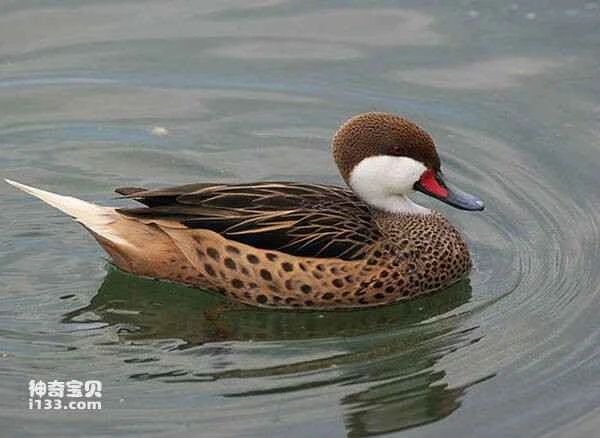
It has a dark brown hood and nape, white cheeks and throat, and an iron-grey beak.
Distribution and Habitat
Distributed in Anguilla, Antigua and Barbuda, Argentina, Aruba, Bahamas, Barbados, Bolivia, Bonaire, Saint Eustachians and Saba, Brazil, Cayman Islands, Chile, Colombia, Cuba, Curaçao, Dominican Republic, Dominican Republic, Ecuador, French Guiana, Guyana, Haiti, Martinique, Montserrat, Paraguay, Peru, Puerto Rico, Saint Kitts and Nevis, Saint Lucia, Saint Vincent and the Grenadines, Saint Martin (Dutch part), Suriname, Trinidad and Tobago, Turks and Caicos Islands, United States, Uruguay, Venezuela, and Virgin Islands.
Migratory birds: Falkland Islands, Guadeloupe, Jamaica, Panama, Saint Martin (French territory).
It inhabits mangrove wetlands and lagoons. During the wintering season, it inhabits various types of rivers, lakes, marshes, saline wetlands, ponds, as well as open coastal areas and bays. During the breeding season, it mainly inhabits large inland lakes, slow-flowing rivers, river bends, and nearby marshes and wet grasslands.
Appearance
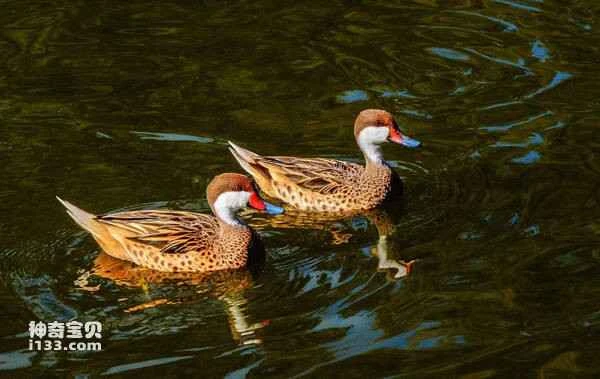
The White-faced Needletail is 38-51 cm long, with a wingspan of 55-68 cm, and weighs 474-533 grams. It has a dark brown head cap and nape, white cheeks and throat, and an iron-grey beak with bright red triangular patches on either side of the black base at the corner of the beak. The wing feathers are mostly black with brown edges. The body feathers are brownish-grey, covered with dark brown spots. The flight feathers are dark brown with a bright green speculum on the wings; the leading edge of the speculum is tipped with cinnamon-colored feathers on the greater coverts. The tail feathers are white, pointed, and upturned. The female's plumage is duller in color with less contrast, and she is slightly smaller. The iris is dark brown, and the feet and legs are grey.
Detailed introduction
The White-cheeked Pintail (scientific name: Anas bahamensis) is a medium-sized waterfowl belonging to the genus Anas in the family Anatidae. It has three subspecies.
White-faced Needletails are gregarious, often moving in flocks, especially during migration and winter. They frequently form large groups ranging from dozens to hundreds of individuals. They are active and rest mainly in near-shore waters or open sandy and muddy areas. They are quick and agile swimmers and also good fliers; their flight is fast and powerful. They are also adept at walking on land. They are timid and alert; during the day, they mostly hide in reed beds or wander or rest on the water's surface away from the shore, only venturing to shallow waters near the shore to forage at dusk and night. At the slightest disturbance, they immediately fly away.
The White-faced Needletail Duck is a skilled diver, obtaining food underwater. Its diet consists mainly of plants, but it also occasionally consumes animal matter. Its webbed toes allow it to swim and play in the water, keeping its tail above the surface while swimming. It is adept at foraging, playing, and courting in the water. Playing in the water also helps maintain the cleanliness and growth of its feathers.
The White-faced Needletail reaches sexual maturity at one year old and is capable of mating and nesting. Pairing is relatively rapid; most females pair up before the end of winter, with some courtship behavior continuing into the following spring during migration. The breeding season is from April to July. Nests are built in grassy areas or sparsely vegetated lowlands near lakes and riverbanks, usually 50 to 100 meters from the water. Each clutch contains 5-12 eggs. Typically, one clutch is held per year. Eggs are creamy white to pale yellow, measuring 52-58 × 37-39 mm and weighing 40-51 grams. Incubation is entirely undertaken by the female; the male usually only guards the nest at the beginning of incubation. The incubation period is 21-23 days. Chicks are precocial, able to walk and swim soon after hatching. Ducklings can dive into the water to escape predators and sometimes bond with chicks from different clutches, forming larger flocks. Feathers fully develop in 45 to 60 days. Lifespan can reach up to 14 years.
Listed as Least Concern (LC) on the IUCN Red List of Threatened Species 2013 ver 3.1.
Protect wild animals and ban the consumption of wild game.
Maintaining ecological balance is everyone's responsibility!