Basic Information
Scientific classification
- Chinese name: Solomon's Crowned Dove
- Scientific name: microgoura meeki, rothschild
- Classification: Landfowl
- Family and genus: Columbiformes, Columbidae, Columbidae
Vital signs data
- Body length: No verification information available.
- Weight: No verification information available.
- Lifespan: No verification data available.
Significant features
Distribution and Habitat
This bird was endemic to the Solomon Islands and mainly inhabited the ground, but unfortunately it is now extinct.
Appearance
In appearance, the Solomon crowned pigeon has colorful plumage and a gentle, melodious call.
They have a distinctive crest on their heads, similar to the Victoria pigeon, but facing in a different direction.
Detailed introduction
The Solomon Islands, scientifically known as *Microgoura meeki*, is a nation of hundreds of small islands located in the central Pacific Ocean near the equator. One of its provinces, Choisel, features a crested dove on its flag, which locals call the Solomon Crowned Dove.
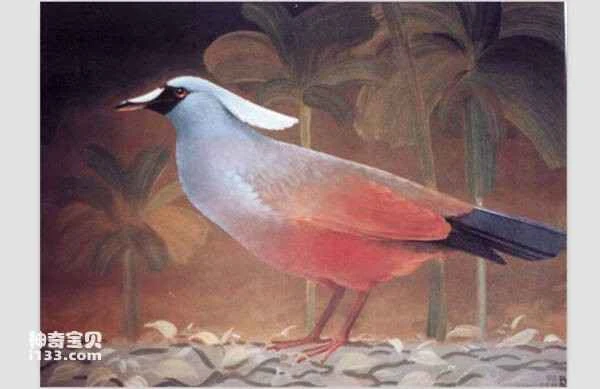
According to local residents, the Solomon Crowned Pigeon is similar in size to a domestic pigeon and often appears in lower forests. Its most famous characteristic is its laziness; during the breeding season, it does not build a nest but instead lays its eggs directly in low-lying areas, behaving very casually.
Without natural predators and far from the mainland, the Solomon Islands crowned pigeons gradually lost their wariness, spending their days eating and drinking, and their temperament slowly became "docile." According to local residents, they were often seen playing in groups of three to five on the ground. Even when hunters approached, they wouldn't run away; some could even grab them by hand without flinching. Therefore, the Solomon Islands natives enjoyed using them in cooking, a practice that continued for a long time. This changed in the 16th century when Spanish navigators arrived, followed by a large influx of missionaries, merchants, and immigrants. Along with them came new species such as cats and rats.
These new species are a nightmare for the Solomon crowned pigeon, not only hunting and killing them but also destroying their eggs, leading to the deaths of large numbers of Solomon crowned pigeons. Furthermore, the people who came to the area, in their pursuit of survival, heavily exploited local resources, resulting in deforestation and the replacement of forests with cash crops, further shrinking the Solomon crowned pigeon's habitat.
Most egregiously, some so-called "collectors" enjoyed capturing Solomon crowned pigeons and making them into specimens, creating a kind of "fashion trend." Under these multiple blows, the number of Solomon crowned pigeons dwindled to almost nothing, with the last recorded capture of a Solomon crowned pigeon occurring in 1904.
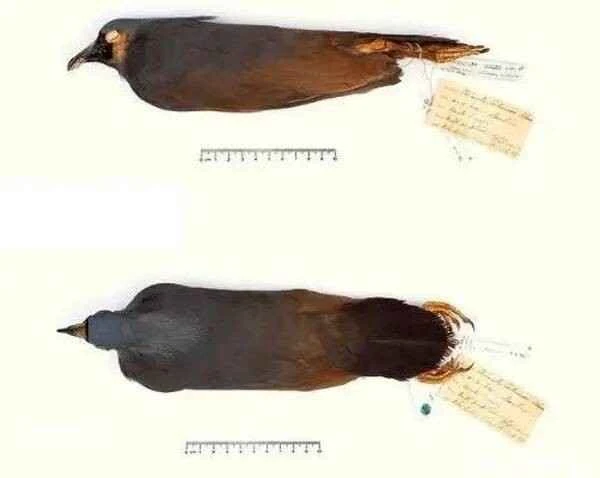
Scientists had been searching for this bird for decades, believing it might still exist on some isolated islands, but to no avail. Finally, decades later, the International Union for Conservation of Nature (IUCN) declared it an extinct species. Since then, this creature has never been seen on Earth, leaving only withered specimens to display its former beauty.
Protect wild animals and ban the consumption of wild game.
Maintaining ecological balance is everyone's responsibility!