Basic Information
Scientific classification
- Chinese name: Marked tarantula
- Scientific name: Neosparassus (family Sprassidae)
- Classification: Arthropoda
- Family: Sparassidae Neosparassus
Vital signs data
- Body length: female 15–25 mm; male 12–20 mm (excluding leg span); leg span 5–8 cm
- Weight: Small to medium-sized spiders, varying with individual differences.
- Lifespan: Approximately 1–2.5 years; females typically live longer.
Significant features
Nocturnal hunting; running quickly across tree bark/walls; female spiders protecting their eggs; bright colors on their abdomen serving as a menacing "badge".
Distribution and Habitat
Woodlands, scrublands, and suburban gardens in all Australian states; commonly found under tree bark, in wood piles, on eaves, and on walls.
Appearance
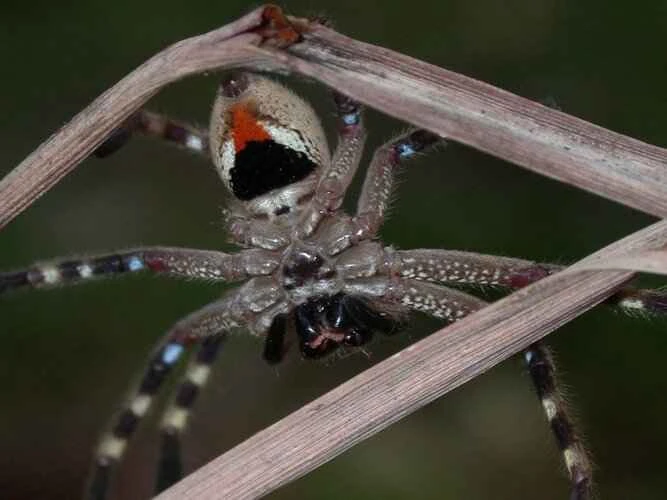
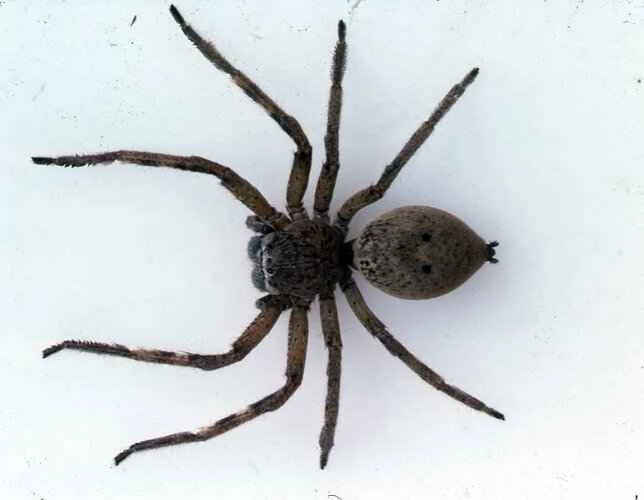
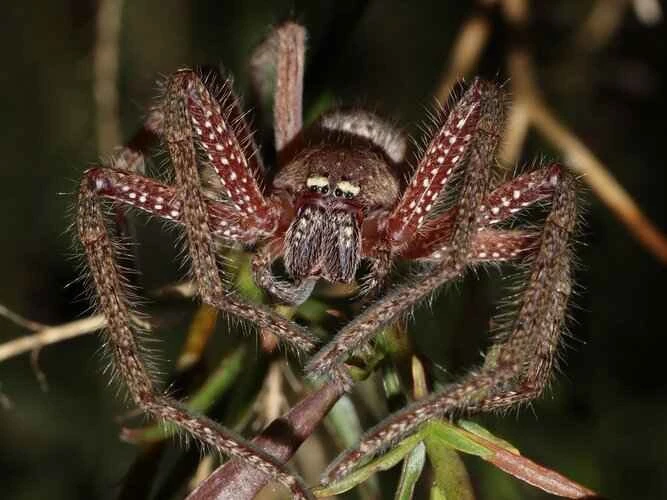
Flat body shape, lateral walking legs; bark mimicking gray/yellowish-brown; ventral surface with yellow/orange/red-black contrasting spots.
Detailed introduction
Badge Huntsman Spiders typically refer to a group of Australian tarantulas, including the genus * Neosparassus* , belonging to the family Sprassidae . The name "Badge" derives from the distinctive colored patches on the underside of some species, which are often displayed as a threatening signal when startled or in defensive situations.
Ecology and Biology
Activity patterns: Mostly nocturnal , hiding under tree bark, on the back of dead leaves, under stones, or in crevices under eaves during the day .
Predation: Actively hunts small insects and other arthropods, adept at running quickly sideways on tree trunks and walls.
Reproduction and egg protection: Female spiders construct egg sacs and frequently protect their eggs/larvae ; their defensiveness increases during the egg protection period.
Morphology and Recognition
Body shape: Typical lateral walking legs (flat-faced spider body type), flat body to facilitate attachment to bark and crevices.
Body color: mostly grayish-brown/yellowish-brown , with bark-like markings; bright yellow/orange/red and black "badge"-like spots can be seen on the ventral/stomach surface .
Size: Female spiders are typically 15–25 mm long (excluding leg span), with a leg span of 5–8 cm ; male spiders are slightly smaller and more slender.
Distribution and Habitat
Widely distributed throughout Australia (woodlands, scrublands, grassland edges, and urban and rural gardens); commonly found under tree bark, on fences/piles of wood, on interior walls, and on window frames .
Humanity and Safety
Medical significance: Low medical importance to humans; bites usually cause localized pain and swelling . For bite victims, it is recommended to clean the wound, apply cold compresses, and observe the condition.
When encountering people: If they are attracted to light or warmth at night, they can go indoors; gently capture them using the cup and paper method and then release them back outdoors.
IUCN: This entry is a general overview of taxa ; most species have not been independently evaluated, and this site marks the general overview entry as not evaluated (NE) .
Frequently Asked Questions
Q1: Why is it called the "marker/badge tarantula"? Because its ventral surface often has brightly contrasting spots , which it displays when defending itself, resembling a badge.
Q2: Do they weave nets? They do not weave predatory nets; they primarily hunt actively , but they will lay a small amount of silk in concealed locations to secure their egg sacs.
Q3: Will they jump on people? They are good at running but not jumping . Occasionally, they may move quickly along the wall when startled; just keep your distance.
Q4: How to reduce the occurrence of such cases at home? Seal gaps in doors and windows, clear away clutter and wood piles, and keep screens closed at night; if an individual appears, gently move it out.


