Basic Information
Scientific classification
- Chinese name: Spotted pufferfish
- Scientific name: Diodon nicthemerus
- Classification: Small fish
- Genus and family: Diodontidae Diodon
Vital signs data
- Body length: Commonly 15–25 cm; Maximum ~30 cm
- Weight: Increases with body length; small to medium-sized fish
- Lifespan: Approximately 6–10 years (estimated)
Significant features
It can absorb water and expand; it has long, thin spines that allow it to lie prone; its teeth can crush hard-shelled prey; it is active in temperate nearshore reef-seagrass belts.
Distribution and Habitat
Temperate coastal waters of southern and southeastern Australia (including Tasmania); rocky reefs, kelp forests, seagrass beds, 2–60 m.
Appearance
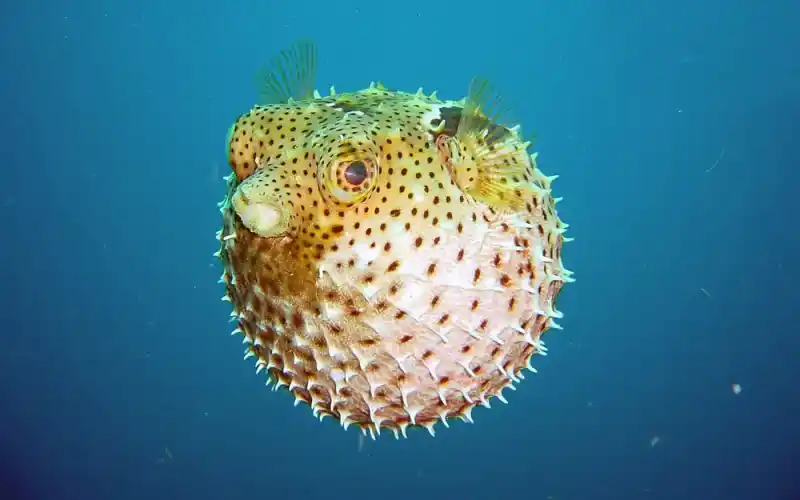
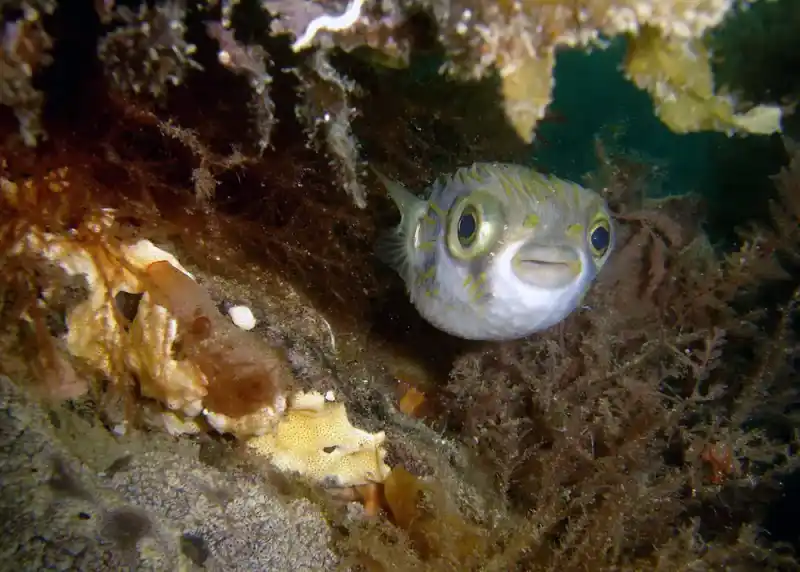
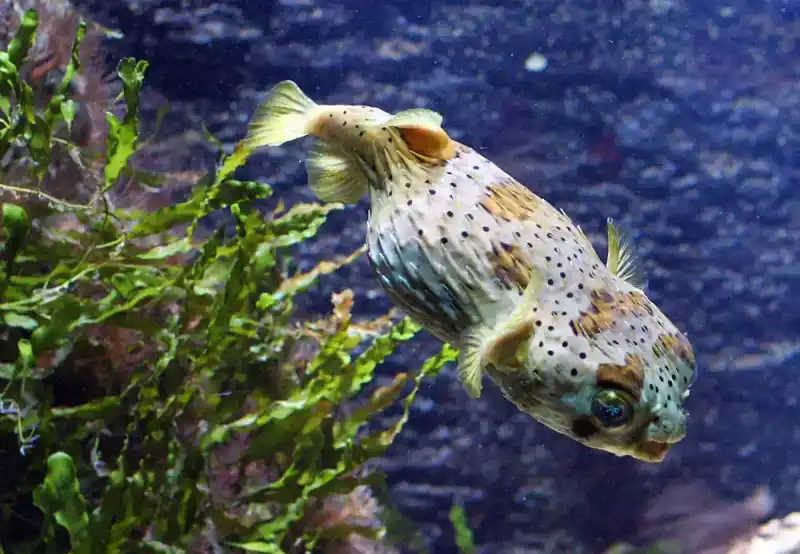
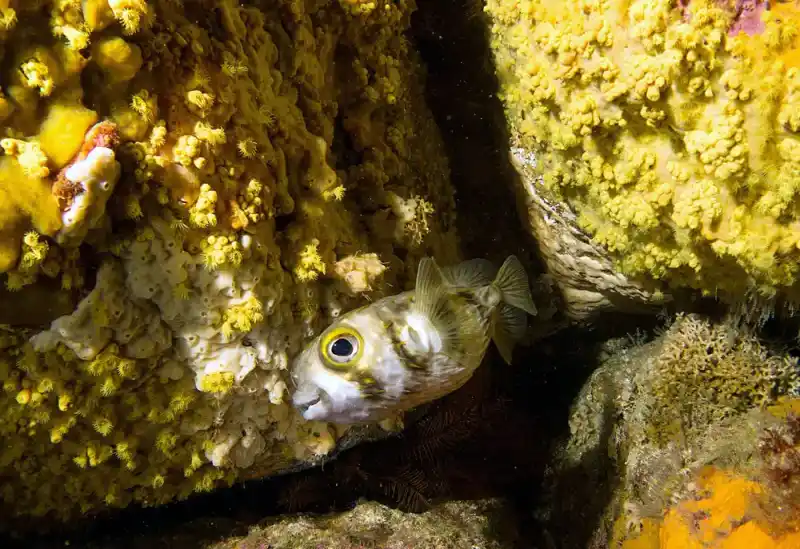
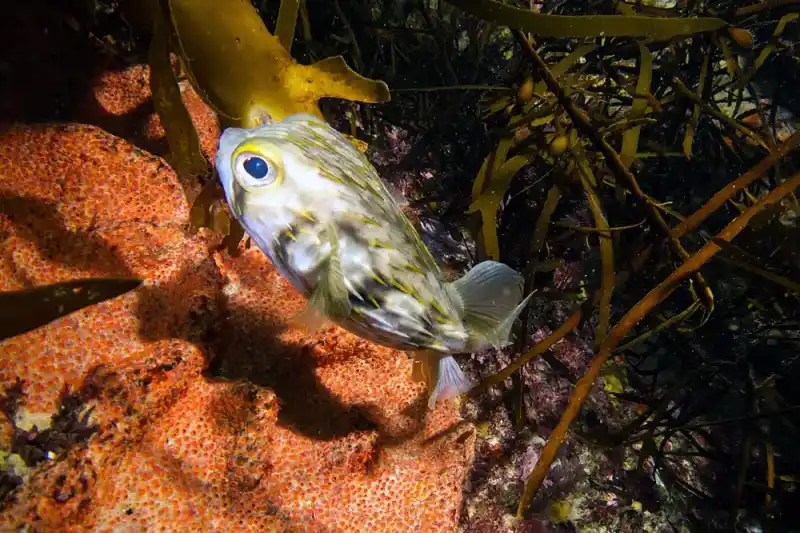
Stripes and spots coexist; fins have fine spots; when at rest, spines are attached to the body, but stand erect when startled.
Detailed introduction
The spotted porcupinefish ( Diodon nicthemerus , also known as the spotted porcupinefish ) belongs to the family Diodontidae and is a typical inflatable four-toothed pufferfish (its mouthparts are two fused upper and lower tooth plates ). When startled, it can rapidly inflate by swallowing water/air , and its long, slender spines, which allow it to lie prone, stand erect for self-defense. It feeds on hard-shelled invertebrates and is commonly found in temperate nearshore reef areas and seagrass beds.
Ecology and Biology
Diet: Shellfish, sea urchins, crustaceans and polychaetes, etc., hard-shelled/benthic organisms; feed by crushing food with its toothed plates.
Behavior: During the day, they are mostly active among reefs and seagrass, and when disturbed, they seek shelter or expand to warn others ; individuals are mostly solitary or appear in small groups.
Reproduction: Eggs and sperm are released in the open ocean; the eggs and fry are buoyant , and the larvae float on the surface before returning to the near shore.
Morphology and Recognition
Body color/pattern: The sides of the body have alternating light and dark stripes and spots ; fine spots are commonly seen on each fin (hence the name "spotted fins").
Thorns: slender and relatively flexible , usually lying flat against the body when at rest; stand upright when inflated.
Mouthparts: two horny toothed plates , suitable for crushing hard shells.
Body size and lifespan
Body length: Commonly 15–25 cm , with a maximum of about ~30 cm .
Lifespan: Estimated 6–10 years (subject to environmental variations).
Distribution and Habitat
It is distributed in the temperate nearshore waters of southern and southeastern Australia (including Tasmania) and adjacent sea areas, and is commonly found on rocky reefs, kelp forests and seagrass beds , in water depths of 2–60 m .
Conservation and Human Interaction
Threats: Nearshore habitat degradation, bycatch and pollution; overall fishery pressure is relatively low.
Food safety: Some species of pufferfish may contain tetrodotoxin/ciguatoxin ; local consumption recommendations should be followed (science tips).
IUCN: Least Concern (LC) (subject to the latest authoritative assessment).
Frequently Asked Questions
Q1: How to distinguish it from "Spiky Porcupinefish ( D. holocanthus )"? This species is smaller , with finer and longer spines that are more prone to lying down ; it has more stripes and spots on its sides, and its fins often have fine spots.
Q2: Will it hurt people when it inflates? It's mainly for self-defense ; it won't attack unprovoked. Please do not handle it or force it to inflate, as this may cause stress.
Q3: Is it common at dive sites? It is relatively common in the nearshore reefs and seagrass belts of South Australia, and the activity is more easily observed at dusk and night.
Q4: Can it be kept in captivity? Not recommended. It requires specific water quality and diet, and the potential risk of toxins and its rapid growth make it unsuitable for home aquariums.