Basic Information
Scientific classification
- Chinese name: Sphyraena (plover)
- Scientific name: Sphyraena
- Classification: Medium-sized fish
- Family: Sphyraenidae Sphyraena
Vital signs data
- Body length: 50–100 cm; large sizes 150–180 cm+
- Weight: 1–8 kg; Large size 20 kg+
- Lifespan: 10–14 years (depending on species)
Significant features
High-speed predation; capable of both ambush and pursuit; two separate dorsal fins; well-developed canines; straight lateral line.
Distribution and Habitat
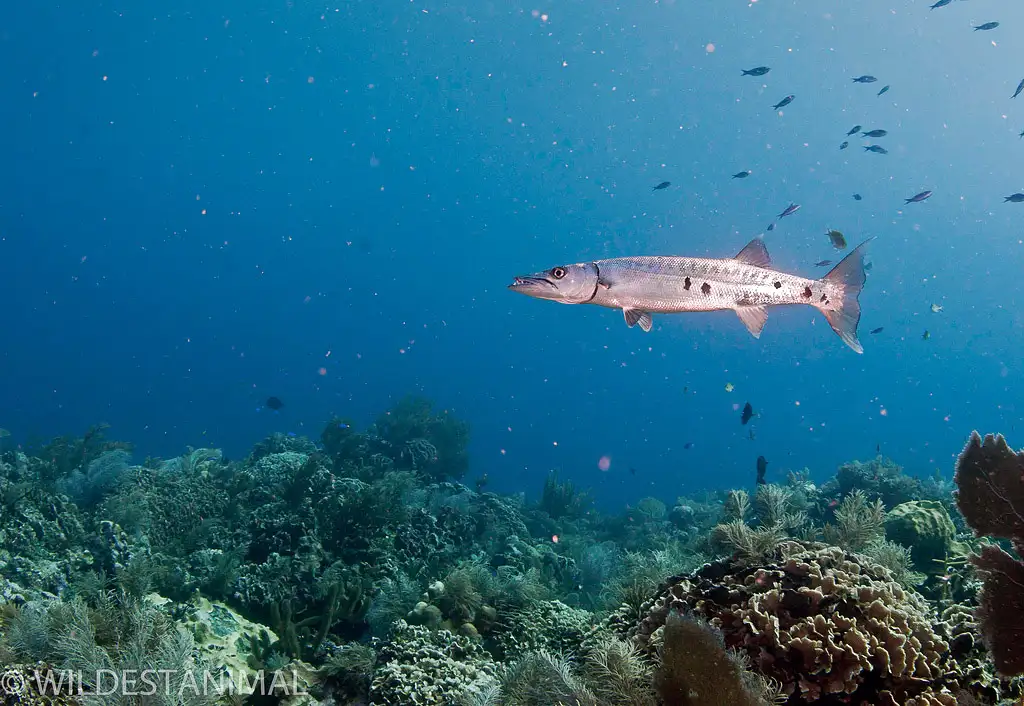
Tropical to subtropical coastal and offshore waters; coral/reefs, lagoons, seagrass beds, shelf edges; juvenile fish in shallow coastal waters/mangrove inlets.
Appearance
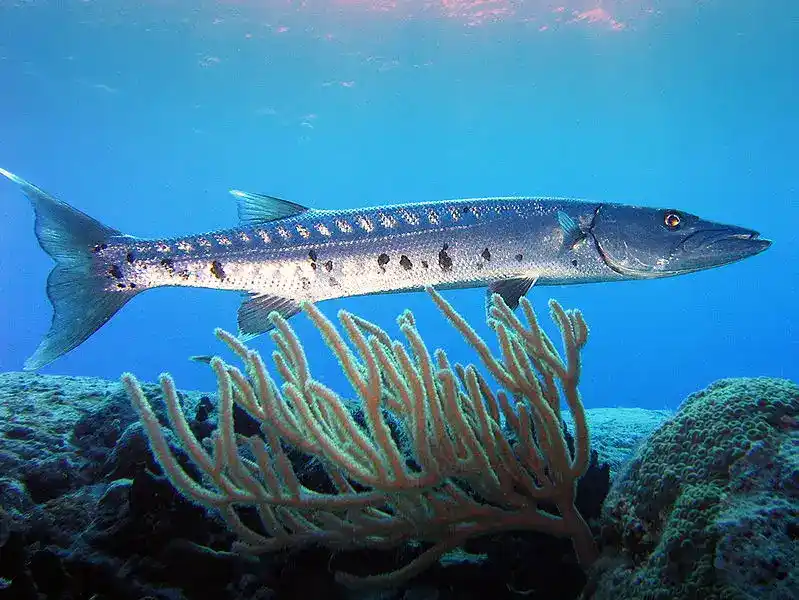
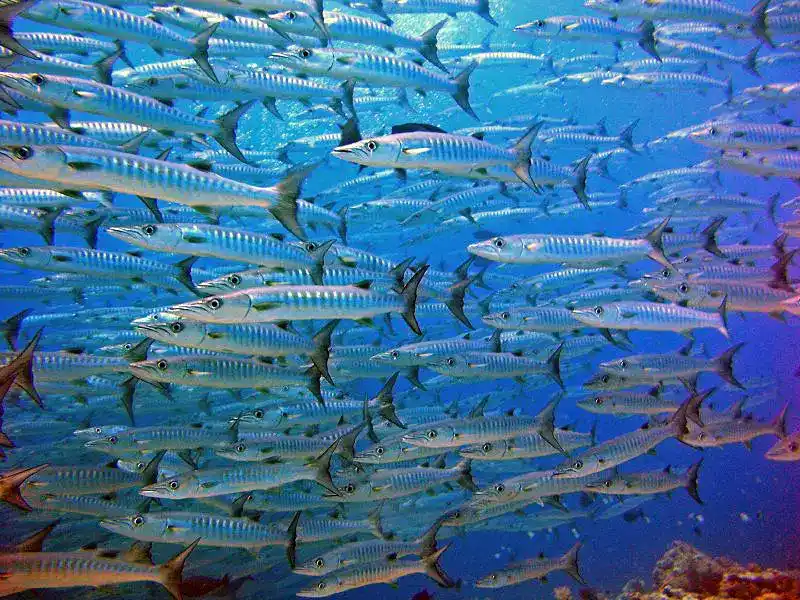
Slender spindle-shaped body, large canine teeth; two dorsal fins, deeply forked tail; longitudinal stripes/dark spots on the sides of the body.
Detailed introduction
Barracuda ( Sphyraena ) belongs to the family Sphyraenidae and is commonly known as a barracuda, large barracuda, or scuttler . They are typical high-speed predatory fish found in tropical and subtropical waters. They have slender bodies, wide mouths with sharp canine teeth , and primarily feed on small to medium-sized fish. They employ both ambush and burst-attack strategies and are particularly common on the outer edges of coral reefs, lagoon channels, and continental shelf edges.
Ecology and Biology
Diet: Sardines, tuna, anchovies and squid, etc.; juveniles feed on small planktonic fish and crustaceans.
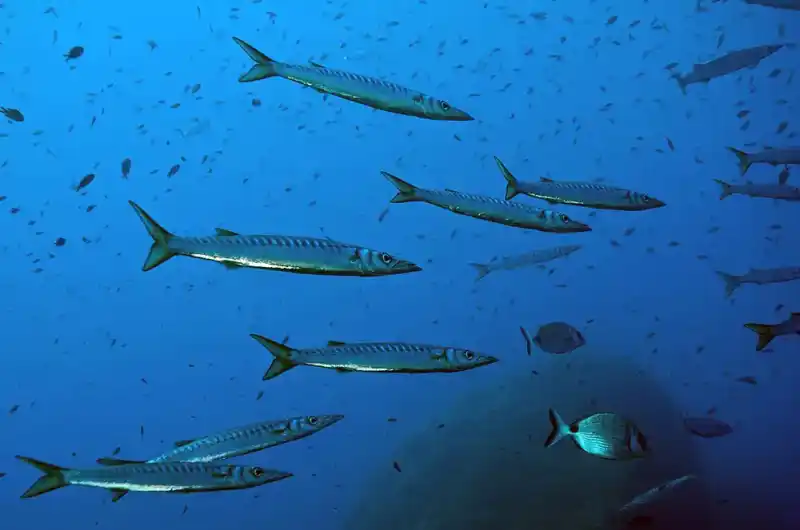
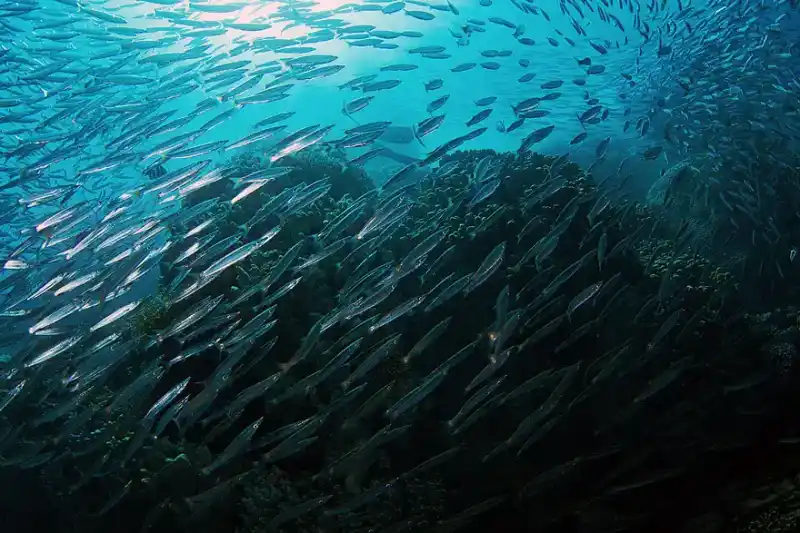
Behavior: Juveniles/subadults swim in groups , while large adults often swim alone or in small groups; peak activity occurs at dawn and dusk.
Reproduction: They spawn in groups at sea , and the eggs and larvae float and drift with the current.
Growth and lifespan: They grow relatively quickly, and their lifespan is typically 10–14 years (depending on the species).
Morphology and Recognition
The body is slender and spindle-shaped , with a large head and wide mouth, and well- developed canine teeth in both the upper and lower jaws ; the dorsal fin is divided into two parts (anterior hard spine and posterior soft rays), and the lateral line is nearly straight and distinct; the caudal peduncle is narrowed and the caudal fin is deeply forked. Longitudinal stripes or dark spots can be seen on the sides of the body (varies depending on the species).
Body size and lifespan
Body length: Mostly 50–100 cm ; large species (such as the barracuda ) can reach 150–180 cm+ .
Weight: Commonly 1–8 kg ; maximum weight can be 20 kg+ .
Distribution and Habitat
Global tropical and subtropical coastal and offshore waters , including coral/reefs, lagoons, seagrass beds and shelf edges; juvenile fish are commonly found in shallow coastal waters and mangrove inlets.
Human interaction and management
Fishing and recreational angling: Commonly used for recreational angling and consumption , but there is a risk of ciguatera poisoning in some sea areas.
Safety tips: Barracuda may be attracted to shiny jewelry ; avoid wearing it while snorkeling/swimming.
Management: Size restrictions/quotas, protection of key habitats and monitoring of harmful algal blooms; resupply of gregarious larvae is greatly affected by environmental conditions.
IUCN: Genera-level overview, assessment varies greatly among different species (LC–NT–VU, etc.); the overview at this site was not assessed (NE) .
Frequently Asked Questions
Q1: How to distinguish it from the mullet/water mackerel family? The barracuda is more slender and has prominent canine teeth , two separate dorsal fins and a nearly straight lateral line; the mullet/water mackerel often have separate fins or different tooth shapes.
Q2: Will it attack people unprovoked? Extremely rare; avoid wearing shiny metallic jewelry in low visibility or at night.
Q3: Is it safe to eat? There is a risk of ciguatoxin in some sea areas. Please follow local reports (science tips).
Q4: What are some representative species? S. barracuda (large barracuda), S. jello (yellow-spotted barracuda), S. qenie (blackfin barracuda), etc.